




 Find US, EU, UK, CA, & AU requirements












Starting in July 2026, eFiling is mandatory for certain products imported into the United States. This guide can help you determine if your products are covered by eFiling requirements.
2026 update: We added an infographic and the full list of children’s products and general-use products that require certification and eFiling. We also added a video tutorial.
Content Overview

FREE CONSULTATION CALL (30 MIN)
 Ask questions about compliance requirements
- Countries/markets:
.png)
.png)
.png)


- Learn how we can help your business
You will speak with:Ivan Malloci
How can I know if eFiling is required for my product?
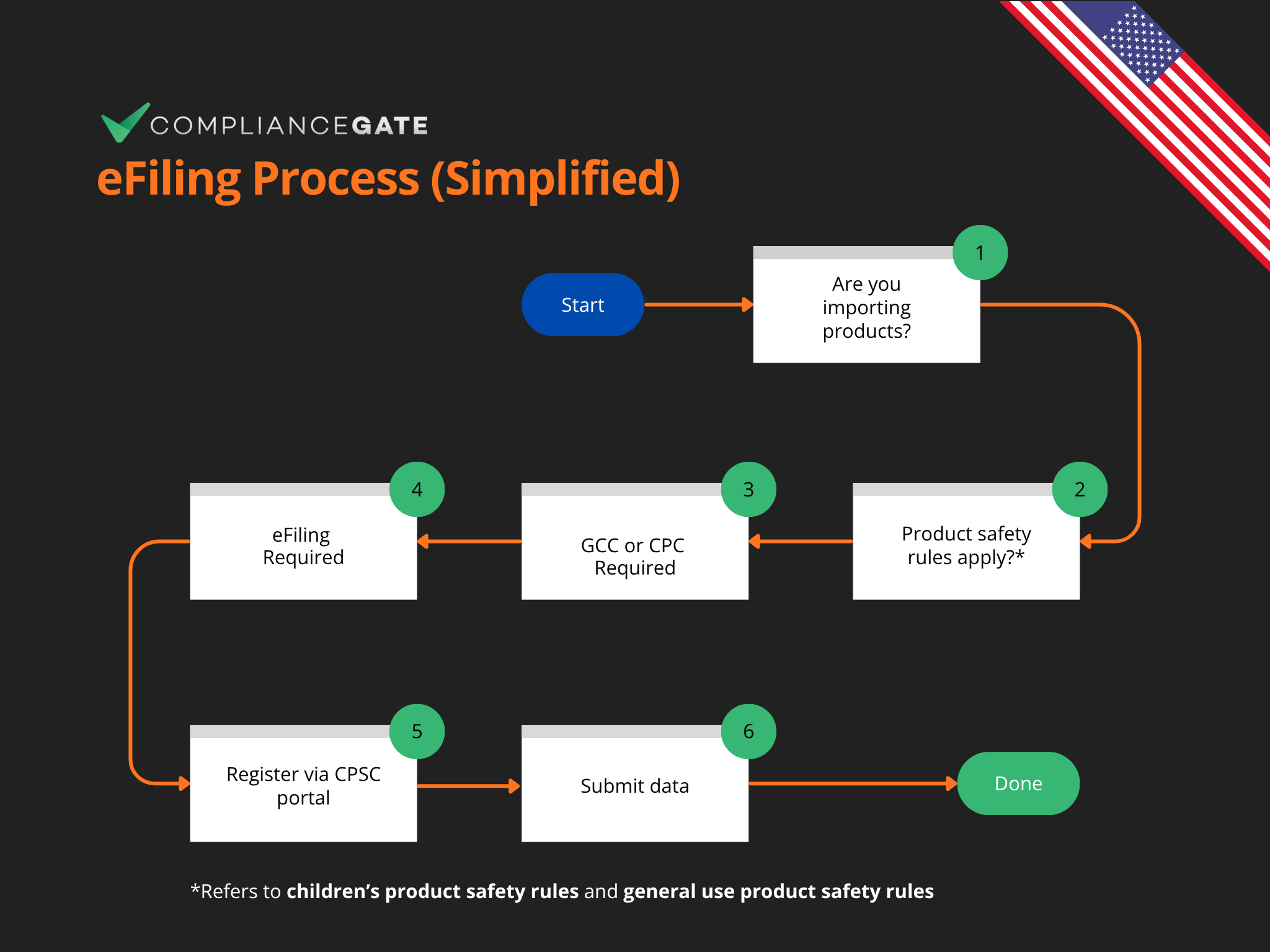
CPSC eFiling is expected to become mandatory for finished products manufactured outside the United States that are already subject to certification requirements. This is written in the amendment to Part 1110, which was published in January 2025:
§ 1110.1 Purpose and scope
This part specifies the entities that must issue certificates for finished products in accordance with section 14(a) of the Consumer Product Safety Act (CPSA), as amended, 15 U.S.C. 2063(a); specifies certificate content, form, and availability requirements that must be met to satisfy the requirements of section 14 of the CPSA; requires importers to file certificates electronically (eFile) with U.S. Customs and Border Protection (CBP) for imported finished products that are required to be certified; and clarifies which provisions of this part apply to component part certificates. This part does not address the type or frequency of testing necessary to support a certificate.”
Certification in this context refers to the Children’s Product Certificate (CPC) and the General Certificate of Conformity (GCC).
As such, eFiling is likely required if:
1. You import finished products to the United States
2. Yourproduct requires a Children’s Product Certificate (CPC), or
3. Your product requires a Certificate of Conformity (GCC)
This, in turn, depends on whether your product is classified as a children’s product or covered by a general product safety rule.
Children’s Products
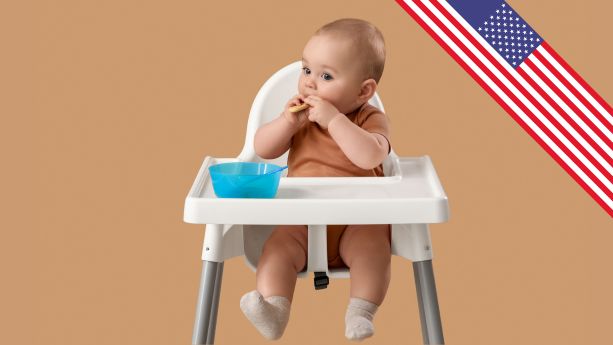
Toys and other children’s products are subject to product safety rules that. Such products require third-party testing and the issuance of a Children’s Product Certificate (CPC). eFiling is therefore a requirement for children’s products.
Below follows a list of products subject to product safety rules that require a CPC and eFiling:
- All-terrain vehicles
- Baby changing products
- Bassinets and cradles
- Bedside sleepers
- Bicycle helmets
- Bicycles
- Booster seats
- Bunk beds (for children)
- Button cell or coin battery
- Carpets and rugs
- Carriages and strollers
- Children’s folding chairs and stools
- Children’s sleepwear: sizes 0 through 6X (FF 3-71)
- Children’s sleepwear: sizes 7 through 14 (FF 5-74)
- Children’s toys
- Clacker balls
- Clothing storage units
- Crib mattresses
- Dive sticks and other similar articles
- Electrically operated toys or articles
- Frame child carriers
- Full-size cribs
- Gates and enclosures
- Hand-held infant carriers
- High chairs
- Infant bath seats
- Infant bath tubs
- Infant bouncer seats
- Infant sleep products
- Infant support cushions
- Infant swings
- Infant walkers
- Magnets
- Mattresses and mattress pads
- Mattresses and mattress sets
- Non-full-size cribs
- Nursing Pillows
- Pacifiers
- Paints and similar surface coatings containing lead
- Phthalates
- Play yards
- Portable bedrails
- Portable hook-on chairs
- Rattles
- Sling carriers
- Small carpets and rugs
- Small parts
- Soft infant and toddler carriers
- Wearing apparel
- Stationary activity centers
- Toddler beds
- Total lead content
- Toy, look-alike, and imitation firearms
- Vinyl plastic film
Learn more: eFiling Requirements for Toys and Children’s Products
General Use Products

eFiling is also applicable to products covered by one or more product safety rules, which mandate a General Certificate of Conformity (GCC).
Here is a list of products subject to product safety rules that require a GCC and eFiling:
- All-terrain vehicles
- Architectural glazing materials
- Adult portable bed rail
- Artificial emberizing materials
- Bicycle helmets
- Bicycles
- Bunk beds
- Button cell or coin battery
- Carpets and rugs (large)
- Carpets and rugs (small)
- CB antennas
- Cellulose insulation
- Cigarette lighters
- Clothing storage units
- Consumer patching compounds
- Dive sticks and other similar articles
- Drywall
- Fireworks
- Garage door openers
- Lawn darts
- Liquid nicotine packaging
- Magnets
- Matchbooks
- Mattresses and mattress pads
- Mattresses and mattress sets
- Metal-cored candlewicks
- Multipurpose lighters
- Paints and similar surface coatings containing lead
- Portable fuel containers (flame mitigation device)
- Portable fuel containers (special packaging)
- Power lawn mowers (walk-behind)
- Refrigerator doors
- Refuse bins
- Wearing apparel
- Special packaging
- Swimming pool slides (freestanding)
- Toy, look-alike, and imitation firearms
- Vinyl plastic film
- Pool and spas
Note that general product safety rules are not age group dependent but apply regardless of the intended age group of the product. Further, some rules apply to products that contain certain components, such as magnets or button cell batteries, rather than being applicable to certain product types.
Learn more: eFiling Requirements for General-Use Products
Which products are exempt from eFiling?
eFiling is generally not required for products that are either not children’s products or covered by a general product safety rule.
As such, eFiling is not expanded to all imported to the United States, at least for now.
FAQ
Is eFiling required for low-value shipments?
Yes, eFiling will be required for products that are required to be certified regardless of the customs value.
This makes sense, as eFiling would otherwise unfairly burden US-based businesses importing bulk shipments while cross-border sellers shipping low-value parcels would be exempt.
What does it mean if my product is not subject to eFiling requirements?
Then you don’t need to submit via eFiling, but you must still comply with other requirements.
Is eFiling required for baby and children’s products?
Yes, eFiling is required for products defined as children’s products. Products intended for children between 0 and 12 years old are generally deemed to be children’s products.
The CPSC has also published guidelines that can help you determine if your product is defined as a children’s product.
Is eFiling required for toys?
Yes, toys are deemed to be children’s products and are covered by several product safety rules that mandate certification (which in turn requires eFiling).
Is eFiling required for products used by adults?
Yes, eFiling is not only required for children’s products. General use products (non-children’s products) covered by product safety rules are subject to eFiling requirements.
Is eFiling required for magnets?
It is likely that eFiling will be required for magnets, as these are covered by Part 1262, which in turn requires either a CPC or a GCC.
Is eFiling required for batteries?
We have not found any source stating that eFiling will be required for all batteries. That said, button cell batteries are covered by Part 1263, which requires either a CPC or a GCC. It is likely that eFiling will be required for button cell batteries for that reason.
Is eFiling required for furniture?
eFiling may be required for children’s furniture or other furniture covered by general product safety rules. Here are some examples:
- Full-size cribs
- Bassinets and cradles
- Play yards
- Clothing storage units
Is CPSC eFiling mandatory for electronics?
We have not found any source stating that electronic products will be subject to eFiling by default. However, electronic toys or electronics containing button cell batteries will likely be covered.