





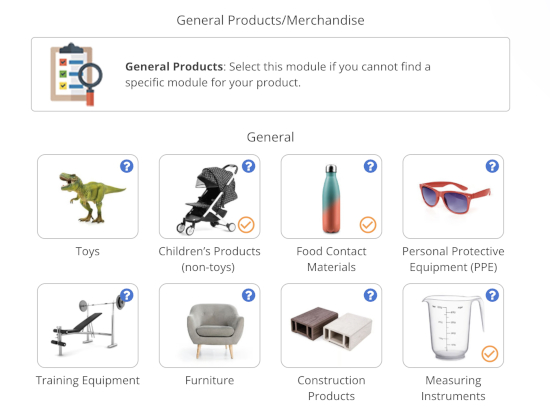
 Product assessments in 2 minutes

















Planning to sell products in Canada? Then you must ensure that product and packaging labelling (and documentation) is provided in both English and French.
Further, certain regulations require that specific statements in both English and French must be present in packaging labels, warnings, instructions, and other texts.
Content Overview

Find Requirements for Your Product Free
Estimated time: 2 to 3 minutes
 Step 1: Select market
.png)
.png)
.png)


- Step 2: Select product/material modules
- Step 3: Compliance Requirements List Created View Sample >
 Data: Primarily based on data from official legislation databases (Learn >)
Is bilingual labelling in English and French mandatory in Canada?
Yes, English and French labelling of products and packaging is required for most products sold in Canada. Such requirements can be found in several acts and regulations applicable to specific products and packaging.
Here are some examples of areas that require bilingual labelling in French and English:
- Packaging labels
- Warnings
- Instructions
- Statements
Consumer Packaging and Labelling Act and Regulations
The Consumer Packaging and Labelling Act and Regulations set labelling requirements for prepacked consumer products. The following is listed in section 10 of the Act:
- Net quantity of the prepackaged product
- Company identity and principal place of business
- Product identity (common or generic name)
- Information required by other regulations (i.e., warnings)
The Consumer Packaging and Labelling Regulations provide more detailed labelling requirements, which include the following concerning bilingual labelling:
official languages means the English language and the French language; (langues officielles)
(2) All information required by the Act and these Regulations to be shown on the label of a prepackaged product shall be shown in both official languages except that the identity and principal place of business of the person by or for whom the prepackaged product was manufactured, processed, produced or packaged for resale may be shown in one of the official languages.
As such, the company name and address must not be presented in both languages. All other information, such as the product identity and net quantity, must be written in English and French.
Imported by information
Certain statements must be present in both English and French. For example, Section 31 of the X states that imported products require the following statements:
- “imported by” (“importé par”) or;
- “imported for” (“importé pour”)
Other Regulations
Requirements concerning English and French bilingual labelling and documentation can be found in many Canadian product regulations. Note that specific statements must often be included.
The following are a few examples of such regulations:
Toys Regulations
1. All statements and warnings must be provided in French and English.
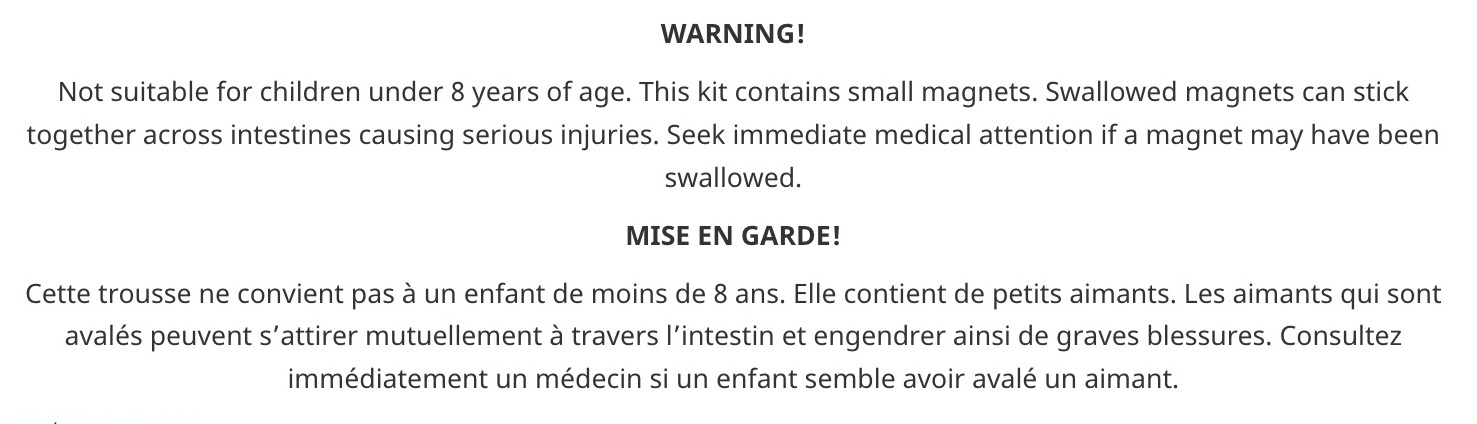
2. A specific bilingual warning is provided for toys containing magnets:
Glazed Ceramics and Glassware Regulations
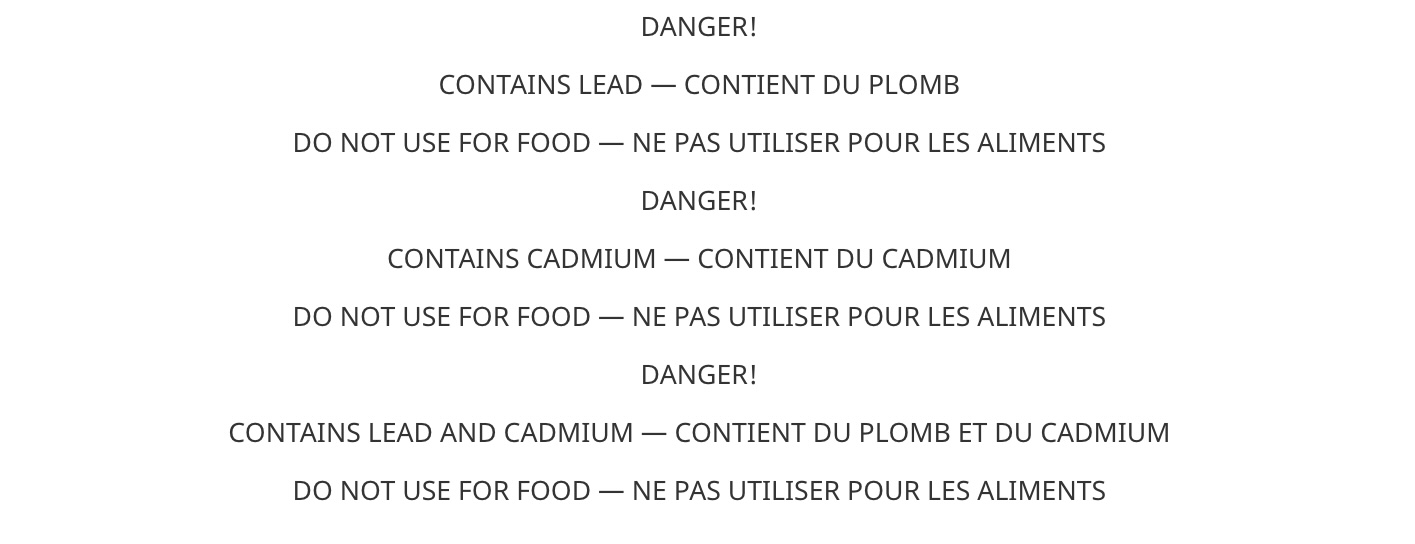
Covered products that are not intended for food contact are exempt from certain lead and cadmium restrictions if an English and French language warning label is provided:
Vaping Products Labelling and Packaging Regulations
1. Warnings must be bilingual and include the statement “Health Canada” and “Santé Canada”.
2. Nicotine-free statements must be written in English and French.
3. Ingredient lists must be written in English and French and include the statements “Ingredients:” and “Ingrédients:”.
4. Flavour ingredients must be written in English and French and include the statements “flavour” and “arôme”.
Amazon language requirements
Amazon requires that all products sold on its Canadian marketplace meet applicable regulations. This also includes all requirements concerning bilingual labelling and documentation.
Amazon references several federal product and packaging regulations, but also some at a provincial level. This includes the Charter of the French Language for products sold to consumers in Quebec.
Products and packaging labels not provided in both languages can be removed from Amazon.