





 Find US, EU, UK, CA, & AU requirements










Clothing and other textile products imported or manufactured for sale in Canada are subject to various acts and regulations covering the following areas:
- General safety
- Flammability
- Chemicals
- Labelling
This guide serves as a general introduction to Canadian clothing and textiles compliance requirements.
Note: An earlier version of this guide was written by Shufen Lee, based in Toronto. The guide has been updated since then, but parts are based on the original guide written by Shufen Lee.
Content Overview

FREE CONSULTATION CALL (30 MIN)
 Ask questions about compliance requirements
- Countries/markets:
.png)
.png)
.png)
- Learn how we can help your business
You will speak with:Ivan Malloci
Canada Consumer Product Safety Act
The Canada Consumer Product Safety Act (CCPSA) sets requirements for consumer products imported or manufactured for sale in Canada. Here are some key requirements under the CCPSA:
- Consumer products sold in Canada must be safe
- False and misleading statements are prohibited
- Testing requirements
- Documentation requirements
CCPSA regulations for clothing and textiles
There are also several product regulations made under the CCPSA applicable specifically to clothing and other textile products. Some also set substance restrictions that apply to textiles.
- Children’s Sleepwear Regulations
- Consumer Products Containing Lead Regulations
- Phthalates Regulations
- Surface Coating Materials Regulations
- Textile Flammability Regulations
- Textile Floor Coverings Regulations
These regulations set specific requirements concerning mechanical safety, substances, flammability and other areas. Some of these are further expanded on in this guide.
Prohibited products
Schedule 2 of the CCPSA lists 16 prohibited product types. The following is directly relevant to textiles:
10. Products made in whole or in part of textile fibres, intended for use as wearing apparel, that are treated with or contain tris (2,3 dibromopropyl) phosphate as a single substance or as part of a chemical compound.
Children’s clothing
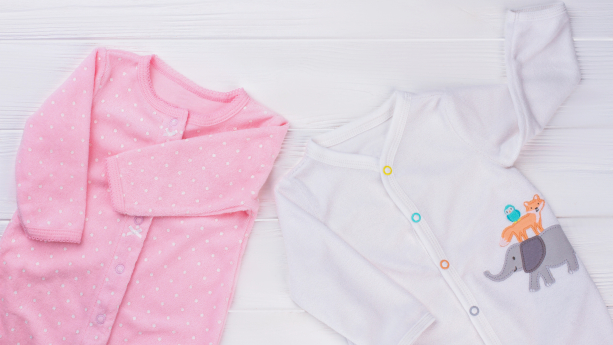
Children’s clothing is covered by several regulations under the CCPSA.
Children’s Sleepwear Regulations
This regulation sets requirements for various types of infant and children’s sleepwear in the following areas:
- Flame resistance
- Flame retardants and toxicity
- Labelling
Testing is required to verify compliance with both flammability and toxicity requirements.
A permanent label is required for loose-fitting sleepwear treated with flame retardants:
(a) the words “flame retardant” and “ignifugeant”; and
(b) instructions in English and in French for the care of the sleepwear, particularly cleaning procedures, to ensure that it is not exposed to agents or treatments that could reduce its flame resistance.
Consumer Products Containing Lead Regulations
This regulation restricts lead in consumer products. The scope specifically mentions the following:
(b) any clothing or clothing accessory that is intended for use by a child under 14 years of age;
Accessible parts must not contain more than 90 mg/kg of lead. Such parts may include the following:
- Buttons
- Zippers
- Garment accessories
That said, there are also some exemptions.
Phthalates Regulations
This regulation restricts phthalates in childcare products, which are defined as following:
Child care article means a product that is intended to facilitate the relaxation, sleep, hygiene, feeding, sucking or teething of a child under four years of age. (article de puériculture)
While the Phthalates Regulations do not specifically mention children’s clothing, it is possible that the rstritions apply to children’s sleepwear.
Limits
- DEHP, DBP and BBP: 1 000 mg/kg
- DINP, DIDP and DNOP: 1 000 mg/kg
For context, phthalates are a group of chemicals that can be found in certain plastics and coatings. Plastic buttons and other plastic (or coated) garment accessories should therefore be tested.
Textile Flammability Regulations
The Textile Flammability Regulations set textile flammability requirements for:
- Textile bedding products
- Products that are composed of textile fibres, other than bedding
| Category | Requirements |
| Textile products without raised fibre surface | Flame spread time > 3.5 seconds |
| Textile products with raised fibre surface | Flame spread time > 4 seconds |
| Beddings (with and without a raised fibre surface) | Flame spread time > 7 seconds |
Standard
The flame spread time is determined by CAN/CGSB-4.2 No. 27.5. Testing is often required to assess if a textile product is compliant with this standard.
Exemptions
The Textile Flammability Regulations exempts children’s sleepwear (0 to 4) as these are covered by flammability requirements under the Children’s Sleepwear Regulations. It also exempts tents, mattresses and certain other products.
Textiles Labelling
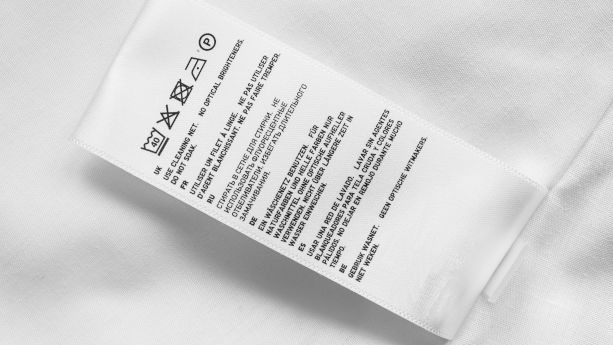
Textiles labelling containing information about the fabric and the brand is required for clothing and other textile products.
Textile Labelling Act
The Textile Labelling Act sets the following labelling requirements under section 6:
- Specify the generic name of all textile fibres that make up at least 5% of the fabric
- Manufacturer or brand identity
- Other information required by regulations
Note that it also prohibits any false or misleading statement concerning the textile fibre or other label information.
Textile Labelling and Advertising Regulations
The Textile Labelling and Advertising Regulations provide more detailed and technical requirements concerning textile labels.
Covered products
You can find a list of products that require textile labels in Schedule I. Here are some examples:
- Clothing
- Floor coverings
- Furniture coverings
- Mattress coverings
- Slip covers
- Ironing board covers and pads
- Draperies, drapery liners and curtains
- Table cloths and covers
- Towels, wash cloths and dish cloths
- Piece goods
- Umbrellas and parasols
- Tents
- Bed canopies
Note that products listed in Schedule II are exempt. Certain exemptions concerning labelling also apply to products listed in Schedule III.
Labelling requirements
Here are some key areas covered by the regulations:
1. Textile label information
- Name and postal address of the dealer (or use an identification number)
- Textile fibre content
- Name of the country of origin
- English and French languages
2. Textile label format and placement
3. Textile fibre names
More detailed information can be found in Part I and Part III.
Other Substance Regulations
As mentioned, certain regulations under the CCPSA restrict substances in children’s sleepwear and other textile products. However, there are other Canadian substance regulations that may apply as well:
- Prohibition of Certain Toxic Substances Regulations, 2012 (SOR/2012-285)
- Prohibition of Asbestos and Products Containing Asbestos Regulations (SOR/2018-196)
- Products Containing Mercury Regulations (SOR/2014-254)
- Volatile Organic Compound Concentration Limits for Certain Products Regulations (SOR/2021-268)
Note that some regulations apply to substances in general, rather than particular product groups.
Fabrics and garment accessories can contain restricted and prohibited chemicals. The only way to find out is by arranging third-party lab testing.
My recommendation is that you contact a testing company that can help you assess what to test for based on a risk-based approach. This, in turn, depends on the following factors:
- Fabrics and parts materials
- Age groups
- Use case
FAQ
Is textile testing required in Canada?
Yes, testing is in practice necessary to verify that your product complies with applicable requirements. Here are some examples of tests that can be applied to clothing and textiles sold in Canada:
- Flammability testing
- Lead testing
- Phthalates testing
- Flame retardant toxicity testing
- Mechanical safety testing
- Textile fibre contents testing
The specific testing requirements, in turn, depend on the applicable acts and regulations. Note that some products must be tested according to specific Canadian standards.
Do we need to provide textile labels in French?
Yes, the Textile Labelling and Advertising Regulations specifically mention that textile fibres must be specified in both English and French.
Are chemicals restricted in textiles in Canada?
Yes, there are Canadian regulations that set substance restrictions for clothing and other textile products. Here are two examples:
- Children’s Sleepwear Regulations
- Consumer Products Containing Lead Regulations
Some relate specifically to toxicity, while others set limits on specific substances like lead.
Is the country of origin required on textiles labels?
Textile Labelling Act and Regulations do not require that the name of the country of origin (e.g. Made in Vietnam) be identified on an imported textile product unless the representation is made to the fact that the product, fabric or fibre therein is imported. When such a representation is made, it is then required that the country of origin of that product or part be stated.
The declaration of the country of origin may be stated on the disclosure label or on a separate label in one of the official languages.
Although the country of origin is not required to be shown on the disclosure label, the Canada Border Service Agency (CBSA) does require you to identify the country where goods originate from when importing goods to Canada.




I would like to know how much non cotton fabric is allowed in 100% cotton labelled bath towels.
hello need help with environmental requirements in the textile industry in Canada
can you tell me the references? about different parameters that are important in this sector
Hello there! Hope you are doing good.
I have a question, I am planning to import into Canada that a over produced, cancelled order baby cloths for resale, those included many with well known brands, my question is do I have to obtain a permission from the brand owner ? Pls clarify it will be great help and appreciated.
Thank you
Sree
Hello Frederik, I live in US and import from China but would like to expand my customer base to CAN. Do I need to obtain a C/N # to sell to customers in Can (considering I am based in US-with RN # already present on my garments).
Is it mandatory for undies to have gusset?
We don’t do product assessments in the comment section. You need to contact a lab or a consultant.
If you have a brand in canada and importing clothing from a different country can you indicate on the tag the location of the brand?, Not stating “made” or “from” on the tag?
Thanks
I have purchased clothing online and the garments arrived with NO labeling. Only a small tag “L” on the neckline.
Is it illegal to sell garments without a content label?
Please reply, I’d like to discuss this further.
Kathy munro
Maybe the care instructions are placed elsewhere? Doesn’t have to be the neck tag.
It also depends on the location of the seller.
Dear
i want to know if we are sailing cloths in Canada .is VAT number required of dealer
I need help with labels for imported clothes