




 Find US, EU, UK & CA requirements











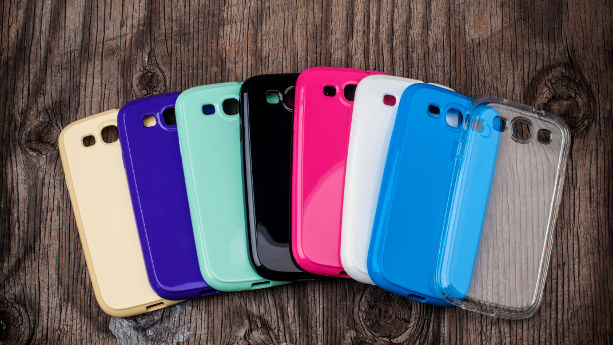
Planning to sell phone cases in the United States? This guide serves as an introduction to several US regulations setting requirements concerning chemicals and labelling for phone cases imported to or manufactured for sale in the United States.
Product examples
- Plastic phone cases
- Silicon phone cases
- Aluminium phone cases
- Leather phone cases
- Phone cases for children
Content Overview

FREE CONSULTATION CALL (30 MIN)
 Ask questions about compliance requirements
- Countries/markets:
.png)
.png)
.png)


- Learn how we can help your business
You will speak with:Ivan Malloci
19 CFR Part 134 – Country of Origin Marking
Country of origin marking is generally required for products sold in the United States, including phone cases. The country of origin marking should reflect the manufacturing country, which is likely China when it comes to the majority of phone cases.
The country of origin marking can be affixed to the product and packaging. That said, most brands affix the country of origin marking to the packaging or the inside of the phone case.
16 CFR Part 24 – Guides for Select Leather and Imitation Leather Products
16 CFR Part 24 sets requirements concerning the description of leather and imitation leather. As such, it may be relevant to the following types of phone cases:
- Leather phone cases
- PU leather phone cases
While it does not explicitly list phone cases in its scope, it does list the following that could also encompass certain phone cases:
- Sample cases
- Key cases
- Coin purses
- Card cases
- Gadget bags
- Similar articles
It sets guidelines and requirements for how certain types of leather must be presented in labelling and marketing materials. For example, phone cases covered in PU leather could be presented under the following terms:
- Not leather
- Imitation leather
- Simulated leather
- Vinyl
- Vinyl-coated fabric
- Plastic
Note that additional guidelines and terms are in place for other leather types.
16 CFR Part 1262 – Safety Standard for Magnets
Certain phone cases have magnets built in for closing mechanisms or other purposes. Such cases may be subject to the requirements of 16 CFR Part 1262 – Safety Standard for Magnets.
While the regulation does not explicitly mention phone cases, it does mention the following:
(b) Subject magnet product means a consumer product that is designed, marketed, or intended to be used for entertainment, jewelry (including children’s jewelry), mental stimulation, stress relief, or a combination of these purposes, and that contains one or more loose or separable magnets, but does not include products sold and/or distributed solely to school educators, researchers, professionals, and/or commercial or industrial users exclusively for educational, research, professional, commercial, and/or industrial purposes.
Each loose or separable magnet contained in a covered product that fits inside the specific cylinder dimensions must have a flux index of less than 50 kG2 mm2.
40 CFR Chapter I Subchapter R – Toxic Substances Control Act (TSCA)
The Toxic Substances Control Act (TSCA) sets restrictions concerning PFAS, formaldehyde, and many other chemicals. Some restrictions could also be relevant to materials and coatings used to manufacture phone cases.
For context, Otterbox (which is a premium phone case brand) lists the Toxic Substances Control Act (TSCA) in their Global Restricted Substances Policy.
Testing is generally required to verify if a certain material complies with the substance restrictions set by the TSCA.
Consumer Product Safety Improvement Act (CPSIA)
The CPSIA is applicable to all children’s products sold in the United States. While not all phone cases are by default children’s products, this can be the case for phone cases that meet the following criteria:
1. Phone cases with built-in toys or play features
2. Phone cases that are designed to appeal specifically to children
3. Phone cases that are marketed specifically to children
Example
A phone case with artwork or designed to resemble cartoon characters could potentially be deemed a children’s product and therefore within the scope of the CPSIA.
CPSIA Requirements
If that is the case, then you will need to meet the following requirements:
1. Identify applicable children’s product safety rules
2. Arrange testing with a CPSC-accepted lab
3. Create a Children’s Product Certificate (CPC)
4. Affix tracking labels
California Proposition 65
California Proposition 65 sets substance restrictions for products sold in California. More specifically, products should not contain restricted substances or carry warning labels.
Substance risks
Here are some examples of restricted substances (under CA Prop 65) that may be found in materials used to make phone cases:
- Plastics: DEHP or other phthalates
- Glossy coatings: DEHP or other phthalates
- Aluminum cases: Lead, cadmium, or other heavy metals
- Leather cases: Lead or hexavalent chromium
Product testing
Material testing is generally required to verify if phone cases contain certain substances.








H&S stores are selling iPhone cases without any packaging labels or warning of product safety.Why is that not regulated??? Thank You