




 Find US, EU, UK, CA, & AU requirements












Planning to import general-use products into the United States? Starting in July 2026, eFilign is required for general-use products (non-children’s products) covered by product safety rules that require a GCC.
This guide breaks down the process into 6 key steps, starting with getting your product ready for eFiling.
Note: Read this guide if you need to determine if eFiling is required for your product.
Content Overview

FREE CONSULTATION CALL (30 MIN)
 Ask questions about compliance requirements
- Countries/markets:
.png)
.png)
.png)


- Learn how we can help your business
You will speak with:Ivan Malloci
Part I: Get your product ready for eFiling

eFiling is based on submitting information about the product and its compliance status. As such, you need to ensure that your general use product is compliant with relevant rules and tested before you have anything to submit.
Step 1: Identify product safety rules
First, you must identify applicable product safety rules. This is also what determines if your product is deemed to be a general use products, which triggers the certification requirement (which means that eFiling is required).
General-use product list
Here is a list of products that are covered by product safety rules and therefore defined as general-use products:
- All-terrain vehicles
- Architectural glazing materials
- Adult portable bed rail
- Artificial emberizing materials
- Bicycle helmets
- Bicycles
- Bunk beds
- Button cell or coin battery
- Carpets and rugs (large)
- Carpets and rugs (small)
- CB antennas
- Cellulose insulation
- Cigarette lighters
- Clothing storage units
- Consumer patching compounds
- Dive sticks and other similar articles
- Drywall
- Fireworks
- Garage door openers
- Lawn darts
- Liquid nicotine packaging
- Magnets
- Matchbooks
- Mattresses and mattress pads
- Mattresses and mattress sets
- Metal-cored candlewicks
- Multipurpose lighters
- Paints and similar surface coatings containing lead
- Portable fuel containers (flame mitigation device)
- Portable fuel containers (special packaging)
- Power lawn mowers (walk-behind)
- Refrigerator doors
- Refuse bins
- Wearing apparel
- Special packaging
- Swimming pool slides (freestanding)
- Toy, look-alike, and imitation firearms
- Vinyl plastic film
- Pool and spas
Components
Note that some product safety rules apply to components, rather than finished products. For example, products containing magnets can be subject to Part 1262. This is also the case for devices containing batteries, which are covered by Part 1263.
Step 2: Design for compliance
Next, you need to implement the requirements set by the applicable product safety rules. Examples of requirements can be found below.
16 CFR part 1262 – Magnets
✅ Flux index limit for loose or separable magnets under a certain dimension
✅ Test procedure for determining flux index requirements
16 CFR part 1263 – Button cell or coin battery
✅ Compliance with ANSI/UL 4200A -Standard for Safety for Products Incorporating Button Batteries or Coin Cell Batteries requirements
✅ Labeling of button cell and coin battery packaging requirements
16 CFR part 1610 – Wearing apparel
✅ Classification requirements
✅ Guaranty requirements
✅ Maintenance of records requirements
✅ Testing requirements (e.g., procedure, apparatus, classification, reporting)
Step 3: Product testing
Product testing is required to verify compliance with all applicable product safety rules. When it comes to general-use products, third-party testing is not explicitly required. That being said, the CPSC states that such products are subject to a “reasonable testing program”.
In practice, this means that manufacturers or importers must verify compliance, but have some flexibility when it comes to how this is accomplished.
For most businesses, this still means that you need to take your product to an external lab and have them test it according to the requirements set by the applicable product safety rule.
It should also be noted that using a CPSC-accepted lab is not mandatory for a general-use product. If you ask me, I don’t really see a reason why you should not use a CPSC-accepted lab anyway (on the basis that this will help you avoid untrustworthy entities).
Step 4: Create General Certificate of Conformity (GCC)
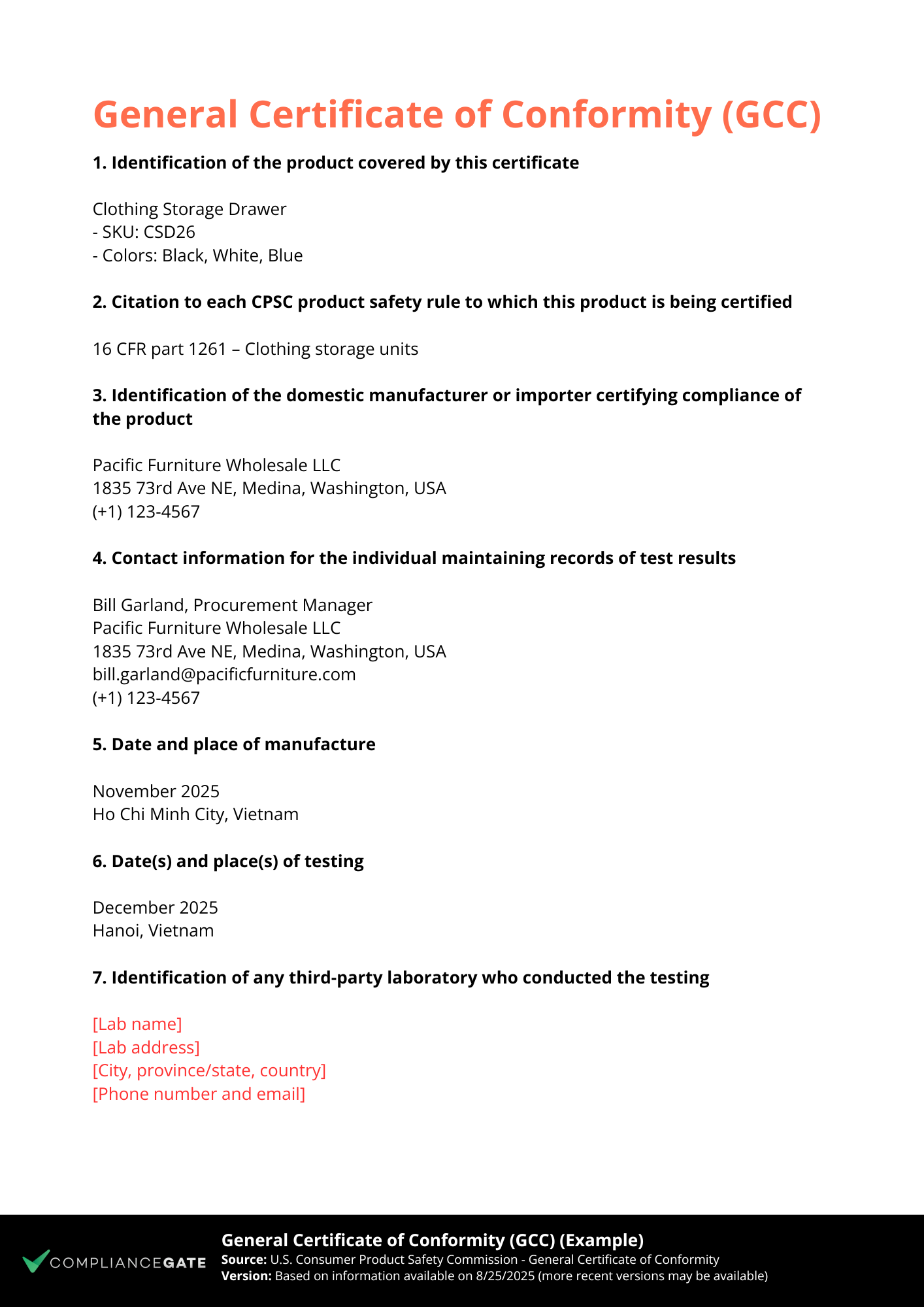
Next, you can create a General Certificate of Conformity (GCC). This document contains much of the information that must later be submitted via the CPSC eFiling system.
Overview
1. Product name and description
2. List of applicable CPSC safety rules and ASTM standards
3. Your company name
4. Contact details: Mailing address, e-mail address, phone number
5. Name of the person holding the test report
6. Date (month, year) and place (city, country) of production
7. Date (month, year) and place (city, country) of product testing
8. Third-party testing company, contact person, e-mail, phone number, and address
GCC sample
Part II: CPSC eFiling
This part explains how you can register for eFiling and submit data when importing general-use products to the United States.
Step 5: eFiling registration
1. Go to the CPSC Product Registry portal
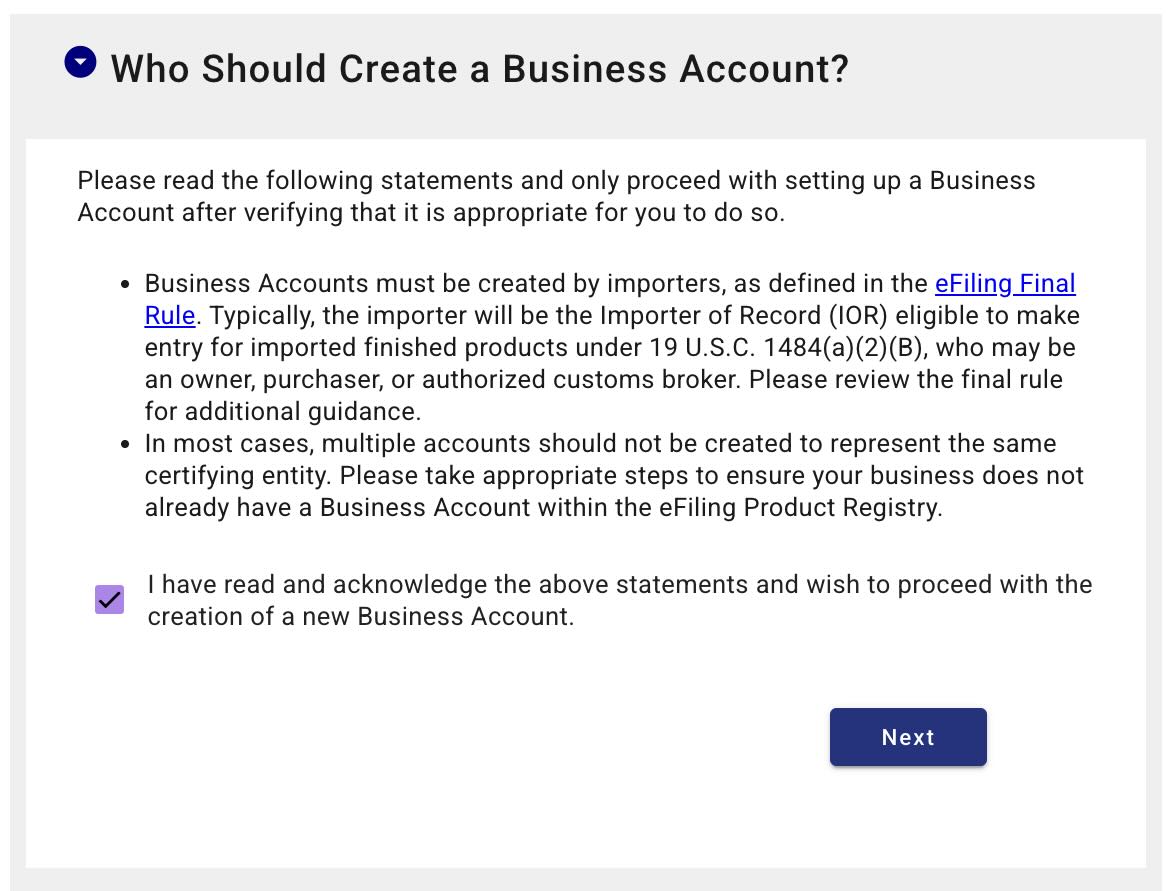
2. Specify the company name, email, and IOR
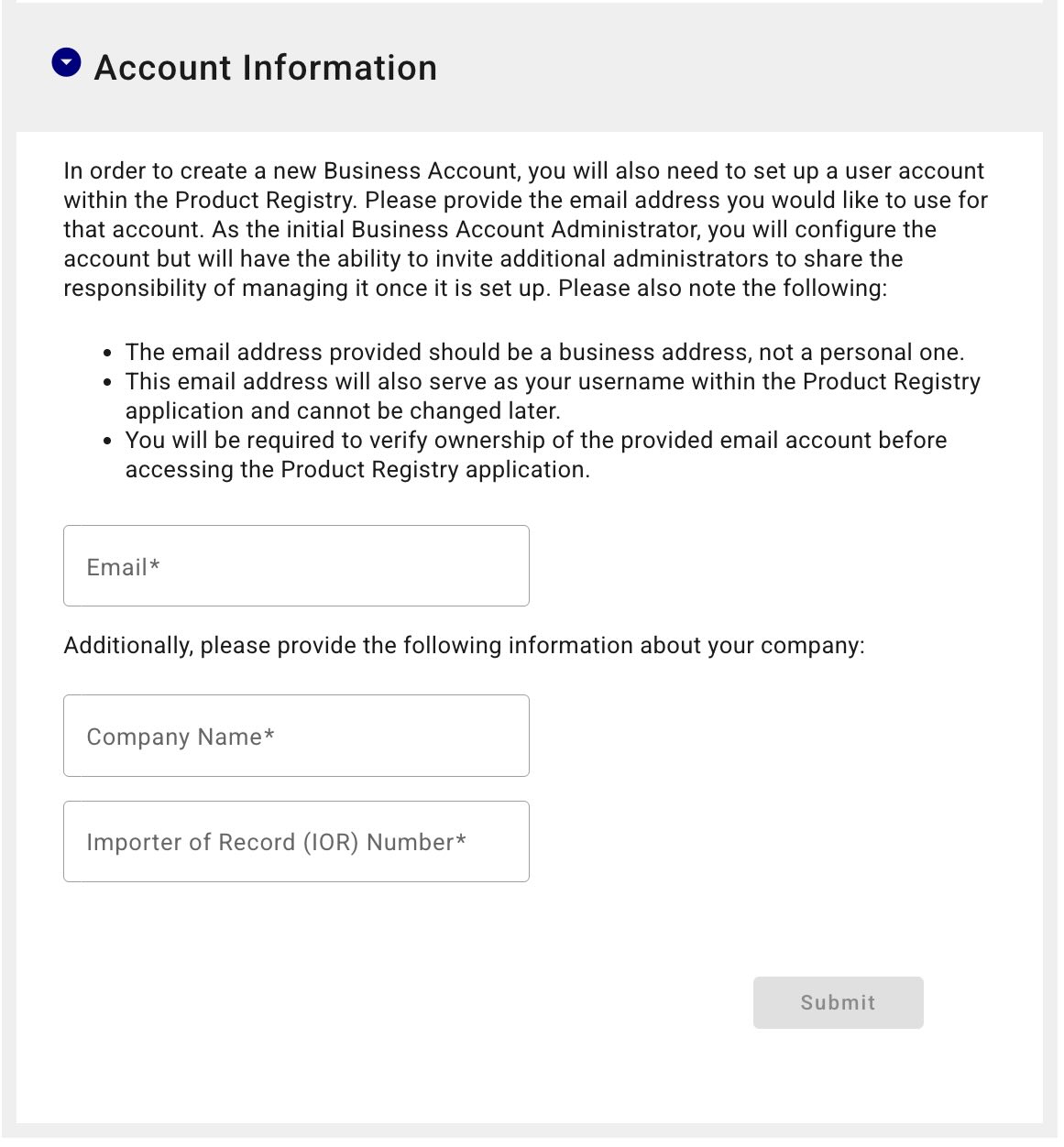
3. You can then proceed to the application
Step 6: eFiling submission
You must submit data via the eFiling portal when importing general-use products. The following information must generally be submitted:
- Manufacturer information
- Certificate type: GCC
- General use product safety rules
- Product information
- Lab information
- Test report data
- Contact person