




 Find US, EU, UK, CA, & AU requirements













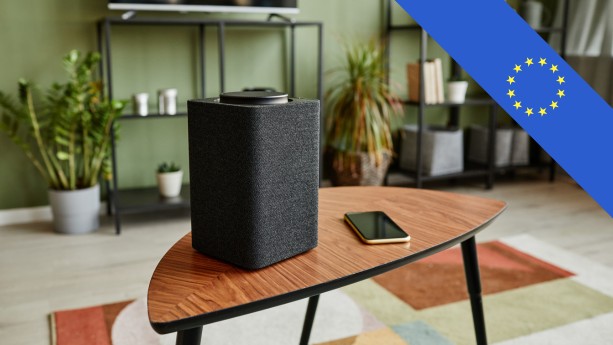
Speakers and sound systems sold in the European Union are subject to mandatory product standards, labelling, documentation and testing requirements. This guide serves as an introduction to the requirements that must be met by both manufacturers and importers of speakers and other audio products.
Product examples
- Bluetooth speakers
- Portable speakers
- Battery-powered speakers
- Smart speakers
- Sound bars
- Floor speakers
- Subwoofers
- PA speakers
Content Overview

FREE CONSULTATION CALL (30 MIN)
 Ask questions about compliance requirements
- Countries/markets:
.png)
.png)
.png)


- Learn how we can help your business
You will speak with:Ivan Malloci
CE marking

Speakers and other sound systems are subject to several EU regulations and directives which mandate CE marking. The table below provides a summary.
General requirements
| Regulation/Directive | Area |
| RoHS Directive | Restrict heavy metals and chemicals in electronic components, solder, PCBs, etc |
| EMC Directive | Sets EMC requirements for electronic products to ensure that speakers and sound systems do not interfere with other devices. |
| Low Voltage Directive | Sets electrical safety requirements for speakers and other electronic products |
| Regulation (EU) 2025/2052 | Sets energy efficiency requirements for external power supplies (including those supplied with speakers and other sound systems). |
Wireless speakers
The following CE marking regulations and directives are relevant to the following types of speakers:
- Bluetooth speakers
- Connected speakers
- Battery-powered speakers
- Smart speakers
| Regulation/Directive | Area |
| Radio Equipment Directive (RED) | The Radio Equipment Directive (RED) sets requirements for radio equipment, which includes speakers with Bluetooth functionality. |
| Battery Regulation | This regulation sets safety, documentation, and labelling requirements for batteries. It is relevant to portable batteries contained in Bluetooth speakers and other portable speakers. |
| EU Cybersecurity Act | This regulation sets cybersecurity requirements concerning the design and manufacturing of products that can be connected to a device or network. |
Technical requirements
Ensuring compliance requires that the speakers are designed to meet harmonised standards. These cover the following areas impacting both speaker hardware and software:
✅ Speakers must meet electrical safety requirements
✅ Speakers must not interfere with other equipment or radio signals
✅ The components, solder and PCBs cannot contain heavy metals and chemicals above the RoHS limits
✅ External PSUs for speakers must meet energy efficiency requirements
✅ Speakers with wireless communications must comply with the RED and not interfere with other devices and signals
✅ Speakers that can connect to networks or other devices must meet the cybersecurity requirements under the EU Cybersecurity Act
✅ Batteries must meet safety requirements and other criteria
Other requirements
✅ Product testing
✅ Technical documentation
✅ User instructions
✅ Manufacturer labelling
✅ Importer labelling
✅ Speaker type and batch number
Bluetooth licensing
Bluetooth licensing is overseen by the Bluetooth SIG, and you can find detailed information, including the Bluetooth License Agreement and pricing, on the Bluetooth website.
As far as we understand it, there are two different types of license agreements:
a. Bluetooth Patent/Copyright License Agreement – Generally required if you use Bluetooth technology
b. Bluetooth Trademark License Agreement – Generally required if Bluetooth trademarks are used
Note that the requirements may be different according to your position in the supply chain, e.g., if your company is:
- A supplier of Bluetooth modules
- An OEM manufacturer that resells its product to other companies (e.g., brands)
- A brand owner
For example, we found that an OEM manufacturer may not need a license if the company is not selling, branding, and representing a Bluetooth product as its own.
Speaker standards
The following section lists harmonised standards relevant to speakers and other audio products.
EN IEC 62368-1 – Audio/video, information and communication technology equipment – Part 1: Safety requirements
This standard is harmonised under the General Product Safety Regulation and the Low Voltage Directive:
a. It covers the safety of electrical and electronic equipment (e.g., insulation, sound pressure) in the field of audio, video, information, and communication technology
b. It does not include requirements for performance or functional characteristics of equipment
EN IEC 62485-1 – Safety requirements for secondary batteries and battery installations – Part 1: General safety information
This standard specifies requirements for secondary batteries (that is, rechargeable batteries) and battery installations. It covers requirements such as:
- Safety
- Reliability
- Life expectancy
- Mechanical strength
prEN 50760 – Secondary portable batteries – Lithium-ion
This standard is still under approval, and it is expected to be harmonised under the Battery Regulation.
Specifically, it should provide technical harmonization guidelines to comply with the essential requirements as defined by the Battery Regulation for portable batteries (Li-Ion)
Other Requirements
The following section lists EU regulations and directives relevant to most speakers and sound systems sold in the European Union.
WEEE Directive
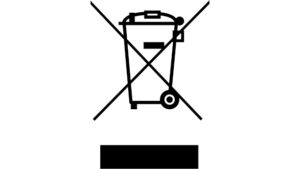
The WEEE symbol shown above is required for speakers and other electronic products sold in the EU. Its purpose is to indicate separate waste collection.
Also note that companies selling speakers and other audio products may also need to contribute to waste collection schemes.
REACH Regulation
The REACH regulation restricts chemicals in essentially all products sold in the European Union. This also includes speakers and other audio products.
Products containing substances above the set limits in Annex XVII are prohibited.
Examples
- Lead
- DEHP
- Cadmium
- Nickel
Compliance risks
Materials used to make speakers can contain restricted substances above the set limits. The table below provides examples of substance risks for specific types of speakers.
| Speaker material | Main risks |
| Coating | DEHP and other phthalates |
| Paints | Lead |
| Plastic speakers | DEHP and other phthalates |
| Metal speakers | Cadmium and other heavy metals (in particular for zinc alloys) |
General Product Safety Regulation (GPSR)
The General Product Safety Regulation (GPSR) mandates that all consumer products sold in the EU are safe. When it comes to speakers, product safety is already addressed by the various CE marking regulations and directives.
FAQ
Is licensing required for Bluetooth speakers?
Yes, you need a license if you are a brand intend to introduce Bluetooth speakers. Many assume that they can use the license of the OEM factory, but that is normally not the case.
Do speakers require CE marking in the EU?
Yes, CE marking is required for speakers and other sound systems sold in the European Union. CE marking indicates that the speaker is compliant with all applicable EU regulations and directives mandating the marking.
As explained in this guide, the specific requirements depend on the functionality of the speaker.
Is testing required?
Yes, testing is generally required to verify that speakers meet requirements concerning substances, electrical safety, EMC and other aspects. The specific testing requirements depend on the functionality of the speaker.