





 Find US, EU, UK, CA, & AU requirements











Certain products sold in the European Union can only be sold if they are certified, or come with a manufacturer issued deflection. This guide provides an overview of key product certificates and declarations required in the European Union.
Content Overview

FREE CONSULTATION CALL (30 MIN)
 Ask questions about compliance requirements
- Countries/markets:
.png)
.png)
.png)


- Learn how we can help your business
You will speak with:Ivan Malloci
| Examples | Description |
 |
Type-Examination Certificate: Issued by a notified body as part of the conformity assessment process for PPE, medical devices, construction products, machinery, and other products |
 |
Voluntary Certificates: Issued by third parties after a product, label and/or document review. |
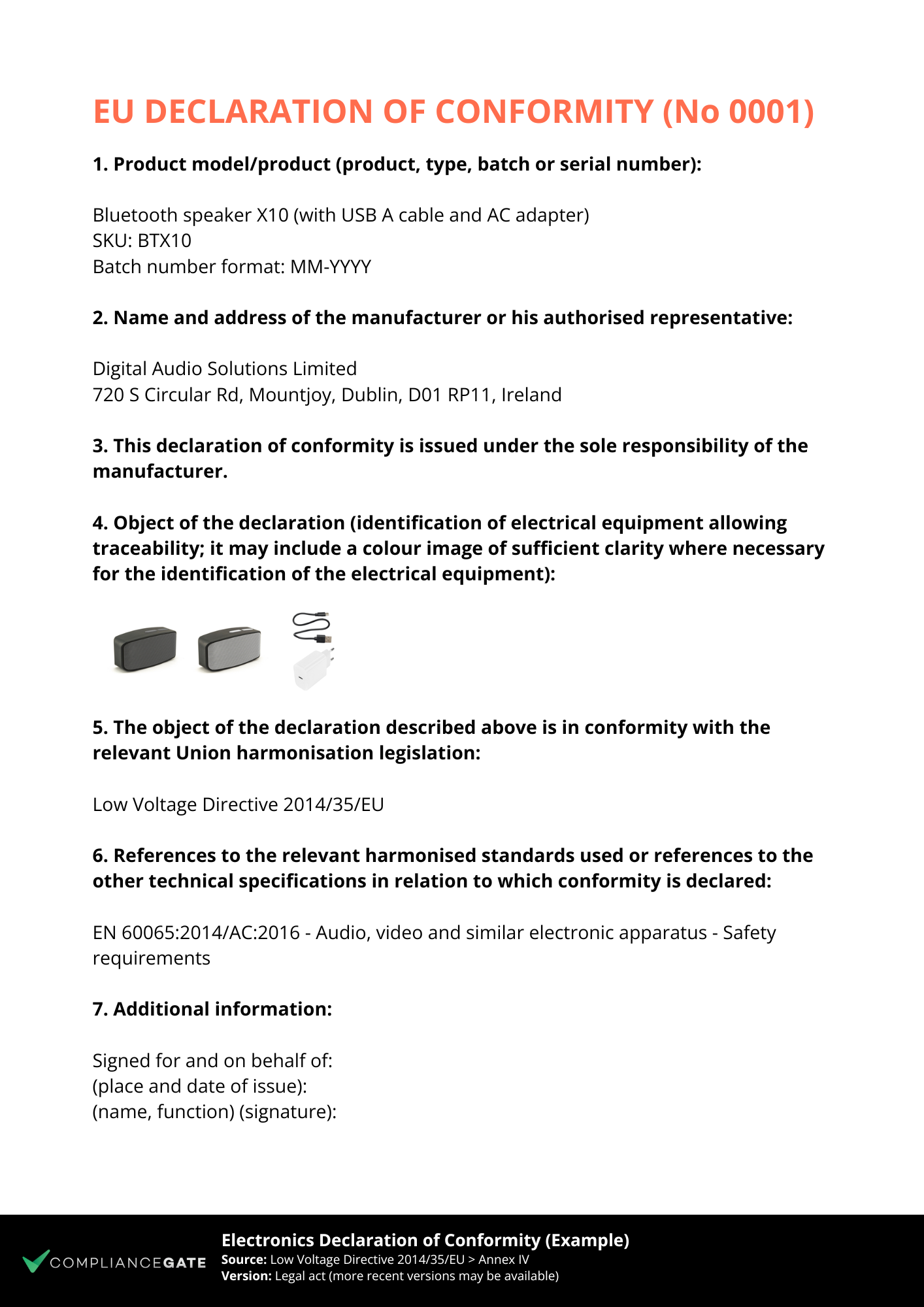 |
Declaration of Conformity (DoC): This document is issued by the manufacturer and is required for CE marked products. |
|
FCM Declaration of Compliance: This document is issued by the manufacturer and is required for certain food contact materials. |
Type-Examination Certificate
Some CE marking regulations and directives require certain products to be certified by a notified body before being sold in the EU. As such, this certificate is issued by a notified body, not the manufacturer itself.
Some examples are listed below.
PPE Regulation
- PPE Category II
- PPE Category III
Medical Devices Regulation
- Medical device class I (only if they are supplied in sterile condition, have a measuring function or are reusable surgical instruments)
- Medical device class IIa
- Medical device class IIb
- Medical device class III
Note: the certificate may have a different name according to the applicable conformity assessment procedure (e.g. quality management system certificate, EU technical documentation assessment certificate).
Toy Safety Directive
Required for toys (or safety aspects) not compliant with harmonised standards.
Required information
The specific information depends on the regulation and directive that applies. The following must be included in an EU-type examination for PPE:
- Notified body name and ID
- Manufacturer name and address
- PPE identification
- PPE compliance statement
- Harmonised standards list
- Technical specifications references
- PPE performance level or protection class
- for PPE produced as a single unit to fit an individual user, the range of permissible variations of relevant parameters based on the approved basic model
- Date of issue,
- Date of expiry
- Date(s) of renewal (if applicable)
- Conditions
- PPE category III statement
Requirements
A Type-certificate is only issued if the notified body deems the product to be compliant with the applicable regulations and directives. Testing is always required in practice before a certificate is issued.
Further, other documentation can also be required by the notified body.
Learn more: EU-type Examination Certificates Guide
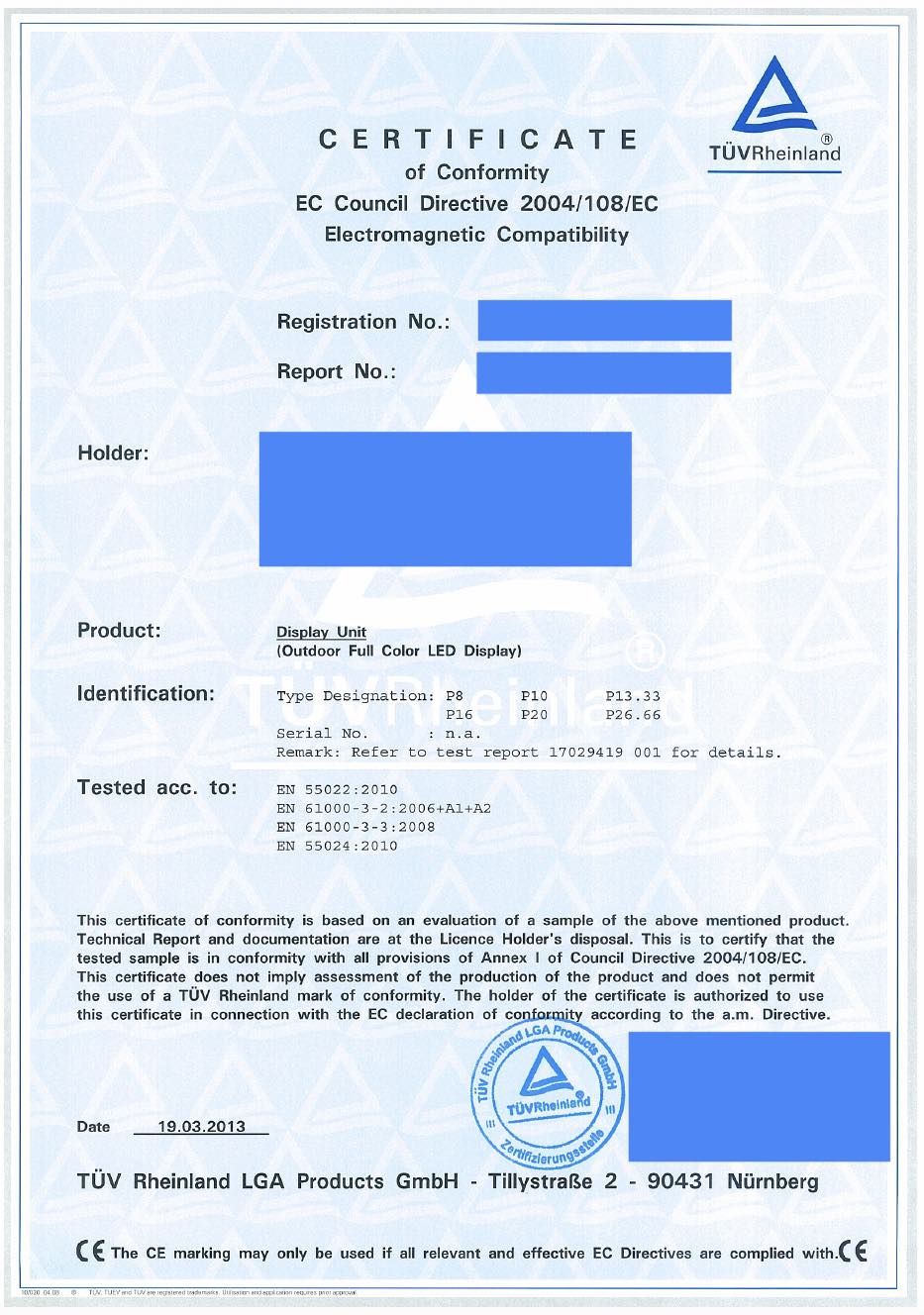
Voluntary Certificates
There are various types of voluntary certificates issued for both legitimate and less legitimate reasons. Such certificates are not required by EU regulations or directives, but serve as third-party issued statements based on a review.
For example, companies like TUV Rheinland can issue certificates declaring that a product is:
- Compliant with certain regulations and directives
- Correctly labelled
- Correctly documented
That said, many companies issue voluntary certificates without doing a proper review (or a review of anything at all). Such certificates are false and can result in companies selling unsafe and non-compliant products.
Examples
- Certificate of Compliance
- Certificate of Conformity
- Attestation of Conformity
- Verification of Conformity
Learn more: CE Certificate of Conformity
Declaration of Conformity (DoC)
Manufacturers must create a Declaration of Conformity (DoC) for products covered by one or more CE marking directives or regulations. Here are examples of product categories for which a DoC is required:
- Electronics
- Toys
- Personal Protective Equipment (PPE)
- Medical devices
- Gas appliances
- Machinery
- Batteries
Required information
The exact format depends on the regulations and directives that apply. That said, the following is often included:
- Product model name
- Manufacturer information
- Product traceability information
- Compliance statement
- Applicable EU regulations and directives
- Applicable product standards
- Notified body information
- Name and signature
Requirements
A DoC can only be issued if a product is compliant with applicable regulations, directives and harmonised standards. Generally, a DoC must also be supported by a test report.
Learn more: Declaration of Conformity (DoC) Requirements in the EU
FCM Declaration of Compliance
Manufacturers of certain types of food contact materials must issue a Declaration of Compliance. Here are some examples of such products:
- Kitchen appliances
- Lunch boxes
- Food packaging
Required information
The exact requirements depend on the applicable regulation. That said, the following is required for plastic food contact materials covered by Regulation 10/2011:
- Company information
- Product name
- List of materials/components
- Statement declaring that the product is compliant with certain regulations
- Information about the substances
- Types of food the material is made for contact with
- Time and temperature
- Information about the test methods
Requirements
An FCM DoC is generally issued based on test data. Without testing, you do not have the information required to create an FCM DoC.
That said, the document is issued by the manufacturer and not obtained from a third party.
Learn more: EU Declaration of Compliance (DoC) for Food Contact Materials Guide
FAQ
Do all products need certification in the EU?
No, far from all products require certificates in the EU. That said, lab testing is often necessary to verify that a particular product complies with safety standards and chemical restrictions.
That said, a test report is not the same thing as a certificate (or declaration).
Which products must be certified in the EU?
Certain EU regulations and directives require certification as part of the conformity assessment process. Such products include PPE, medical devices, machinery, and construction products.
Note that many other products require manufacturer-issued DoCs or FCM DoCs.
How much does it cost to get a product certified in the EU?
There is no fixed product certification cost (i.e., type examination) or even a defined range. The cost depends entirely on the product type and the complexity of the process.
That said, here are some examples:
- PPE: From 2000 EUR per product
- Machinery: From 5000 EUR per product
Note that issuing a DoC or FCM DoC does not cost anything. However, these documents can only be issued based on test reports, which can cost anything from a few hundred to thousands of euros.
How can I get a product certified in the EU?
You can only obtain a Type-Certificate from a notified body. That said, the following documents are issued by the manufacturer:
- Declaration of Conformity
- Declaration of Compliance
Note that the DoC and FCM DoC must be based on test reports.
How do I know if an EU certificate is valid?
You can contact the issuing company, such as a notified body, to request verification.
When doing so, ensure that you also check the company name and product information is correct.
Do I need product certification to sell on Amazon in the EU?
Yes, when certification is required for a product in the EU. Amazon can request product certificates, declarations and other compliance documents as part of their vetting process.
This is also the case when selling on Amazon in Germany, France, Italy or elsewhere in the European Union.




Where do I find European Authorization Certificate needed when money brought into London
Hello!
Does the test report of children’s products have an expiration date? For example, if we successfully tested a cot bed in 2019 and received a report on it, will this test report still be valid in 2023?
Thank you.
Hi Ekaterina,
I suggest you read this article: https://www.compliancegate.com/lab-test-report-validity/
hello how are you I am import machines from India to Portugal what documents certification I need from Indian manufacturing company
Hi Sanjay,
In that case, you need to look into the Machinery Directive. It also lists the documents you need.
This guide serves as an introduction:
https://www.compliancegate.com/machinery-directive/