





 Find US, EU, UK, CA, & AU requirements












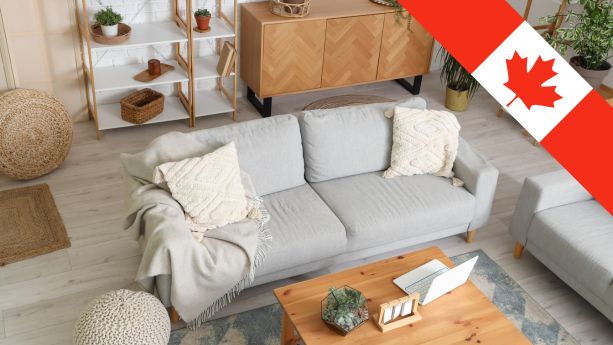
Furniture imported or manufactured for sale in Canada must comply with various safety, flammability, substance, and labelling requirements. In this guide, we take a closer look at compliance requirements for various types of furniture, including children’s furniture, textile furniture, mattresses, and other related products.
Content Overview

FREE CONSULTATION CALL (30 MIN)
 Ask questions about compliance requirements
- Countries/markets:
.png)
.png)
.png)


- Learn how we can help your business
You will speak with:Ivan Malloci
Canada Consumer Product Safety Act (CCPSA)
The Canada Consumer Product Safety Act (CCPSA) prohibits the sale of consumer products that are unsafe or subject to recalls. It also sets requirements for regulations made under the CCPSA. Some of these regulations apply to furniture and related products.
CCPSA Furniture Regulations
- Cribs, Cradles and Bassinets Regulations (SOR/2016-152)
- Expansion Gates and Expandable Enclosures Regulations (SOR/2016-179)
- Glass Doors and Enclosures Regulations (SOR/2016-174)
- Mattresses Regulations (SOR/2016-183)
CCPSA Substance Regulations
Further, some CCPSA regulations apply to substances that can be found in certain types of furniture (including paints and coatings):
- Surface Coating Materials Regulations (SOR/2016-193)
- Phthalates Regulations (SOR/2016-188)
- Consumer Products Containing Lead Regulations (SOR/2018-83)
Other types of furniture
Note that furniture that is not covered by such regulations must still be fundamentally safe. You can consider the use of Canadian standards that are otherwise voluntary to achieve this, or even apply international standards.
For example, Health Canada recommends compliance with ASTM F2057 (a US standard) to ensure furniture stability and reduce the risk of dangerous tip-overs.
We could not find ASTM F2057 referenced in any regulation. But, as mentioned, the CCPSA requires that all consumer products be safe, and it is often a good idea to voluntarily apply relevant standards to achieve this.
Children’s Furniture

The following CCPSA regulations set requirements for children’s furniture:
Cribs, Cradles and Bassinets Regulations (SOR/2016-152)
These regulations set requirements for the following products:
- Cribs
- Cradles
- Bassients
- Accessories
- Stands
General requirements
Covered products must meet certain safety, substance and labelling requirements. Here are some of the areas covered by the regulations:
1. Mechanical safety and construction
2. Substance restrictions (lead, antimony, arsenic, cadmium, selenium, barium, and mercury)
3. Warnings and other labelling (English and French)
4. Flammability
5. Testing
Note that the specific requirements depend on the product type.
Warning labels
Warning labelling examples apply to specific product types and features. The following warning is required for cradles (designed to contain a mattress) sold without mattresses:

You must use the specific English and French language warnings provided in the Cribs, Cradles and Bassinets Regulations (SOR/2016-152). Note that many products require more than one warning.
Expansion Gates and Expandable Enclosures Regulations (SOR/2016-179)
These regulations set requirements for the following products:
| Product | Defintion |
| Expansion gate | 1. A self-supporting barrier, for indoor or outdoor use, that is intended to be used for children from the age of 6 months to 24 months, and
2. To surround completely an area within which such children may be confined |
| Expandable enclosure | 1. A barrier that is intended to be used for children from the age of 6 months to 24 months, and
2. to be erected in a doorway or similar opening in order to prevent the passage of such children 3. But that can be removed by older persons who are able to operate the locking mechanism. |
Here are some of the areas covered by the Expansion Gates and Expandable Enclosures Regulations (SOR/2016-179):
1. Substance restrictions
- Lead: 90 mg/kg
- Antimony, arsenic, cadmium, selenium or barium compounds: 1000 mg/kg (migration)
- Mercury: 10 mg/kg
2. Textile flammability testing according to CAN/CGSB-4.2 No. 27.5
3. Mechanical safety and material parameters
- Must be free from cracks and other defects
- Sharp edges, corners or points
- Bolts covers (acorn nut or an equivalent protection)
- Small parts must not be detachable
- ASTM F1004-86
4. Product information label
- Manufacturer, importer or distributor name and principal place of business
- Model name or model number
- Year and month of its manufacture (or a code/batch number)
5. Warning labelling

6. Instructions for assembly, installation, mounting hardware limitations, operations, maintenance, and cleaning.
Note that testing requirements are outlined in Schedule 1.
Substance restrictions
Some are specific to children’s products / covered below
Mattresses
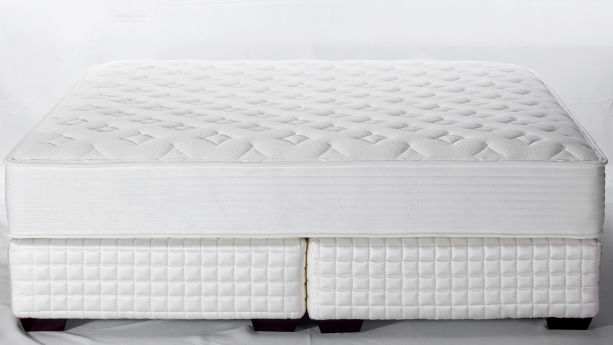
Mattresses sold in Canada must comply with the flammability requirements under the Mattresses Regulations (SOR/2016-183). The regulations cover mattresses, excluding the following:
- Mattress pads
- Infant multi-use pads
- Upholstered furniture parts that are not a separate mattress
- Crib, cradle or bassinet mattresses
- Custom-made prescription mattress
Mattresses must meet the specified flammability resistance requirements when tested according to CAN/CGSB-4.2 No. 27.7-2013 – Textile test methods – Combustion resistance of mattresses – Cigarette test.
Glass Doors and Enclosures
Glass doors and enclosures must comply with the requirements set by the Glass Doors and Enclosures Regulations (SOR/2016-174). The following products made of or containing glass are covered:
- Bathtub doors
- Shower doors
- Enclosures
- Storm doors
- Exterior door
The Glass Doors and Enclosures Regulations (SOR/2016-174) set physical and impact resistance requirements for the following glass types:
- Laminated glass
- Tempered glass
- Wired glass
The specific requirements that must be met can be found in section 2 of the regulations. You must also maintain documentation, such as test reports, that demonstrate compliance with these requirements.
Substance Regulations
Paints and coatings used to manufacture furniture can contain harmful substances, some of which are subject to restrictions in Canada. The following regulations can be relevant to various types of furniture and related products:
| Regulations | Example |
| Surface Coating Materials Regulations (SOR/2016-193) | Furniture surface coatings cannot contain more than 90 mg/kg total lead |
| Phthalates Regulations (SOR/2016-188) | Child care articles must not contain the following above the set limits:
1. DEHP, DBP and BBP: Maximum 1 000 mg/kg 2. DINP, DIDP and DNOP: Maximum 1 000 mg/kg* *For child care articles that can be placed in the mouth of a child younger than 4 years. |
| Consumer Products Containing Lead Regulations (SOR/2018-83) | Accessible parts of consumer products cannot contain more than 90 mg/kg total lead (with some exemptions) |
Furniture Textiles Flammability

The Textile Flammability Regulations (SOR/2016-194) set flammability requirements for textile products:
- Textile bedding products
- Products that are composed of textile fibres, other than bedding
Scope and exemptions
The regulations exempt mattresses, cribs, and other products covered by specific regulations.
That said, furniture fabrics and other textiles are not listed as exempt from the Textile Flammability Regulations.
Requirements
| Category | Requirements |
| Textile products without raised fibre surface | Flame spread time > 3.5 seconds |
| Textile products with raised fibre surface | Flame spread time > 4 seconds |
| Beddings (with and without a raised fibre surface) | Flame spread time > 7 seconds |
Textiles Labelling
The following regulations set labelling requirements for textile products:
- Textile Labelling Act (R.S.C., 1985, c. T-10)
- Textile Labelling and Advertising Regulations (C.R.C., c. 1551)
Scope
The following furniture-related items are listed in Schedule I:
1. Outer coverings of upholstered furniture, mattresses, cushions, and mattress protectors
2. Slip covers, throws and other covers for furniture
3. furniture scarves
Labelling requirements
Here are some key areas covered by the regulations:
1. Textile label information
- Name and postal address of the dealer (or use an identification number)
- Textile fibre content
- Name of the country of origin
- English and French language
2. Textile label format and placement
3. Textile fibre names
More detailed information can be found in Part I and Part III of the Textile Flammability Regulations (SOR/2016-194).






Any documentation available from U.S. Consumer Product Safety Commission and Canada Consumer Safety & Health concerning Product Assembly & Installation Sheet requirements for Wall bed furniture.
Major recall of wallbeds in Canada & USA April 2022 . Please comment,