





 Find US, EU, UK, CA, & AU requirements













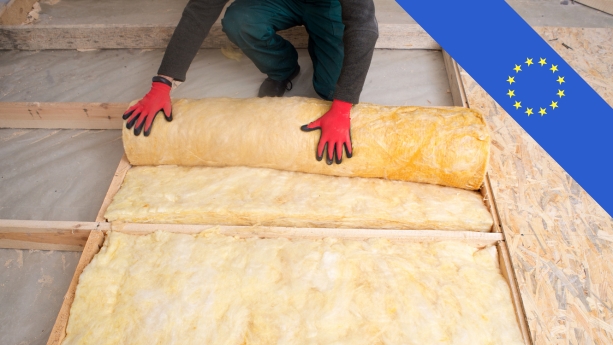
If you are a manufacturer or an importer of insulation materials, it is important to understand that the Construction Products Regulation 2011 requires the fulfilment of specific labelling, documentation, and testing requirements when there are harmonised standards that apply to your products.
This guide is specific to requirements affecting manufacturers of insulation materials that are covered by harmonised standards under the Construction Products Regulation 2011, such as:
- Insulating glass units
- Thermal insulation products for buildings (e.g. extruded polystyrene foam)
- Acoustic insulation composite panels
- Insitu formed loose-fill mineral wool (MW) products
- Self-supporting double skin metal faced insulating panels
Note that this guide does not cover other regulations that may be relevant for insulation materials.
Content Overview

FREE CONSULTATION CALL (30 MIN)
 Ask questions about compliance requirements
- Countries/markets:
.png)
.png)
.png)


- Learn how we can help your business
You will speak with:Ivan Malloci
CPR 2011 standards for insulation materials
Harmonised standards contain specifications for insulation materials to ensure that the products can comply with the declared performance.
When a manufacturer applies a harmonised standard that is specific to their insulation materials, they must create technical documentation. Based on the technical documentation, they must then draw up a declaration of performance. In turn, when the declaration is drawn up, the CE mark must be affixed along with some specific information.
Furthermore, the applicable harmonised standard specifies what system of assessment and verification for the insulation materials must be used. All the possible systems are listed in Annex V of the regulation. Each system specifies whether a notified body is involved and what their tasks are.
As such, the first step is to determine which standards apply to your insulation material.
Here we list the harmonised standards under the Construction Products Regulation 2011 that mention the terms “insulating” and “insulation” in their titles:
EN 1279-5 – Glass in building – Insulating glass units – Part 5: Product standard
EN 13162 – Thermal insulation products for buildings – Factory made mineral wool (MW) products – Specification
EN 13163 – Thermal insulation products for buildings – Factory made expanded polystyrene (EPS) products – Specification
EN 13164 – Thermal insulation products for buildings – Factory made extruded polystyrene foam (XPS) products – Specification
EN 13165 – Thermal insulation products for buildings – Factory made rigid polyurethane foam (PU) products – Specification
EN 13166 – Thermal insulation products for buildings – Factory made phenolic foam (PF) products – Specification
EN 13167 – Thermal insulation products for buildings – Factory made cellular glass (CG) products – Specification
EN 13168 – Thermal insulation products for buildings – Factory made wood wool (WW) products – Specification
EN 13169 – Thermal insulation products for buildings – Factory made expanded perlite board (EPB) products – Specification
EN 13170 – Thermal insulation products for buildings – Factory made products of expanded cork (ICB) – Specification
EN 13171 – Thermal insulation products for buildings – Factory made wood fibre (WF) products – Specification
EN 13950 – Gypsum board thermal/acoustic insulation composite panels – Definitions, requirements and test methods
EN 14063-1 – Thermal insulation products for buildings – Insitu formed expanded clay lightweight aggregate products – Part 1: Specification for the loose-fill products before installation
EN 14064-1 – Thermal insulation products for buildings – Insitu formed loose-fill mineral wool (MW) products – Part 1: Specification for the loose-fill products before installation
EN 14303 – Thermal insulation products for building equipment and industrial installations – Factory made mineral wool (MW) products – Specification
EN 14304 – Thermal insulation products for building equipment and industrial installations – Factory made flexible elastomeric foam (FEF) products – Specification
EN 14305 – Thermal insulation products for building equipment and industrial installations – Factory made cellular glass (CG) products – Specification
EN 14306 – Thermal insulation products for building equipment and industrial installations – Factory made calcium silicate (CS) products – Specification
EN 14307 – Thermal insulation products for building equipment and industrial installations – Factory made extruded polystyrene foam (XPS) products – Specification
EN 14308 – Thermal insulation products for building equipment and industrial installations – Factory made rigid polyurethane foam (PUR) and polyisocyanurate foam (PIR) products – Specification
EN 14309 – Thermal insulation products for building equipment and industrial installations – Factory made products of expanded polystyrene (EPS) – Specification
EN 14313 – Thermal insulation products for building equipment and industrial installations – Factory made polyethylene foam (PEF) products – Specification
EN 14314 – Thermal insulation products for building equipment and industrial installations – Factory made phenolic foam (PF) products – Specification
EN 14315-1 – Thermal insulating products for buildings – Insitu formed sprayed rigid polyurethane (PUR) and polyisocyanurate (PIR) foam products – Part 1: Specification for the rigid foam spray system before installation
EN 14316-1 – Thermal insulation products for buildings – Insitu thermal insulation formed from expanded perlite (EP) products – Part 1: Specification for bonded and loose-fill products before installation
EN 14317-1 – Thermal insulation products for buildings – Insitu thermal insulation formed from exfoliated vermiculite (EV) products – Part 1: Specification for bonded and loose-fill products before installation
EN 14318-1 – Thermal insulating products for buildings – Insitu formed dispensed rigid polyurethane (PUR) and polyisocyanurate (PIR) foam products – Part 1: Specification for the rigid foam dispensed system before installation
EN 14319-1 – Thermal insulating products for building equipment and industrial installations – In-situ formed dispensed rigid polyurethane (PUR) and polyisocyanurate foam (PIR) products – Part 1: Specification for the rigid foam dispensed system before installation
EN 14320-1 – Thermal insulating products for building equipment and industrial installations – In-situ formed sprayed rigid polyurethane (PUR) and polyisocyanurate foam (PIR) products – Part 1: Specification for the rigid foam spray system before installation
EN 14496 – Gypsum based adhesives for thermal/acoustic insulation composite panels and plasterboards – Definitions, requirements and test methods
EN 14509 – Self-supporting double skin metal faced insulating panels – Factory made products – Specifications
EN 14933 – Thermal insulation and light weight fill products for civil engineering applications – Factory made products of expanded polystyrene (EPS) – Specification
EN 14934 – Thermal insulation and light weight fill products for civil engineering applications – Factory made products of extruded polystyrene foam (XPS) – Specification
EN 15501 – Thermal insulation products for building equipment and industrial installations – Factory made expanded perlite (EP) and exfoliated vermiculite (EV) products – Specification
EN 15599-1 – Thermal insulation products for building equipment and industrial installations – In-situ thermal insulation formed from expanded perlite (EP) products – Part 1: Specification for bonded and loose-fill products before installation
EN 15600-1 – Thermal insulation products for building equipment and industrial installations – In-situ thermal insulation formed from exfoliated vermiculite (EV) products – Part 1: Specification for bonded and loose-fill products before installation
EN 15732 – Light weight fill and thermal insulation products for civil engineering applications (CEA) – Expanded clay lightweight aggregate products (LWA)
EN 16069 – Thermal insulation products for buildings – Factory made products of polyethylene foam (PEF) – Specification
The harmonised standards above include descriptions of product characteristics and testing requirements. However, the above standards are not limited to testing requirements, as they may also contain labelling requirements or other requirements.
CE marking and other labelling

When a harmonised standard is applied to the insulation material, the declaration of performance must be issued. When issued, the manufacturer must affix the CE marking to the insulation material, a label attached to it, its packaging, or to accompanying documents.
The CE marking must also be followed by detailed information specified in Article 9 of the Construction Products Regulation 2011.
Additionally, the insulating material must come with traceability information:
- Type, batch or serial number
- Manufacturer’s name, registered trade name or registered trademark
- Manufacturer’s contact address
Declaration of performance (DoP)
As mentioned above, a DoP must be created when a harmonised standard specific to the insulation material is applied. The declaration is created on the basis of the technical documentation, and the manufacturer must keep it for 10 years after the insulation material is supplied.
The declaration must be created using the model found in Annex III of the regulation. The annex also has a section that contains instructions for creating the declaration of performance.
Instructions
Manufacturers must make sure instructions and safety information accompany the insulation material. They must also ensure that the instructions are translated so that they can be easily understood by users.
The languages that must be featured depend on the requirements of the EU member states to which the insulation material is supplied.
Technical documentation
When a harmonised standard that is specific to the manufacturer’s insulation material is applied, the manufacturer must draw up technical documentation. The manufacturer must keep it for 10 years after the insulation material is supplied.
The documentation must contain information on the relevant elements related to the required system of assessment and verification according to Article 11 of the Construction Products Regulation 2011.
The declaration of performance is created on the basis of the technical documentation.
Insulation materials testing
To demonstrate that the insulation materials meet the requirements of the applicable harmonised standards, the manufacturer must have the product tested.
Testing is typically done by a third-party lab testing company. However, depending on the system of assessment and verification prescribed by the harmonised standard, a notified body may have to be involved in the testing of the insulation material.
Examples of the type of tests conducted include those that relate to:
- Thermal resistance
- Thermal conductivity
- Tensile stress
After the lab tests the insulation material, the manufacturer can expect to receive test reports from them. The test reports can be used to show that you meet the requirements of the applied harmonised standard.
FAQ
Is CE marking required for insulation materials in the EU?
The Construction Products Regulation 2011 requires you to create a declaration of performance if harmonised standards exist for your product.
After you have drawn up the declaration of performance for the insulation material, you must also affix the CE marking.
How do we comply with insulation standards?
Harmonised standards for insulation materials specify safety and performance requirements. Typically, a lab testing company needs to be involved to assess whether the insulation material meets the requirements of the standards.
Additionally, the standard determines the system of assessment and verification to be used. The systems are listed in Annex V of the regulation, and they mention tasks for the manufacturer (e.g. to carry out factory production control) and for the notified body (if any).
Do we need to involve a notified body?
Whether a notified body is needed or not depends on which system of assessment and verification is required for the insulation material.
All possible systems are listed in Annex V of the Construction Products Regulation 2011. Under each system, they mention whether a notified body is needed and what their tasks are.
How do I know which system to follow?
When a harmonised standard is applied, the standard should specify which system of assessment and verification for the insulation material should be followed.
The full list of systems is found in Annex V of the Construction Products Regulation 2011.