






 Product assessments in 2 minutes



















EU and UK product regulations remain similar, yet with crucial differences that must be bridged before you can sell the same products in both markets. In practice, this means that you may need to adjust labels, documentation, and even arrange additional product testing.
In this guide, I’ve prepared several mini case studies highlighting key differences between EU and UK regulations, and how these gaps can be overcome in practice.
- EU and UK product regulations overlap in many ways
- The EU and UK generally recognised the same product standards
- Products must often be relabelled before being sold in the other market
Note: This guide does not take Northern Ireland into account. The UK refers to Great Britain in this context.
Content Overview

Get a FREE Product Assessment in 3 Steps
 Step 1: Select market
.png)
.png)
.png)


- Step 2: Select product/material modules
- Step 3: Set specifications
👍 Included: Track new, updated and future regulations using the LexDatabase
Case A: Consumer Products (GPSR)

Consumer products sold in the EU must comply with the General Product Safety Regulation (GPSR). In the UK, consumer products must comply with the General Product Safety Regulations 2005.
The EU GPSR replaced the GPSD, while the UK GPSR 2005 is based on the GPSD. As such, the EU and UK versions are similar in many respects. That said, there are key differences that must be addressed when selling products in both the EU and the UK.
The following table demonstrates how the EU GPSR and UK GPSR 2005 differ in terms of labelling requirements.
Labelling
| Item | EU GPSR | UK GPSR 2005 |
| Product info | Type, batch or serial number | Product reference or where applicable the batch |
| Company | Manufacturers name, registered trade name or registered trade mark | Name of the producer |
| Postal address | Manufacturer postal address | Address of the producer |
| Electronic address | Manufacturer electronic address | / |
| Authorised representative | Required if no economic operator in the EU | Required if no manufacturer/person established in the UK |
EU company information
1. The manufacturer (regardless of location) must be specified. This also includes manufacturers established outside the EU.
2. The EU importer (if any) must be specified.
3. The EU authorised representative must be specified if there is no manufacturer, importer, or other economic operator established in the EU.
UK company information
The following companies can act as the producer of the product (which must be present):
- UK-based manufacturer
- UK-based representative (if non-UK manufacturer)
- UK-based person placing the product on the UK market (if non-UK manufacturer)
- Other professionals in the supply chain
Conclusion
Labelling requirements overlap between the EU GPSR and UK GPSR 2005. That said, the EU goes further in some aspects and requires the inclusion of the electronic address of the manufacturer.
Further, the EU requires that an economic operator based in the EU is specified on the label, while the UK requires that a UK-based producer is specified.
As such, consumer products sold in the EU must be relabelled before being sold in the United Kingdom.
Case B: CE Marked Products
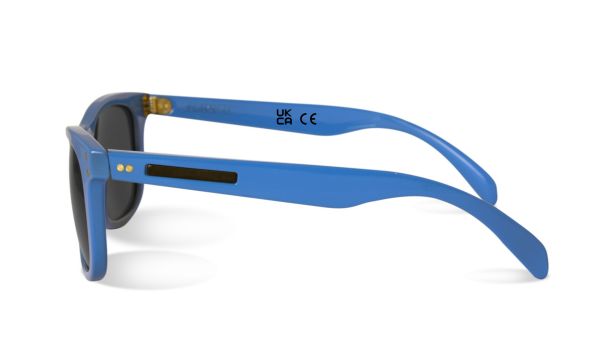
UKCA marking was initially expected to fully replace the CE mark in the United Kingdom. However, the UK government decided to recognise CE marking for certain products sold in the country.
Under the same regulations, businesses can also meet EU requirements and processes to CE mark their product for the Great Britain market under continued recognition.
This gives businesses the option to sell products both in the EU and the UK, if the latter accepts CE marking for their particular product type.
That being said, label files may still need to be adjusted to ensure that a UK entity and address is specified. Further, warnings and instructions must also be provided in English when selling in the UK.
Note that additional differences may also exist.
Case C: EU Standards and British Standards

The EU and the UK are both members of CEN and CENELEC, the two organisations developing product standards. Product standards, in turn, determine the specific technical requirements that certain products must meet before being sold.
Key facts
✅ Both the EU and the UK are involved in the development of product standards
✅ Many standards that are recognised in the UK were developed when the UK was part of the EU
✅ The UK and the EU continue to adopt new and updated versions of product standards
That said, it is not a given that the EU and the UK will walk in lockstep when it comes to the adoption of all new standards, including harmonising (or designating in the UK) new versions of existing standards.
This can create a gap where companies must consider different standards or two versions of the same standard.
Comparison
The table below compares the EN 71 versions referenced as harmonised (EU) or designed (UK) as available at the time of writing:
| Standard | EU Toy Safety Directive | UK Toy Safety Regulations 2011 |
|
EN 71-1 – Mechanical safety |
EN 71-1:2014+A1:2018 ✅ *Restrictions apply |
EN 71-1:2014+A1:2018 ✅ |
|
EN 71-2 – Flammability |
EN 71-2:2020 ✅ |
EN 71-2:2020 ✅ |
|
EN 71-3 – Chemicals |
EN 71-3:2019+A1:2021 ✅ |
EN 71-3:2019+A1:2021 ✅ |
As you can see above, the same versions have (in this specific case) been adopted in both the EU and the UK. This should not be taken for granted, however. Further, the withdrawal window for standards can also differ between the two.
Conclusion
Compare the lists of harmonised standards in the EU to the corresponding list of designated standards in the UK to determine whether there are gaps in terms of standards.
If that is the case, then you may need to adjust your product specification and arrange additional product testing.
Case D: Chemical Restrictions

The EU REACH regulation restricts chemicals in mixtures and products (articles). For example, products containing excessive amounts of lead or DEHP cannot be sold in the EU.
Until Brexit in 2021, the EU REACH regulation was applicable in the UK. Since then, however, the UK has its own version of the REACH regulation and makes its own decisions with respect to which chemicals to restrict and under what conditions.
As a result, there are different substance restrictions under the two versions of the REACH regulation.
Examples
The table below provides examples of substance restrictions in Annex XVII of the two regulations.
| Chemical | EU REACH | UK REACH |
|
Lead and its compounds |
Example: 1. Shall not be placed on the market or used in any individual part of jewellery articles if the concentration of lead (expressed as metal) in such a part is equal to or greater than 0,05 % by weight. |
Example: 1. Shall not be placed on the market or used in any individual part of jewellery articles if the concentration of lead (expressed as metal) in such a part is equal to or greater than 0.05 % by weight. |
|
Bis(2-ethylhexyl) phthalate (DEHP) |
Example: 1. Shall not be used as substances or in mixtures, individually or in any combination of the phthalates listed in column 1 of this entry, in a concentration equal to or greater than 0,1 % by weight of the plasticised material, in toys and childcare articles. |
Example: Shall not be used as substances or in mixtures, individually or in any combination of the phthalates listed in column 1 of this entry, in a concentration equal to or greater than 0.1 % by weight of the plasticised material, in toys and childcare articles. |
|
Formaldehyde and formaldehyde-releasing substances |
Example: 1. Shall not be placed on the market in articles, after 6 August 2026, if, under the test conditions specified in Appendix 14, the concentration of formaldehyde released from those articles exceeds: |
Not found |
|
1-ethylpyrrolidin-2-one (NEP) |
Example: 1. Shall not be placed on the market as a substance on its own, as a constituent of other substances, or in mixtures in a concentration equal to or greater than 0,3 % after 23 December 2026 unless manufacturers, importers and downstream users have included in the relevant chemical safety reports and safety data sheets, derived no-effect levels (DNELs) relating to exposure of workers of 4,0 mg/m3 for long-term exposure by inhalation and 2,4 mg/kg bw/day for long-term dermal exposure. |
Not found |
|
Per- and polyfluoroalkyl substances (PFAS) |
Example: 1. Shall not be placed on the market or used as of 23 October 2030 in firefighting foams in a concentration equal to or greater than 1 mg/L for the sum of all PFAS. |
Not found |
Note: In the above table, we only provide some examples of restrictions. You can find the full lists on the EUR-Lex and hse.gov.uk websites.
Conclusion
Additional substance testing may be required. I suggest that you ask your lab to assess if there are any gaps in terms of substance restrictions and allowed limits (which in turn depends on the product and its materials).