







 Find US, EU, UK, CA, & AU requirements













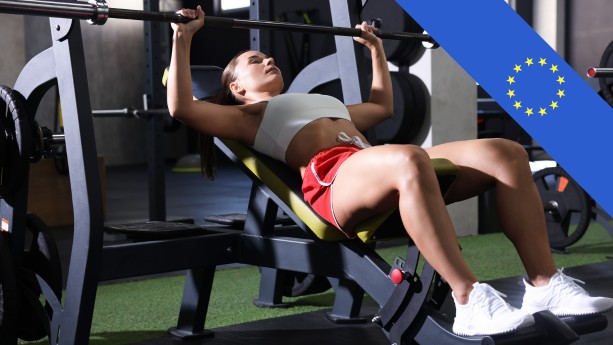
Fitness products sold or used in the European Union are subject to various regulations, directives and standards. In this guide, we take a closer look at the General Product Safety Regulation (GPSR), REACH and CE marking requirements relevant to gym machines, training equipment and other types of fitness products.
Product examples
- Gym machines
- Smith machines
- Rowing machines
- Dumbbells
- Free weights
- Foam rollers
- Electrical treadmills
- Home fitness products
- Outdoor exercise equipment
- TRX equipment
- Crossfit equipment
Note: This guide does not cover protective equipment (i.e., helmets or hockey gear) that can be used in sports or other activities. Such products may be defined as PPE which are covered in this guide.
Content Overview

FREE CONSULTATION CALL (30 MIN)
 Ask questions about compliance requirements
- Countries/markets:
.png)
.png)
.png)


- Learn how we can help your business
You will speak with:Ivan Malloci
General Product Safety Regulation (GPSR)
The General Product Safety Regulation (GPSR) mandates that all consumer products imported or manufactured for sale in the EU meet certain safety requirements. The GPSR also applies to self-powered and gym machines, training equipment and fitness products.
EN standards
The GPSR mandates compliance with applicable European standards, when such exist. Harmonised standards exist for the following fitness and training products:
Stationary training equipment
- Strength training benches
- Pedal crank training equipment
- Stationary exercise bicycles
- Upper body crank training equipment
- Treadmills
- Rowing machines
- Steppers, stairclimbers and climbers
- Elliptical trainers
- Exercise bicycles with a fixed wheel or without a freewheel
These standards provide technical parameters directly impacting the design and construction of training equipment. These parameters must be carefully implemented into your technical drawings to ensure that the product is safe.
You can find a list of GPSR standards for training equipment at the end of this guide.
Other fitness products
Bear in mind that harmonised standards do not exist for all fitness products and gym equipment. The standards harmonised under the GPSR primarily cover gym machines.
This does not mean that dumbbells, foam rollers and other types of fitness products are exempt from safety requirements. Instead, such products must meet other EN standards or industry standards.
Testing requirements
Compliance with applicable standards must generally be verified through product testing. Here are some examples of areas that may need to be part of the testing process:
- Stability testing
- Structural load tests
- Entrapment hazards
- Sharp edges and corners
- Adjustment mechanism
Traceability labelling
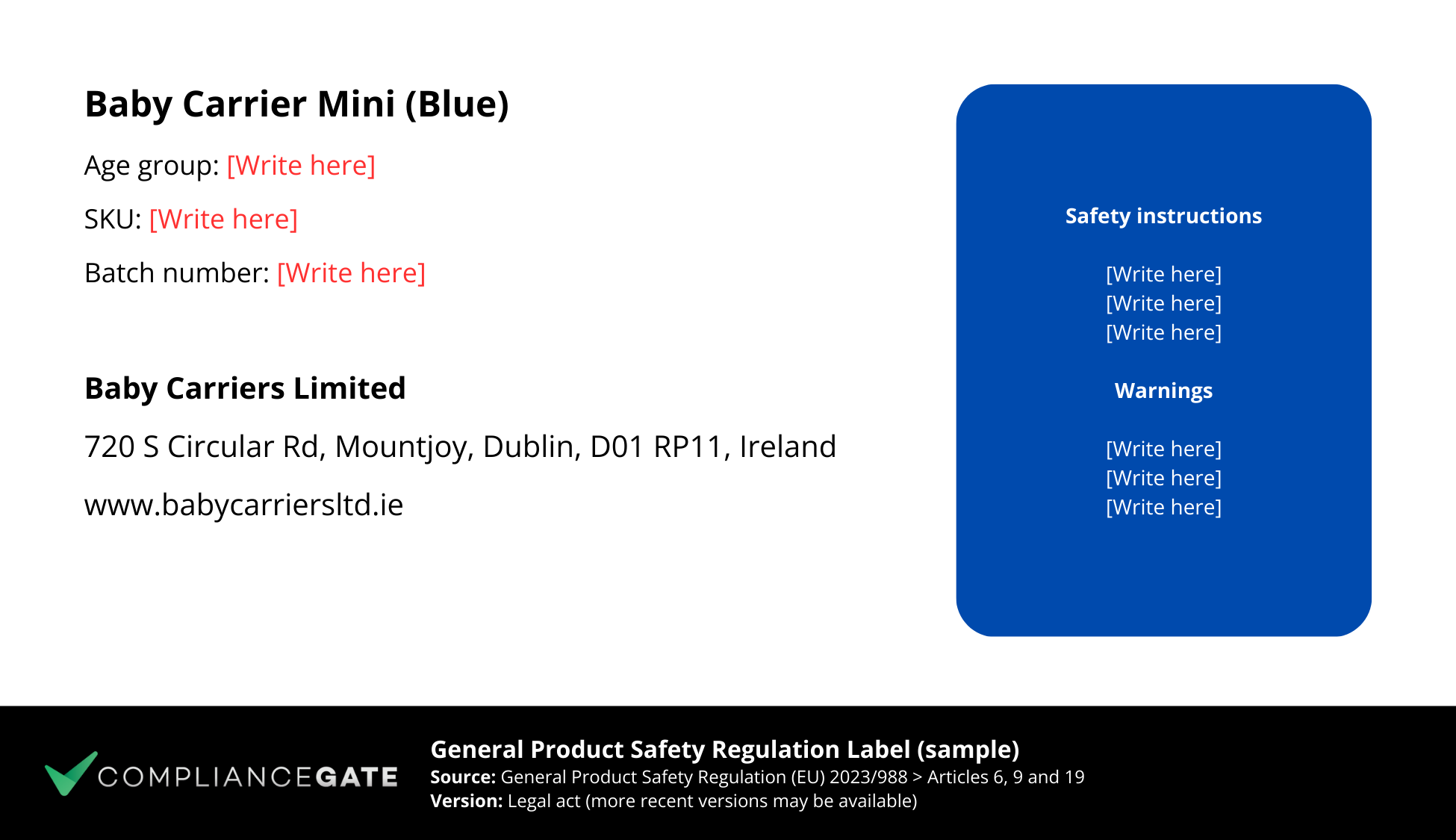
The GPSR mandates that the following information be present on the product labels:
- Product type
- Batch or serial number
- Manufacturer name
- Manufacturer address and electronic address
- Importer address and electronic address (if any)
Warnings and safety information
The GPSR states that manufacturers must provide “clear instructions and safety information”. This can include the following for fitness products, including gym machines and other equipment:
- Usage instructions
- Warnings and precautions
- Pictograms
- Weight parameters
You should also provide instructions covering installation, assembly, maintenance and other relevant aspects.
Technical documentation

Manufacturers must compile technical documentation, which generally includes the following information:
- General description of the product
- Essential characteristics relevant for assessing its safety
- Risk analysis
- Solutions adopted to eliminate or mitigate such risks
- Test reports
- EN standards
Note that this must be done for each product model.
REACH Regulation
Materials used to manufacture fitness products can contain chemicals and heavy metals restricted under the REACH regulation. In short, a product containing restricted substances above the set limits cannot be sold or used in the EU.
Here are some examples of substance risks specific to fitness products:
Risk 1: Plastic fitness products
Foam rollers or plastic handles on gym machines can contain excessive amounts of DEHP and other phthalates.
Risk 2: Heavy metals
Certain alloys used to manufacture fitness products can contain excessive amounts of lead, cadmium or other heavy metals.
Electrical Training Equipment
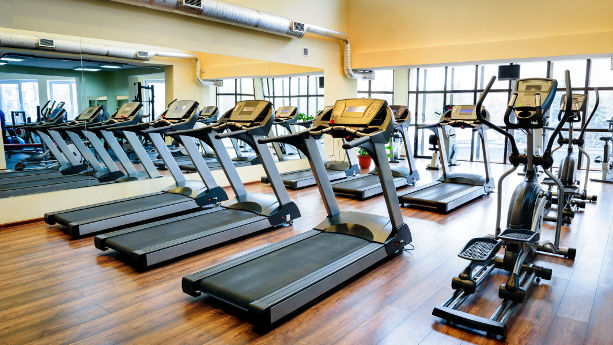
In addition to the GPSR and the REACH regulation, electrical training machines may need to comply with the following regulations and directives:
| Legislation | Relevancy |
| Machinery regulation | Relevant to electrical training machines, such as motorised treadmills and other related products |
| EMC Directive | Sets electromagnetic compatibility requirements for electronic products |
| Low Voltage Directive | Sets electrical safety requirements for electronic products within a certain voltage range. Also applies to external power supplies |
| RoHS Directive | Restricts heavy metals and chemicals in electronic products |
| Ecodesign Directive | Sets energy efficiency requirements for electrical motors and external power supplies (which may be incorporated in electrical training equipment) |
| Radio Equipment Directive | Applicable to electrical training equipment with Bluetooth or WiFi functionality |
| Batteries Regulation | Applicable to battery-powered fitness products |
Note that these regulations and directives mandate CE marking, which also involves the following:
- Harmonised standards
- Declaration of Conformity
- Technical documentation
- User instructions
- Traceability
- Warnings and safety information
You can learn more about CE marking requirements for manufacturers in this guide.
FAQ
Is CE marking required for fitness products?
CE marking is required for electrical training machinery and equipment. However, CE marking is generally not applicable to self-powered gym machines, dumbbells or personal fitness products.
That said, such products must still comply with other regulations, such as the GPSR.
Which regulations apply to self-powered fitness equipment?
The General Product Safety Regulation (GPSR) applies to consumer products, which generally include gym equipment and other fitness products.
Fitness Product Standards
The following standards are harmonised under the GPSR:
EN 957-1:2005 – Stationary training equipment – Part 1: General safety requirements and test methods
EN 957-2:2003 – Stationary training equipment – Part 2: Strength training equipment, additional specific safety requirements and test methods
EN 957-4:1996 – Stationary training equipment – Part 4: Strength training benches, additional specific safety requirements and test methods
EN 957-4:2006+A1:2010 – Stationary training equipment – Part 4: Strength training benches, additional specific safety requirements and test methods
EN 957-5:1996 – Stationary training equipment – Part 5: Pedal crank training equipment, additional specific safety requirements and test methods
EN 957-5:2009 – Stationary training equipment – Part 5: Stationary exercise bicycles and upper body crank training equipment, additional specific safety requirements and test methods
EN 957-6:2001 – Stationary training equipment – Part 6: Treadmills, additional specific safety requirements and test methods
EN 957-6:2010 – Stationary training equipment – Part 6: Treadmills, additional specific safety requirements and test methods
EN 957-6:2010+A1:2014 – Stationary training equipment – Part 6: Treadmills, additional specific safety requirements and test methods
EN 957-7:1998 – Stationary training equipment – Part 7: Rowing machines, additional specific safety requirements and test methods
EN 957-8:1998 – Stationary training equipment – Part 8: Steppers, stairclimbers and climbers – Additional specific safety requirements and test methods
EN 957-9:2003 – Stationary training equipment – Part 9: Elliptical trainers, additional specific safety requirements and test methods
EN 957-10:2005 – Stationary training equipment – Part 10: Exercise bicycles with a fixed wheel or without freewheel, additional specific safety requirements and test methods






Hi , What certifications do i need for yoga mats and dumbells?
Hi,
great article Vincent!
the same question as Victoria had – do spinning bikes need CE? If it is not electrical.
So far it seems that basically for fitness equipment the following requirements are a must:
EN957 for the frame and CE for the console separately.
Hi Simonas,
What console are you referring to?
LCD, LED display ones.
What about those spinning bikes? do spinning bikes need CE? If it is not electrical.
Thank you for a prompt reply! :)
Hi Simonas,
Not that I am aware of but I would need to do research before I can say anything with certainty. CE is mandatory for the displays though.
thanks for this post. Do spinning bikes need CE certificate?
Hi Victoria,
Is it an electrical spinning bike?
thanks for sharing this post i like your post too much.
Hi a smith machine a bench what requirements need to import in europe
Hi Lambros,
Probably the same regulations as mentioned in the article. There may also be EN standards that apply.