




 Find US, EU, UK, CA, & AU requirements












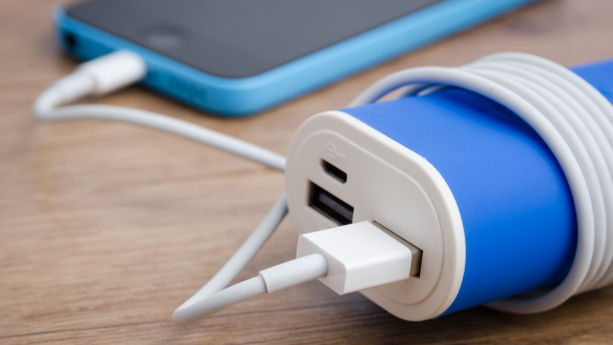
Power banks imported and manufactured for sale in the European Union must meet strict product safety requirements. This guide serves as an introduction to many of the regulations and standards that set such requirements for power banks.
We also cover mandatory labelling, documentation, and testing requirements for power banks sold in the European Union.
Content Overview

FREE CONSULTATION CALL (30 MIN)
 Ask questions about compliance requirements
- Countries/markets:
.png)
.png)
.png)


- Learn how we can help your business
You will speak with:Ivan Malloci
Regulations and Directives
The following regulations and directives set requirements for most power banks sold in the European Union:
- Batteries Regulation (EU) 2023/1542
- Electromagnetic Compatibility Directive 2014/30/EU
- RoHS Directive 2011/65/EU
- Waste Electrical and Electronic Equipment Directive 2012/19/EU*
These regulations and directives set requirements concerning product safety, substances, documentation, labelling, and testing.
Other
Note that the following EU regulations and directives may also apply to power banks with particular features:
| Title | Relevancy |
| Low Voltage Directive 2014/35/EU | Relevant for AC adapters accompanying power banks (50 – 1 000 V AC and 75 – 1 500 V DC) |
| Radio Equipment Directive 2014/53/EU | Relevant for power banks with WiFi, Bluetooth or other wireless functionality |
| Cyber Resilience Act (Regulation (EU) 2024/2847) | Relevant for power banks that can connect to other devices or networks |
Product safety requirements
Power banks in the European Union must meet certain requirements in the following areas:
- Battery safety
- Electrical safety
- Electromagnetic compatibility
In practice, this means that power banks must meet harmonised standards under all applicable EU regulations and directives. These are covered in a separate section in this guide.
Chemicals and heavy metals
The RoHS Directive restrict chemicals and heavy metals in power banks and other electronic products. The following substance restrictions are listed in Annex II:
- Lead (0,1 %)
- Mercury (0,1 %)
- Cadmium (0,01 %)
- Hexavalent chromium (0,1 %)
- Polybrominated biphenyls (PBB) (0,1 %)
- Polybrominated diphenyl ethers (PBDE) (0,1 %)
- Bis(2-ethylhexyl) phthalate (DEHP) (0,1 %)
- Butyl benzyl phthalate (BBP) (0,1 %)
- Dibutyl phthalate (DBP) (0,1 %)
- Diisobutyl phthalate (DIBP) (0,1 %)
It is essential that you work with suppliers who exclusively procure RoHS-compliant components for your power bank. Using just a few components that contain restricted substances can result in the power bank failing to meet the RoHS Directive requirements.
Labelling requirements
The Batteries Regulation (EU) 2023/1542 sets the following labelling requirements for portable batteries:
- Model identification and batch or serial number
- Company information (e.g. company name, address, email address)
- Place of manufacturing
- Date of manufacturing
- Weight
- Capacity
- Chemistry
- Hazardous substances information
- Critical raw materials information
- QR code
- Separate collection symbol
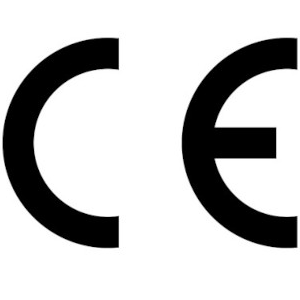
- CE marking
The following compliance marks are also applicable to power banks in the EU:
| Example | Description |
 |
CE marking is required for power banks in the EU |
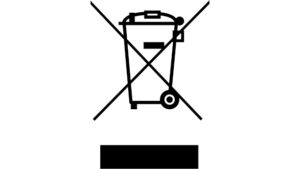 |
The WEEE symbol is required for electronic products in the EU (including power banks) |
Instructions
Several CE marking regulations and standards mandate that products are accompanied by instructions. Here are some examples of information that may need to be provided for power banks:
- Capacity
- Voltgage
- Current
- Power
- Other electrical parameters
- Usage
- Installation
- Maintance
- Precautions
- Warnings
- Disposal
Note that warnings and precautions cannot be used as a substitute for ensuring that your power bank is safe. You must ensure that all applicable harmonised standards are met.
Declaration of Conformity
Power bank manufacturers must issue a Declaration of Conformity for each model. This document must generally contain the following:
- Product model name
- Manufacturer information
- Product traceability information
- Compliance statement
- Applicable EU regulations and directives
- Applicable product standards
- Notified body information
- Name and signature
Technical documentation
The technical documentation for electronic products often includes the following:
(a) a general description of the electrical equipment
(b) conceptual design and manufacturing drawings and schemes of components, sub-assemblies, circuits, etc
(c) descriptions and explanations necessary for the understanding of those drawings and schemes and the operation of the electrical equipment
(d) a list of the harmonised (or other) standards applied in full or in part
(e) results of design calculations made, examinations carried out, etc
(f) test reports
You should include test reports for the battery and the final power bank.
Power bank standards
This section lists examples of standards that may be relevant for power banks under certain regulations and directives:
General Product Safety Regulation (EU) 2023/988
EN IEC 62368-1 – Audio/video, information and communication technology equipment – Part 1: Safety requirements
Note: The above-listed standard is also harmonised under the Low Voltage Directive 2014/35/EU, which covers equipment designed to operate with a voltage of 50 – 1,000 V in AC and 75 – 1,500 and 1 500 V in DC.
Batteries Regulation (EU) 2023/1542
prEN 50760 – Portable Batteries, Performance and durability for Secondary Portable Batteries – Li-Ion
prEN 50761 – Portable Batteries, Performance and durability for Secondary Portable Batteries – Ni-MH
Note: The two above-listed standards are still under approval.
Electromagnetic Compatibility Directive 2014/30/EU
EN 55032 – Electromagnetic compatibility of multimedia equipment – Emission requirements
EN 55035 – Electromagnetic compatibility of multimedia equipment – Immunity requirements
Power bank testing
Product testing is required for all power banks sold in the EU. Below follow examples of tests necessary for power banks.
Battery safety
- Thermal testing
- Short circuit protection testing
- Overcharge protection testing
- Over-discharge protection testing
- Over-temperature protection testing
- Thermal propagation protection testing
- Mechanical damage testing (i.e., drop testing / external shocks)
- Fire testing
- Gas emission testing
Other tests
- Electrical safety
- Electromagnetic compatibility
- Internal components substance testing
- Casing materials and substances testing
- IP testing
FAQ
Do power banks need to be CE marked?
Yes, power banks are subject to several EU regulations and directives mandating CE marking. In this context, the CE mark indicates that the power bank meets certain safety standards.
Power banks that are not correctly CE marked cannot be imported or manufactured for sale in the EU.
Is it sufficient to only test the battery?
No, it is not sufficient to only test the battery. The complete power bank unit (including cables) must be tested.
That being said, I strongly recommend that you only procure batteries that already meet battery safety requirements under the Batteries Regulation (EU) 2023/1542. You can check this by requesting and verifying test reports.
Not all batteries are compliant with the regulation, and using such batteries is very likely to result in testing failure.
Which companies provide testing for power banks?
Here are some examples of companies that provide testing solutions for power banks:
- SGS
- TUV Rheinland
- Intertek
- Bureau Veritas
How can we import safe power banks?
It is essential that you check that the supplier can provide the following:
- Declaration of Conformity
- Test reports
- Correct labelling
- Instructions
Bear in mind that many, if not most, power banks sold in the world do not meet EU regulations and standards. Assuming that all power banks available from suppliers online can result in disaster.
Also note that the national customs authorities in EU member states tend to be more strict when it comes to checking inbound shipments for devices that contain batteries. Failing to submit the required documents can result in the immediate destruction of the entire shipment.
What are some risks with power banks?
Power banks that fail to meet safety standards can be severe fire hazards. There is no margin for error when it comes to ensuring that power banks meet all applicable EU regulations and standards.




Hi,
Is it a legal requirement to show the “rated capacity” in mAh or Whrs on the ratings label for a power bank product. The internal battery ( Lion/LiPo ) has a raw capacity of e.g. 20000mAh. This has to be declared because airlines will only allow hand luggage powerbanks up to 100Whrs max ( due to the energy stored and risk of explosion or fire ). “rated capacity” in most interpretation I have studies is the real world capacity the user would experience after power conversion losses at a particular output configuration ( e.g. 5V @ 2A 10W load ). The accumulated rated capacity is measured in Whrs. This varies heavily between well designed efficient powerbanks ( >90% efficient ) and lossy designs that can get warm ( <75% ) efficients. The question is it a legal requirement to declare the lower rated capacity. Lots of product show it ( e.g Anker powerbanks ) but many don't. What is the rationale?
What testing is done if your product does not full under LVD e.g. load testing, over voltage, over current, short circuit etc and what standard does this fall under
Are you referring to directives/regulations or specific EN/IEC standards?
Hi, you did not answer the question from Kevin and I hope you can answer me.
Powerbanks will always fall under General Product Safety Regulation, so which IEC/EN standards are used to approve safety of powerbanks? The only standard I know is an american standard UL 2056 but I am not sure if this can be used in EU.
Why is the EU POPS REGULATION (EC) No 850/2004 not in your overview ?
Hi Pans,
We will look into that
Hi Frederik, can you please reply to my question = Why is the EU POPS REGULATION (EC) No 850/2004 not in your overview ?
Why? I can’t say. This article was written a while ago. If we deem it necessary we may add it when we update it later this year or next year. We do not claim that our guides are definitive and cover every single requirement.