






 Find US, EU, UK, CA, & AU requirements














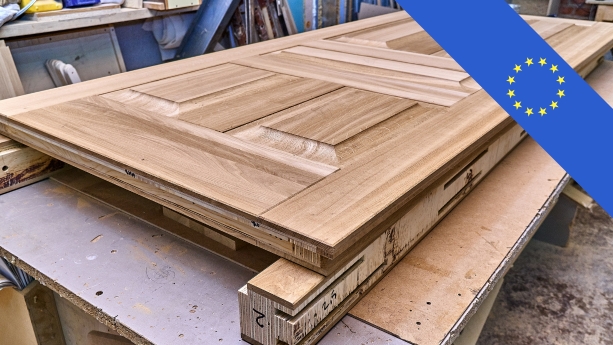
Manufacturers and importers of doors looking to supply their products in the EU must adhere to the requirements of the Construction Products Regulation 2011, among other regulations. Many types of doors and their parts are subject to their labelling, documentation, CE marking, and testing requirements.
In this guide, we focus specifically on requirements for manufacturers of doors covered by harmonised standards under the Construction Products Regulation 2011.
Here are some examples of the different types of door products that this guide is relevant to:
- Pedestrian doorsets
- Doors with controlled door closing devices
- Swing doors with electrically powered hold-open devices
- Double leaf swing doors with door coordinator devices
- Garage doors
Content Overview

FREE CONSULTATION CALL (30 MIN)
 Ask questions about compliance requirements
- Countries/markets:
.png)
.png)
.png)


- Learn how we can help your business
You will speak with:Ivan Malloci
Harmonised standards for doors
Under the Construction Products Regulation 2011, when a construction product is covered by a harmonised standard, the manufacturer must draw up a declaration of performance and the technical documentation as a basis for the declaration.
In turn, where the declaration of performance is drawn up, the manufacturer must correctly affix the CE marking.
Additionally, where a harmonised standard is applied, it specifies the applicable:
- Factory product control
- System for the assessment and verification (a notified body may be involved)
Here are harmonised standards that we found whose titles mention “door” under the Construction Products Regulation 2011:
EN 1154 – Building hardware – Controlled door closing devices – Requirements and test methods
EN 1155 – Building hardware – Electrically powered hold-open devices for swing doors – Requirements and test methods
EN 1158 – Building hardware – Door coordinator devices – Requirements and test methods
EN 13241 – Industrial, commercial, garage doors and gates – Product standard, performance characteristics
EN 14351-1 – Windows and doors – Product standard, performance characteristics – Part 1: Windows and external pedestrian doorsets
EN 16034 – Pedestrian doorsets, industrial, commercial, garage doors and openable windows – Product standard, performance characteristics – Fire resisting and/or smoke control characteristics
These harmonised standards contain requirements such as safety and performance requirements. An example of such a requirement is contained in the description for EN 13241 for garage doors found on the CEN-CENELEC’s site:
“This European Standard specifies the safety and performance requirements, except resistance to fire and smoke control characteristics, for industrial, commercial, garage doors […]”
Labelling requirements
Doors covered by harmonised standards must come with the following labelling information:
CE marking

Information that must follow the CE marking
- The two last digits of the year in which it was first affixed
- The name and the registered address of the manufacturer or the identifying mark
- The unique identification code of the product-type
- The reference number of the declaration of performance
- The level or class of the performance declared
- The reference to the harmonised technical specification applied
- The identification number of the notified body (if applicable)
- The intended use (as set by the applicable harmonised standard)
Traceability information
1. Product identifying information (e.g., type, batch or serial number)
2. Manufacturer information (e.g., manufacturer’s name, registered trade name or registered trade mark, and contact address)
3. Importer information (if any)
Declaration of performance (DoP)
When a harmonised standard covers a product, the declaration of performance must be drawn up using the model contained in Annex III of the Construction Products Regulation 2011.

By drawing up the declaration, the manufacturer assumes full responsibility for the conformity of the product with the declared performance.
Instructions
The product must be accompanied by instructions and safety information, as specified in Article 11.
Technical documentation
The technical documentation must be created as it is used as a basis for the creation of the declaration of performance.
Product testing
Testing is needed to meet the requirements of the regulation and applicable standards. Testing would be related to certain safety aspects that depend on the product, like fire safety and durability. Once the door product has been tested, you can expect to receive a lab test report. The report can serve as evidence that you have met the requirements of the regulation.
The testing can be performed by a third-party lab testing company. However, the applicable harmonised standard may specify a system for the assessment and verification that requires a notified laboratory to perform the tests.
We found that only System 3 in Annex V of the regulation mentions the notified laboratory:
“The notified laboratory shall assess the performance on the basis of testing (based on sampling carried out by the manufacturer), calculation, tabulated values or descriptive documentation of the construction product.”
FAQ
Is CE marking required for doors in the EU?
If a harmonised standard covers your door, you must draw up the declaration of performance. Once it is drawn up, the CE marking must be correctly affixed to your product.
Are there harmonised standards for doors?
Yes, we found a number of harmonised standards that apply to doors and their parts. Here are some examples:
EN 1154 – Building hardware – Controlled door closing devices – Requirements and test methods
EN 14351-1 – Windows and doors – Product standard, performance characteristics – Part 1: Windows and external pedestrian doorsets
Do we need to involve a notified body?
According to the regulation, the harmonised standard that covers your door should specify which system of assessment and verification of constancy of performance is needed.
The different systems are listed in Annex V of the Construction Products Regulation 2011. Under each system, it is specified whether a notified body is required and what its tasks are.