





 Find US, EU, UK, CA, & AU requirements











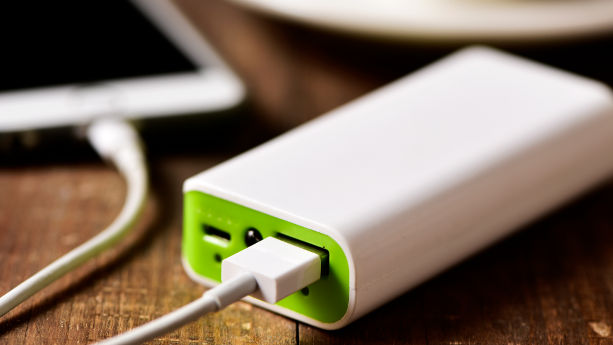
Power banks sold in the United States are covered by a complex mix of voluntary standards and regulatory requirements. This guide serves as an introduction to UL standards, 47 CFR Part 15, and other compliance requirements for power banks.
Content Overview

FREE CONSULTATION CALL (30 MIN)
 Ask questions about compliance requirements
- Countries/markets:
.png)
.png)
.png)


- Learn how we can help your business
You will speak with:Ivan Malloci
Power Bank Standards
Power banks are potential fire hazards and are generally deemed to be high-risk products. As such, it might come as a surprise that safety standards for power banks are generally voluntary in the United States.
That being said, these are only “voluntary” on paper, as it would be extremely risky to sell power banks that don’t meet relevant standards in the United States.
Bear in mind that you can be liable in case your power bank causes injury or fire damage. This is the case regardless of whether or not mandatory standards exist. It is therefore in your interest to ensure that your power banks meet all relevant safety standards.
CPSC Guidelines
The CPSC published a guidance page listing standards relevant to various types of batteries. The following may be relevant to power banks:
- ANSI/NEMA C18 – Safety Standards for Primary, Secondary and Lithium Batteries
- UL 1642 – Standard for Safety for Lithium Batteries
- UL 2054 – Standard for Household and Commercial Batteries
- UL 2056 – Outline of Investigation for Safety of Power Banks
- UL 2595 – Standard for Safety for General Requirements for Battery-Powered Appliances
Amazon requirements
You can only sell power banks on Amazon that meet the listed safety standards, such as the following:
Option A: UL 2056 and UN 38.3
Option B: IEC/UL/CSA 62368-1 and IEC/UL/CSA 62133-2 and UN 38.3
Option C: IEC/UL/CSA 62368-1 and UL 2054 and UN 38.3
Note that Amazon can request test reports to verify that your power bank is tested according to the required standards.
UN 38.3
UN 38.3 sets requirements for the transportation of lithium batteries, and is therefore applicable to power banks. Specifically, it sets requirements concerning safety and packaging.
Power banks must comply with UN 38.3 to be shipped both from the factory and distributed domestically. You can find more information about UN 38.3 requirements in this guide.
OSHA and NRTL
The Occupational Safety and Health Administration requires Nationally Recognized Testing Laboratory (NRTL) approval for some products that may be used in the workplace.
Specifically, they provide a list of appropriate test standards that must be applied in order to obtain approval for your products.
Such tests must be performed by an NRTL, such as UL, Eurofins, Intertek, and others.
We found that UL 2056 – Power Banks is on the list of appropriate test standards. We could not find any mention of UL 2056 or requirements for power banks under 29 CFR 1910 – Occupational Safety and Health Standards, which set requirements for NRTL approval.
However, according to a Letters of Interpretation titled “Recordability of workplace injuries resulting from personal rechargeable lithium-ion batteries” published on the OSHA website, products such as rechargeable lithium-ion batteries that may cause incidents in the workplace may be regulated by 29 CFR 1910, unless an exception applies.
47 CFR Part 15 – FCC Requirements
47 CFR Part 15 sets requirements for radio frequency devices. This includes most power banks sold in the United States. Most power banks can be classified as either an intentional or unintentional radiator, which determines the required testing, documentation, and labelling requirements.
Unintentional radiators
Power banks that do not have any Wi-fi, Bluetooth, or similar wireless capability are generally considered unintentional radiators.
In this case, you must apply the Supplier’s Declaration of Conformity Authorization procedure in order to comply with the 47 CFR Part 15 requirements.
The procedure sets the following key requirements:
- Testing against relevant standards (e.g., ANSI C63.4-2014)
- Compliance information statement
- Labeling (e.g., Product identification information, compliance statement, optional FCC logo)
Intentional radiators
Power banks that are Bluetooth-enabled or have similar functionalities are generally considered intentional radiators.
In this case, the device must be authorized according to the Certification procedure, which requires:
- Testing by an FCC-recognized accredited testing lab (e.g., against the ANSI C63.10-2020 standard)
- Technical report
- Labeling (e.g., FCC ID)
- Telecommunication Certification Body (TCB) approval
California Proposition 65
California Proposition 65 restricts chemicals and heavy metals in consumer products sold in California. Products containing such substances require warning labels, with some exceptions in place for small businesses.
Power bank casing materials are mostly made of plastics, which can contain phthalates such as DEHP, and other restricted substances.
Country of origin
Country of origin marking is mandatory for power banks sold in the United States. Most power banks are manufactured in China, and are therefore marked as Made in China.
The country of origin can be placed on the:
- Power bank
- Packaging
Testing Requirements
As mentioned, standards for power banks are mostly voluntary. That said, it is in your interest to ensure that your power banks meet applicable safety standards, which in turn requires that the device undergo a testing process.
Here are some of the tests that can be included in a UL 2056 testing plan:
- Mechanical damage testing
- Electrical safety testing
- Battery safety testing
- Testing testing
- Temperature cycling
- Output capacity testing
- Overload testing
- Material flammability
Test reports
You will receive a test report that demonstrates compliance with UL 2056 (or other standards) upon completion. This test report can be requested by Amazon or resellers.
Avoid component changes
Note that a test report is only valid for the specific power bank specification that was originally tested. Replacing the battery cell with a different model or brand, or other components, would render the test report irrelevant to your product.
It is therefore important to document all components before testing and ensure that your manufacturer does not make changes to the bill of materials without our knowledge.
A worst-case scenario is that your supplier makes changes that render your power banks unsafe, with you bearing the consequences.
FAQ
Are there mandatory US standards for power banks?
We could not find any mandatory test reports. That said, in practice, it would be very risky to sell power banks that do not meet the standards recommended by the CPSC or those required by Amazon.
Most power banks manufactured outside the US do not meet UL standards. Many of these are outright dangerous and can cause severe personal injury or property damage.
Which companies offer power bank testing services?
Our research indicates that Underwriter Laboratories itself provides testing according to UL 2056. That said, it is likely that TUV Rheinland and other companies can provide testing for some standards relevant to power banks.




I think we must also consider the 2026 IATA Packaging requirements for shipment of the Power/Battery Bank via Air.
As per the 2025 and 2026 IATA requirements, Power Banks / Battery Banks fall under PI965 (UN3480). This means all battery packs shipped by air must be at a State of Charge (SoC) of ≤ 30%.
This is Mandatory from 1st Jan 2026.
Hello Ryan,
Thank you for your suggestion. We will look into that.
Hi,
Do I have to apply the same requirements for gifts/sweepstakes?
Thank you,
Yes. That does not change the fact that unsafe products are unsafe.
HI
i am upender & compliance service provider like BIS, WPC, BEE ,TEC for electronics products in india
Hello again,
I am sorry but I forgot to mention I am intended to sell in USA.
Hello there,
I am trying to sell wireless charging power bank. Amazon says we are required UL2056 certification. Could you please tell me how much does it cost for only one type of power bank to get certified, best company to get certified and how long it takes?
Hi Ronak,
You need to contact UL directly to get a lab test quote: https://www.ul.com/contact-us
You’re probably looking at 2000 – 4000 USD