





 Find US, EU, UK, CA, & AU requirements













The Packaging and Packaging Waste Regulation (PPWR) 2025/40 sets new, extensive requirements for packaging in the European Union. That said, it’s not always clear what sort of items are deemed to be packaging in the meaning of the PPWR.
In this guide, we take a closer look at the types of packaging that are subject to the PPWR and exempt. Note that the exact same item (i..e, a clothing hanger) can be deemed packaging when sold with a product, while it’s not deemed packaging if sold separately.
Content Overview

FREE CONSULTATION CALL (30 MIN)
 Ask questions about compliance requirements
- Countries/markets:
.png)
.png)
.png)


- Learn how we can help your business
You will speak with:Ivan Malloci
How does the PPWR define packaging?
The PPWR generally covers packaging based on the following principles:
✅ The PPWR generally applies to all packaging and packaging waste (regardless of the material)
✅ The PPWR covers packaging and packaging waste used in industry, other manufacturing, retail or distribution, offices, services or households
✅ The PPWR generally defines packaging as an item used for containment, protection, handling, delivery or presentation of products
⚠️ Packaging is generally not an integral part of the product
Packaging covered by the PPWR
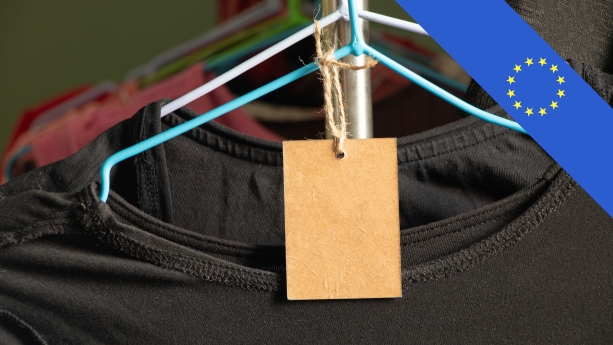
Article 2 of the PPWR states that the regulation applies to all packaging and packaging waste in the European Union. You can find a detailed definition of packaging in Article 3(1) and a list of items considered to fall within this definition in Annex I.
Here are examples of packaging covered by the PPWR:
Product packaging
- Cardboard boxes
- Plastic boxes
- Product packaging
- Glass packaging
- Jewelry packaging
- Watch packaging
- Toy packaging
- Food packaging
- Clothing hang tags
- Clothes hangers sold with clothing*
- Plastic cover film
- Plant pots used for transportation
*Not considered packaging if sold separately.
Food packaging
- Cake boxes
- Paper cups
- Tea and coffee foil pouches
- Aluminium foil
- Sandwich bags
Retail packaging
- Bags
- Display packaging
Transportation packaging
- Mailing pouches
- Parcels
- Enveleopes
- Packaging boxes
Note that a more detailed definition of packaging can be found in Article 3(1).
Is any packaging exempt from the PPWR?
Some boxes, containers and items may fall outside the PPWR on the basis that they are deemed to be integral parts of the products. This is further explained in point 13:
An item which is an integral part of a product and is necessary to contain, support or preserve that product throughout its lifetime and where all elements of that item are intended to be used, consumed or disposed of together should not be considered to be packaging given that its functionality is intrinsically linked to it being part of the product.
Annex I of the PPWR further clarifies when certain items may be exempt:
| Item | Packaging | Not packaging |
| Clothing hanger | If sold with clothing items | If sold separately |
| Flower and plant pots | If only used for selling and transporting | If used through different stages of production or intended to be sold with the plant |
| Stickers | Sticky labels attached to fruits and vegetables | RFID tags |
| Wrapping paper | Used as packaging | Sold separately to consumers and business operators |
| Paper or plastic carrier bags | Designed and intended to be filled at the point of sale | Not intended to be filled at the point of sale |
| Disposable plates and cups | Designed and intended to be filled at the point of sale | Not intended to be filled at the point of sale |
| Sandwich bags | Designed and intended to be filled at the point of sale | Not intended to be filled at the point of sale |
Prohibited Packaging
Annex V of the PPWR restricts the manufacture, importation, and use of certain packaging materials. The packaging formats are listed below:
- Single-use plastic grouped packaging
- Single-use plastic packaging for unprocessed fresh fruit and vegetables
- Single-use plastic packaging for condiments, preserves, sauces, coffee creamer, sugar, and seasoning in HORECA sector
- Single-use accommodation sector packaging intended for an individual booking
- Very lightweight plastic carrier bags
FAQ
Does the PPWR cover product packaging?
Yes, product packaging is covered by the scope of the PPWR. For example, boxes used to contain toys are subject to the PPWR in addition to requirements set by the Toy Safety Regulation.
Does the PPWR apply to clothing hang tags?
Yes, the PPWR applies to clothing hang tags. Such tags are explicitly covered by the PPWR definition for packaging:
an ancillary element to an item referred to in point (a) that is hung directly on, or attached to, the product and that performs a packaging function, without being an integral part of the product, and which is intended to be used, consumed or disposed of together with the product;
Does the PPWR cover packaging used for transportation?
Yes, the PPWR applies to packaging used to transport goods, such as export cartons and mailing pouches. It is not limited to product packaging or retail packaging.
Does the PPWR cover food packaging?
Yes, the PPWR covers food packaging in the following cases:
a. The food packaging is designed and intended to be filled at the point of sale (i.e., takeaway restaurants)
b. The food packaging is sold by the final distributor containing food and beverages
Point 18 of the PPWR states that food packaging intended to be sold empty by the final distributor is not considered packaging.
It should also be noted that certain types of food packaging are prohibited by the PPWR. These can be found in Annex V.
Does the PPWR cover cosmetics packaging?
Yes, the PPWR covers cosmetics packaging and specifically mentions that measures to introduce space ratios for cosmetics packaging will be introduced at some point.