




 Find US, EU, UK, CA, & AU requirements














The Packaging and Packaging Waste Regulation (PPWR) restricts substances in packaging materials, specifically heavy metals and PFAS. This guide provides an overview of the substance restrictions in Article 5 of the PPWR and how you can demonstrate compliance.
- PPWR restricts lead, cadmium, mercury and hexavalent chromium
- PPWR restricts PFAS in food-contact packaging
- Testing is generally required to verify the substance contents
Content Overview

FREE CONSULTATION CALL (30 MIN)
 Ask questions about compliance requirements
- Countries/markets:
.png)
.png)
.png)


- Learn how we can help your business
You will speak with:Ivan Malloci
Overview
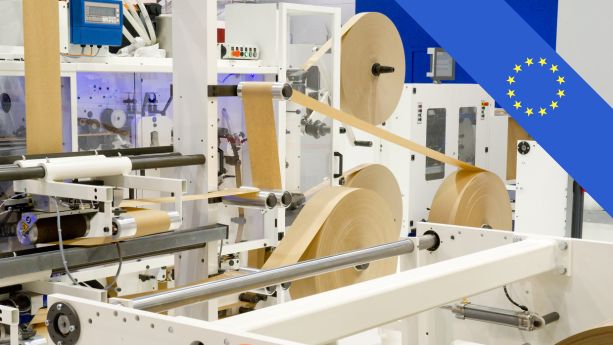
The following tables summarise substance restrictions mentioned in Article 5 of the PPWR:
| Substance | Limit | Covers |
| Lead* | 100 mg/kg | Packaging or packaging components |
| Cadmium* | 100 mg/kg | Packaging or packaging components |
| Mercury* | 100 mg/kg | Packaging or packaging components |
| Hexavalent chromium* | 100 mg/kg | Packaging or packaging components |
| Any PFAS as measured with targeted PFAS analysis** | 25 ppb | Food-contact packaging |
| Sum of PFAS measured as the sum of targeted PFAS analysis** | 250 ppb | Food-contact packaging |
| PFASs (including polymeric PFAS): if total fluorine exceeds 50 mg/kg*** | 50 ppm | Food-contact packaging |
*The total sum of lead, cadmium, mercury and hexavalent cadmium concentrations should not exceed 100 mg/kg
**Polymeric PFAS excluded from quantification
***Additional documentation requirements are specified in Article 5(5c)
Notes
PPB refers to parts per billion
PPM refers to parts per million
Heavy metals
The PPWR mandates that the sum of the following heavy metals cannot exceed 100 mg/kg in packaging or packaging components:
- Lead
- Cadmium
- Mercury
- Hexavalent chromium
These restrictions are not new. The exact same list of heavy metals (and the 100 mg/kg limit) was established by the Packaging and Packaging Waste Directive, which will be replaced by the PPWR.
PFAS
Per- and polyfluorinated alkyl substances (PFAS) is restricted in food packaging materials and cannot contain these substances in amounts equal to or above the limits. These can be found in the table above.
Note that the specific limit depends on how the PFAS is measured in the packaging material.
Another area of interest is that PFAS is a group of substances. Rather than listing every possible substance that may count as a PFAS, the PPWR instead provides the following definition:

It can, in practice, be difficult for companies to determine if their packaging contains PFAS and which specific substances to test for. My best recommendation is to discuss this with your lab.
Testing Report
Article 5(6) of the Packaging and Packaging Waste Regulation (PPWR) requires that compliance with the heavy metals and PFAS restrictions must be provided in the technical documentation.
In practice, this means that you need to include test reports demonstrating that your packaging materials do not contain restricted heavy metals or PFAS above the set limits.
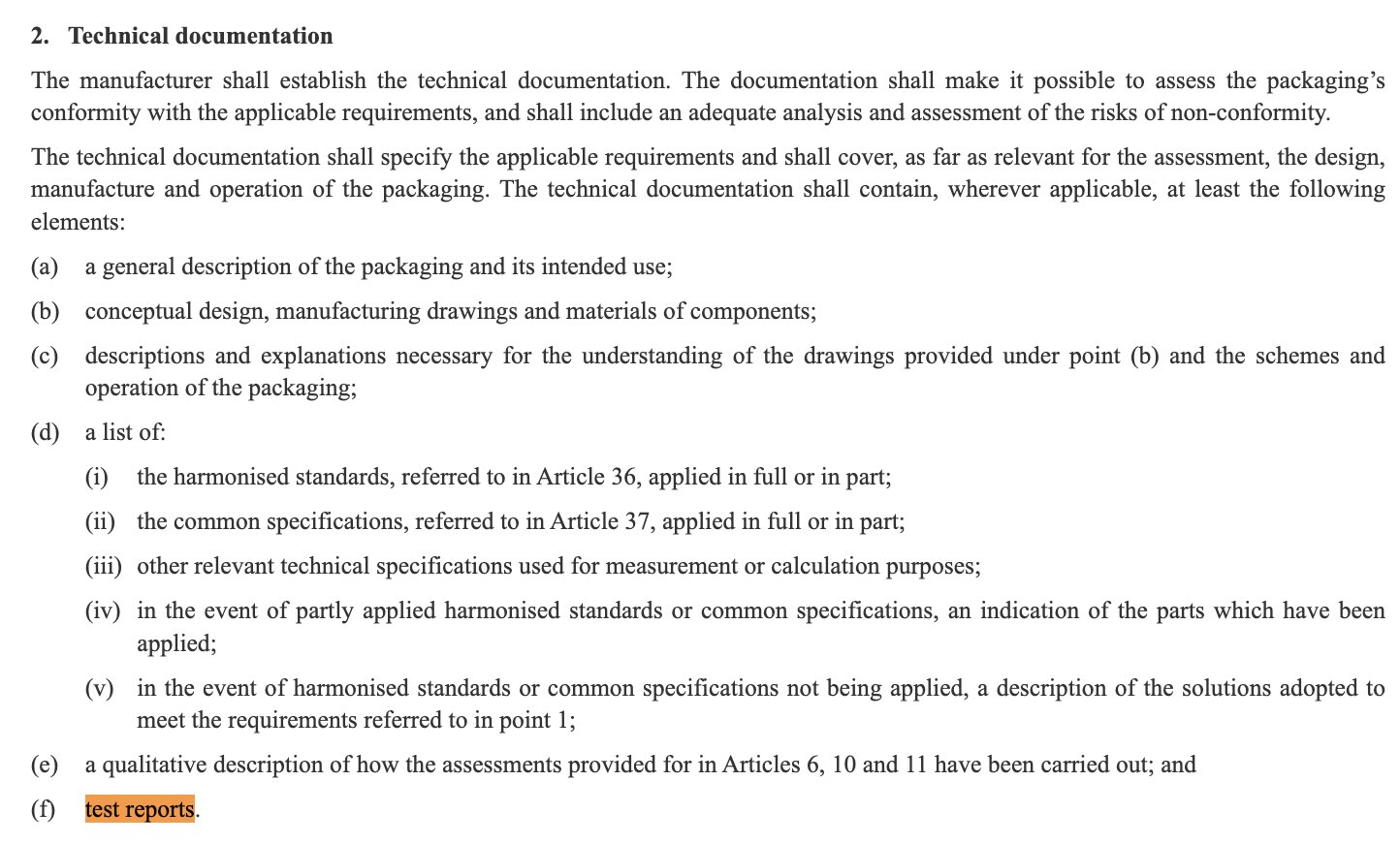
There are essentially two ways you can obtain test reports.
a. Obtain test reports from your supplier
This is the most cost-effective option, as you may not need to arrange third-party testing. That said, you should not take for granted that packaging suppliers outside the EU can provide pre-existing test reports demonstrating compliance with the PPWR.
b. Arrange third-party testing
The other option is to send packaging samples to a company like QIMA or TUV Rheinland, which then carries out testing to verify if the materials contain heavy metals or PFAS above the limits.
Once completed, you will receive a test report that you can include in the technical documentation.
FAQ
Which heavy metals are restricted in packaging materials?
Article 5(4) of the Packaging and Packaging Waste Regulation (PPWR) sets restrictions for lead, cadmium, mercury, and hexavalent chromium.
Note that the limit of 100 mg/kg is set for the total sum of these heavy metals.
Are PFAS restricted in packaging materials?
Yes, chemicals defined as PFAS are subject to restrictions in Article 5(4) of the Packaging and Packaging Waste Regulation (PPWR).
How can we ensure that packaging materials do not contain restricted substances?
You must either arrange third-party testing or obtain test reports from your material suppliers.
What can happen if the packaging contains restricted substances?
Packaging materials containing restricted substances above the set PPWR limits could potentially be subject to recalls.
Are packaging materials subject to other substance restrictions?
Yes, PPWR only restricts heavy metals and PFAS. Additional substance restrictions relevant to packaging materials can be found in the REACH and POPs regulations. Food packaging is also subject to various FCM regulations, which also set substance restrictions.