




 Find US, EU, UK, CA, & AU requirements















Musical instruments imported or manufactured for sale in the European Union are subject to various regulations and directives. These set requirements concerning mechanical and electrical safety, labelling, documentation, and chemicals.
This guide takes a closer look at various EU compliance requirements in relation to acoustic and electric musical instruments.
- Acoustic instruments are subject to various consumer product regulations
- CE marking is required for electronic and electrical instruments
- Toy instruments are subject to the Toy Safety Directive
Content Overview

FREE CONSULTATION CALL (30 MIN)
 Ask questions about compliance requirements
- Countries/markets:
.png)
.png)
.png)


- Learn how we can help your business
You will speak with:Ivan Malloci
Acoustic musical instruments
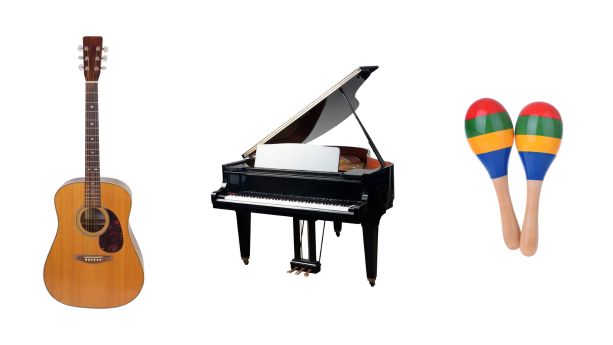
This section lists various regulations relevant to acoustic instruments, such as the following:
- Guitars
- Violins
- Banjos
- Mandolins
- Pianos
- Flutes
- Cellos
- Harps
General Product Safety Regulation (GPSR)
The General Product Safety Regulation (GPSR) mandates that all consumer products sold in the EU are essentially safe. This regulation is relevant on the basis that musical instruments are often sold to consumers as consumer products.
Product standards
Consumer products must be designed to comply with relevant product safety standards to be deemed compliant with the GPSR.
That said, we could not find any harmonised or other EN standard specific to musical instruments. The only standard we could find is ISO 16:1975 Acoustics – Standard tuning frequency (Standard musical pitch).
While still relevant, we have no indication that this standard sets safety requirements. As such, you will likely need to conduct your own risk assessment to ensure that your product does not pose a safety risk.
Other requirements
✅ Labelling
- Product type and batch
- Manufacturer name
- Manufacturer address and electronic address
- Importer name
- Importer address and electronic address
- EU AR information (if any)
✅ Instructions, safety information and warnings
✅ Create technical documentation
✅ Testing
REACH Regulation
The REACH regulation restricts chemicals and heavy metals in consumer products, including musical instruments sold in the EU. Materials, components, and coatings containing excessive amounts of restricted substances (under Annex XVII) cannot be sold in the EU.
The table below lists such substances and risks specific to musical instruments:
| Substance | Annex XVII Limit | Material risk |
| DEHP | 0,1% by weight | Can be found in some surface coatings (i.e., applied to guitars, pianos or other wooden instruments) |
| Cadmium | 0,1% by weight of the paint on a painted article
0,01% by weight of an article’s plastic material |
Can be found in components made of zinc alloys in high concentrations |
| Formaldehyde | 0,062 mg/m3 for furniture and wood-based articles
0,080 mg/m3 for articles other than furniture and wood-based articles. |
Can be found in instruments made of wood and other materials |
Third-party lab testing is often required to verify compliance with the REACH regulation. Another option is to obtain substance documentation from individual material suppliers.
POPs Regulation
The POPs Regulation restricts substances classified as persistent organic pollutants. Examples include the following:
- Polychlorinated Biphenyls (PCB)
- Perfluorooctanoic acid (PFOA)
- Perfluorohexane sulfonic acid (PFHxS)
- Hexachlorocyclohexanes
- Chlordecone
- Hexabromobiphenyl
Third-party testing is generally required to verify compliance with POPs substance restrictions.
Electric and electronic musical instruments
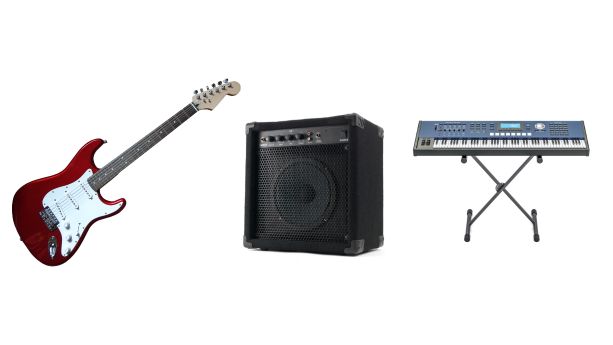
All EU requirements applicable to acoustic instruments generally also apply to electronic musical instruments. That said, the latter is subject to additional EU regulations and directives.
Here are examples of products that are subject to such regulations:
- Electric guitars
- Digital instruments
- Keyboards
- Amplifiers
- External power supplies
- Effect pedals
Overview
| Title | Relevancy |
| RoHS Directive | Restricts phthalates and heavy metals in electronic components |
| EMC Directive | Sets EMC requirements for electrical apparatus (i.e., an electronic keyboard) |
| Low Voltage Directive | Sets electrical safety requirements for equipment designed for 50 and 1 000 V for alternating current and between 75 and 1 500 V for direct current.
Note: The LVD covers external power supplies (in case the instrument itself is not within the specified voltage range). |
| Radio Equipment Directive | Applicable to devices with radio communications, including WiFi and Bluetooth. As such, the RED is relevant to keyboards and other instruments with built-in wireless communications. |
| Battery Regulation | Applicable to battery-powered musical instruments and accessories |
| Regulation (EU) 2025/2052 – Ecodesign requirements for external power supplies, wireless chargers, wireless charging pads, battery chargers for portable batteries of general use and USB Type-C cables | This implementing measure of the Ecodesign Directive sets ecodesign requirements for external power supplies and other products.
It will replace Regulation (EU) 2019/1782 – Ecodesign requirements for external power supplies from 14 December 2028. |
General requirements
The following regulations and directives applicable to electric music instruments require CE marking:
- RoHS Directive
- EMC Directive
- Low Voltage Directive
- Radio Equipment Directive
- Battery Regulation
While the specifics differ between these regulations and directives, the key steps often involve the following:
✅ Ensure compliance with harmonised standards
- EN IEC 62368-1 – Audio/video, information and communication technology equipment – Part 1: Safety requirements
- EN 55032 – Electromagnetic compatibility of multimedia equipment – Emission requirements
- EN 55035 – Electromagnetic compatibility of multimedia equipment – Immunity requirements
✅ Labelling

- CE mark
- Product type and batch
- Manufacturer name
- Manufacturer address
- Importer name
- Importer address
- EU AR information (if any)
- Notified body information (if applicable)
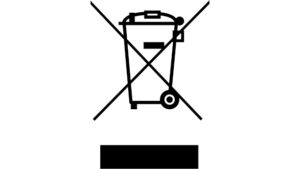
Note: WEEE marking is also required for electronic products
✅ Instructions and warnings
✅ Create Declaration of Conformity (DoC)
✅ Create technical documentation
✅ Testing
Toy Instruments
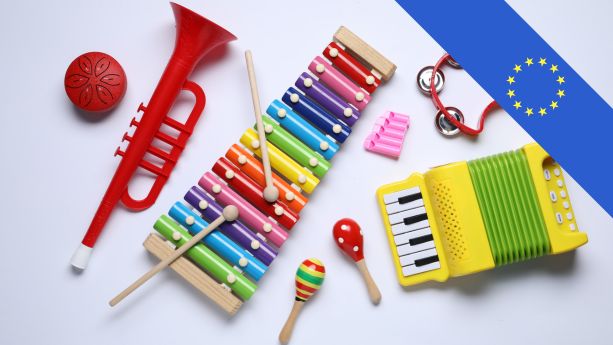
Toy instruments are subject to the Toy Safety Directive, which mandates CE marking and compliance with EN 71 parts and other standards.
EN 71
The following areas are covered by the EN 71 series:
✅ Mechanical safety and small parts
✅ Flammability
✅ Chemicals
Recalls
Most instruments subject to recalls in the European Union are, in fact, toy instruments rather than actual musical instruments. The most common reasons are small parts and substance content.
FAQ
Are musical instruments regulated in the EU?
Yes, musical instruments are subject to EU regulations and directives applicable to consumer products, electrical and electronic products.
Do acoustic musical instruments require CE marking?
Guitars, pianos, and other acoustic instruments are generally not covered by EU regulations and directives mandating CE marking. Products not covered by such regulations and directives should not be CE marked.
Do electric and electronic musical instruments require CE marking?
Yes, electric and electronic musical instruments are subject to various EU regulations and directives mandating CE marking. As such, instruments ranging from electric guitars to digital synthesisers require CE marking when sold in the European Union.