


Cosmetic Products Labelling Requirements in the European Union

Posted on Leave a comment
Need help with compliance? Book a call here

Cosmetic products sold in the European Union must be labelled according to the provisions of the Cosmetic Products Regulation. Cosmetic labels must, for example, contain information about the company selling the product, content, batch number, and intended use.

Thera are also restrictions concerning product claims, and requirement related to precautions and warnings.

Further, we also cover labelling requirements that are part of regulations other than the Cosmetic Products Regulation, but that are still applicable to cosmetic products.

Continue reading Cosmetic Products Labelling Requirements in the European Union
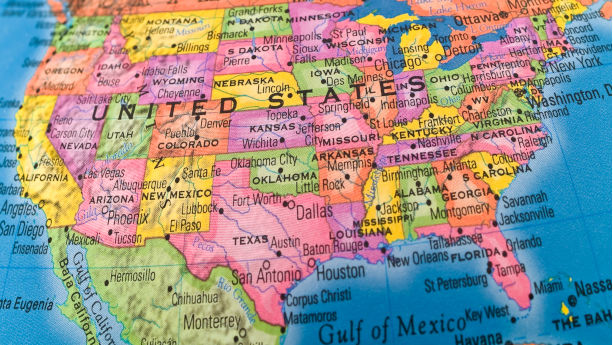
US State Product Safety Standards and Regulations: An Overview

Posted on Leave a comment
Need help with compliance? Book a call here

US State Product Safety Regulations

US importers and manufacturers are oftentimes not only required to ensure compliance with federal level requirements – but also those that apply on a state level. This guides serves as a broad overview of US state level regulations concerning chemicals and heavy metals, flammability, children’s product safety and more.

We do not cover every state, nor do we cover all product compliance related regulations in the listed US states. Additionally, we published a separate article for California.

Note: This guide is a compilation of articles published in 2021. Note that we have not updated or checked the information since the initial publications in 2021. Some information may be outdated.

Continue reading US State Product Safety Standards and Regulations: An Overview

Microplastic Regulations in the United States: An Overview

Posted on Leave a comment
Need help with compliance? Book a call here

Microplastics are tiny plastic particles that can be found in consumer products such as cosmetics, or toothpaste.

The Microbead-Free Waters Act of 2015f amended the Federal Food, Drug, and Cosmetic (FD&C) Act to prohibit microbeads, which are a type of microplastics that are intentionally added to products such as rinse-off cosmetics. The reason is that microplastics can end up in waterways and harm fish and other marine life.

In this guide, we explain what microplastics are, which products may contain them, and how the FDA and various state regulations restrict some types of microplastics from being used in products.
Continue reading Microplastic Regulations in the United States: An Overview

Microplastic Regulations in the European Union: An Overview

Posted on Leave a comment
Need help with compliance? Book a call here

Microplastics are particles that are smaller than 5 mm and made of polymers and additives. These can be found in products such as cosmetics, personal care products, and cleaning products.

Microplastics can get released into the environment, harming it. As such, the EU now restricts microplastics and products and mixtures that contain intentionally added microplastics.

In this guide, we explain what importers and manufacturers should know about microplastics, including which products may contain them, whether these are banned, and how the REACH and EU Ecolabel Regulations restrict microplastics.
Continue reading Microplastic Regulations in the European Union: An Overview

Ecodesign Directive: An Essential Guide

Posted on 3 Comments
Need help with compliance? Book a call here

Ecodesign Directive

The EcodesThe Ecodesign Directive establishes a framework for general requirements and specific implementing measures for various energy-related products, such as vacuum cleaners, computers, and refrigerators.

In this guide, we explain the directive’s product scope and provide information concerning conformity assessment, documentation, labelling, and other requirements.
Continue reading Ecodesign Directive: An Essential Guide

Hazardous Materials Regulations: An Essential Guide

Posted on Leave a comment
Need help with compliance? Book a call here

Hazardous Materials Regulations
The Hazardous Materials Regulations sets requirements related to the transportation of dangerous materials, which include substances and products – such as batteries.

In this guide, we explain what the general requirements are and how US importers and manufacturers can use the Hazardous Materials Table to find relevant information concerning the requirements for their specific hazardous materials or product. We also provide a case study, focusing on the requirements for lithium batteries.
Continue reading Hazardous Materials Regulations: An Essential Guide

Bisphenol A (BPA) Regulations in the United States: An Overview

Posted on Leave a comment
Need help with compliance? Book a call here

Bisphenol A (BPA) is an organic chemical used to improve durability and heat resistance in plastics. As such, it has long been used when manufacturing plastic products, from kitchen utensils and toys to certain medical devices.

That said, studies show that BPA may interfere with hormones, and cause other damage to the human body. It’s therefore not surprising that BPA is regulated in the United States, especially in food contact products designed for children.

In this guide, we explain what importers and manufacturers must know about BPA restrictions, including FDA 21 CFR, California Proposition 65, and other state regulations.

Continue reading Bisphenol A (BPA) Regulations in the United States: An Overview

Technical Documentation for CE Marked Products in the EU

Posted on 5 Comments
Need help with compliance? Book a call here

Technical documentation, also referred to as a technical file, is mandatory for most products that require CE marking in the European Union. As such, technical documentation is mandatory for electronics, toys, protective equipment, medical devices, machinery, and more.

However, understanding what to include in your technical documentation and how to practically compile it can be challenging.
Continue reading Technical Documentation for CE Marked Products in the EU

Extended Producer Responsibility in France – Q&A with Léko

Posted on Leave a comment
Need help with compliance? Book a call here

Extended Producer Responsibility in France

Extended Producer Responsibility (PRO) is covered by provisions of the European Packaging and Packaging Waste Directive 94/62/EC. In practice, EPR requires producers (which includes brands, importers, or manufacturers) to finance packaging waste collection.

This is managed on a national level, by approved organisations. In France, Léko is one such Producer Responsibility Organisation (PRO).

In this guide, they share what businesses selling products in France must know about the EPR registration process, fees, Triman, and other packaging waste instructions.
Continue reading Extended Producer Responsibility in France – Q&A with Léko

Which Countries Accept CE Marked Products?

Posted on Leave a comment
Need help with compliance? Book a call here

CE mark Accepted

The European Union mandates the use of the CE marking for many product categories such as electronics, toys, medical devices, and personal protective equipment. That being said, some countries outside the EU, including Turkey and the United Kingdom, can accept the CE marking for certain products.

Other countries recognise certain aspects of the CE marking process – such as EN standards.

In this guide, we explain what you need to know about the acceptance concerning CE-marked products and EN standards in the United Kingdom, Turkey, Israel, Switzerland, Singapore, and other countries.
Continue reading Which Countries Accept CE Marked Products?