





 Product assessments in 2 minutes















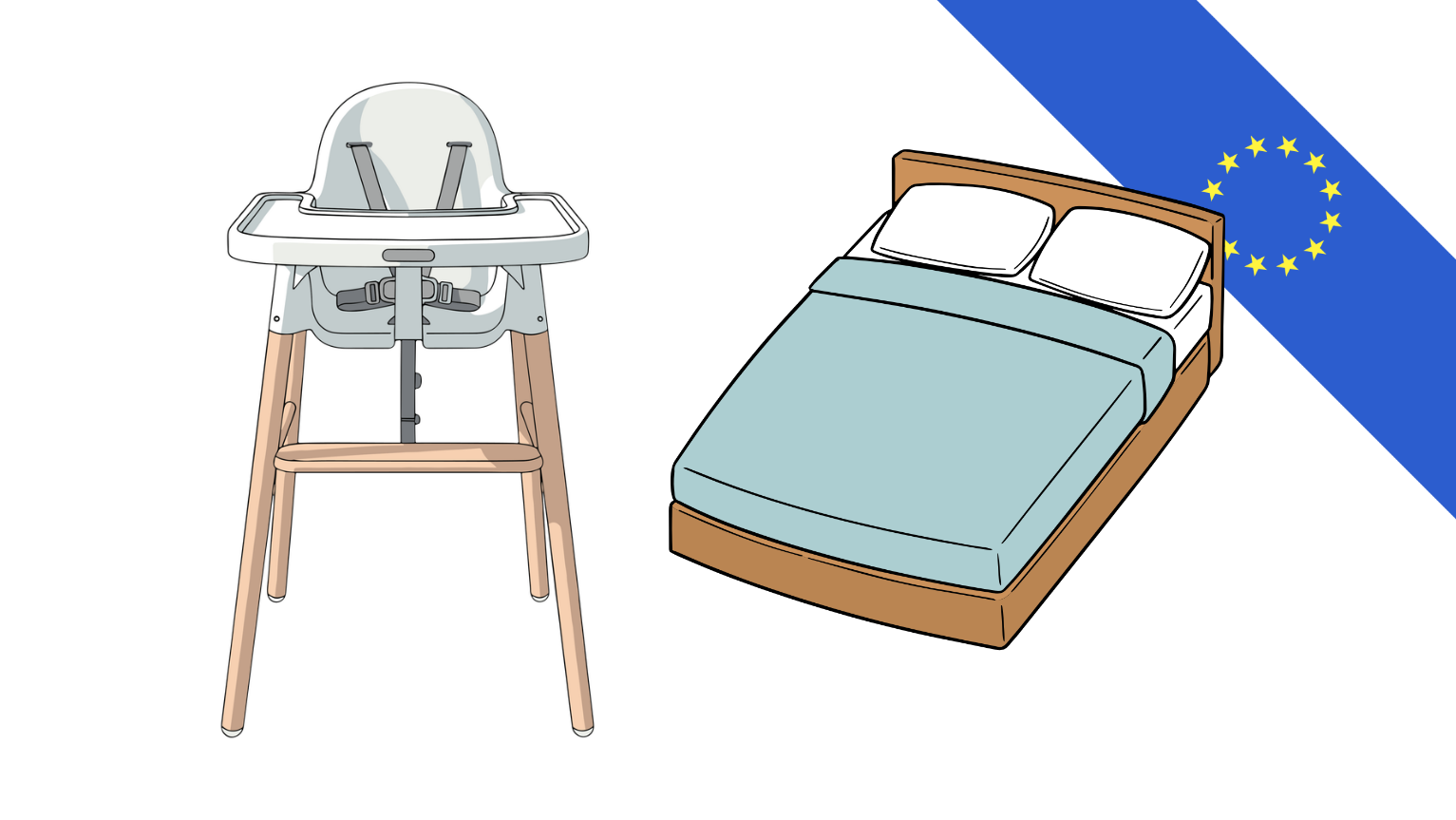
Furniture sold in the European Union is subject to various regulations, directives, and standards. These cover mechanical safety, flammability, chemicals, labelling, and other areas.
In this guide, we take a closer look at the EU GPSR, EUDR, REACH, and other compliance requirements for furniture manufactured in or imported to the EU.
Covered products
- Bedroom furniture
- Living room furniture
- Children’s furniture
- Bathroom furniture
- Upholstered furniture
- Furniture textiles
- Furniture coatings
- Furniture paints
Content Overview

View Future Regulations for Your Product Free
Estimated time: 2 to 3 minutes
 Covered markets:
.png)
.png)
.png)


- Track future and recently updated regulations
- Setup email alerts
 Data: Primarily based on official legislation databases (Learn >)


Free Consultation (30 min)
Do you have questions about US, EU, or UK product compliance requirements?
General Furniture Safety – GPSR
The General Product Safety Regulation (EU) 2023/988 mandates that all consumer products sold in the European Union are safe. This also applies to furniture.
In practice, furniture must comply with applicable safety standards which set requirements for mechanical safety, flammability, and other safety aspects. The first step of the process is therefore to identify the standards that apply to a particular furniture product.
GPSR harmonised standards
We identified the following harmonised standards under the GPSR, which makes them essentially mandatory based on the presumption of conformity principle.
General furniture
EN 1129-1:1995 Furniture – Foldaway beds – Safety requirements and testing – Part 1: Safety requirements
EN 1129-2:1995 Furniture – Foldaway beds – Safety requirements and testing – Part 2: Test methods
Children’s furniture
EN 716-1:2017+AC:2019 – Furniture – Children’s cots and folding cots for domestic use – Part 1: Safety requirements
EN 1130:2019 Children’s furniture – Cribs – Safety requirements and test methods / EN 1130:2019/AC:2020
EN 1272:2017 Child care articles – Table mounted chairs – Safety requirements and test methods
EN 12221-1:2008+A1:2013 – Child use and care articles – Changing units for domestic use – Part 1: Safety requirements
EN 12790-1:2023 Child care articles – Reclined cradles – Part 1: Reclined cradles for children up to when they start to try to sit up
EN 12790-2:2023 Child care articles – Reclined cradles – Part 2: Reclined cradles for children up to when they start to stand up
EN 14988:2017+A1:2020 Children’s high chairs – Requirements and test methods
EN 14988:2017+A2:2024 Children’s high chairs – Requirements and test methods
EN 16120:2012+A2:2016 Child use and care articles – Chair mounted seat
EN 17191:2021 Children’s Furniture – Seating for children – Safety requirements and test methods
Children’s mattresses
EN 16890:2017 Children’s furniture – Mattresses for cots and cribs – Safety requirements and test methods
EN 16890:2017+A1:2021 Children’s furniture – Mattresses for cots and cribs – Safety requirements and test methods
Other standards
Harmonised standards do not cover all furniture types or safety aspects. That said, the GPSR is clear in that you must consider national, non-harmonised European standards, or even international standards when harmonised standards do not exist.
Flammability
We identified the following furniture flammability standards:
| Standard | Product scope |
| EN 1021-1 – Furniture – Assessment of the ignitability of upholstered furniture – Part 1: Ignition source smouldering cigarette | Upholstered furniture |
| EN 1021-2 – Furniture – Assessment of the ignitability of upholstered furniture – Part 2: Ignition source match flame equivalent | Upholstered furniture |
| EN 597-1 – Furniture – Assessment of the ignitability of mattresses and upholstered bed bases – Part 1: Ignition source smouldering cigarette | Mattresses and upholstered bed bases |
| EN 597-2 – Furniture – Assessment of the ignitability of mattresses and upholstered bed bases – Part 2: Ignition source: match flame equivalent | Mattresses and upholstered bed bases |
| DIN 66084 – Classification of burning behaviour of upholstered textile composites and prefabricated upholstered textile composites (Germany) | Upholstered textile composites and prefabricated upholstered textile composites |
| NFP 92-503 – Safety against fire. Building materials. Reaction to fire tests. Electrical burner test used for flexible materials 5 mm thick or less (France) | Building materials
Note: I found that Eurofins mentions FP 92-503 in the context of “furniture flammability”. |
| UNI 9175 – Reaction to fire of upholstered products by applying a small flame – Test method and classification (Italy) | Upholstered products |
General furniture standards
| Standard | Product scope |
| EN 1022 – Domestic furniture – Seating – Determination of stability | Domestic furniture – Seating |
| EN 1023-1 – Office furniture – Screens – Part 1: Dimensions | Office furniture |
| EN 1023-2 – Office furniture – Screens – Part 2: Mechanical safety requirements | Office furniture |
| EN 1023-3 – Office furniture – Screens – Part 3: Test methods | Office furniture |
| EN 716-2 – Furniture – Children’s cots and folding cots for domestic use – Part 2: Test methods | Children’s cots and folding cots |
| EN 747-1 – Furniture – Bunk beds and high beds – Part 1: Safety, strength and durability requirements | Bunk beds and high beds |
| EN 747-2 -Furniture – Bunk beds and high beds – Part 2: Test methods | Bunk beds and high beds |
| EN 12227 – Playpens for domestic use – Safety requirements and test methods | Playpens |
| EN 12520 – Furniture – Safety, strength and durability – Requirements for domestic seating | Domestic seating |
| EN 12521 – Furniture – Safety, strength and durability – Requirements for domestic tables | Domestic tables |
| EN 12528 -Castors and wheels – Castors for furniture – Requirements | Castors for furniture |
| EN 12529 – Castors and wheels – Castors for furniture – Castors for swivel chairs – Requirements | Castors for swivel chairs |
| EN 12532 – Castors and wheels – Castors and wheels for applications up to 1,1 m/s (4 km/h) | Castors and wheels |
| EN 12720 – Furniture – Assessment of surface resistance to cold liquids | Furniture |
| EN 12721 – Furniture – Assessment of surface resistance to wet heat | Furniture |
| EN 12722 – Furniture – Assessment of surface resistance to dry heat | Furniture |
| EN 12727- Furniture – Ranked seating – Requirements for safety, strength and durability | Ranked seating |
| EN 13336 – Leather – Upholstery leather characteristics – Guide for selection of leather for furniture | Leather for furniture |
| EN 1335-1 – Office furniture – Office work chair – Part 1: Dimensions – Determination of dimensions | Office work chair |
| EN 1335-2 – Office furniture – Office work chair – Part 2: Safety requirements | Office work chair |
| EN 13722 – Furniture – Assessment of the surface gloss | Surface gloss |
| EN 13759 – Furniture – Operating mechanisms for seating and sofa-beds – Test methods | Seating and sofa-beds |
| EN 14056-1 – Laboratory furniture – Recommendations for design and installation – Part 1: General | Laboratory furniture |
| EN 14072 – Glass in furniture – Test methods | Glass in furniture |
| EN 14703 -Furniture – Links for non-domestic seating linked together in a row – Strength requirements and test methods | Links for non-domestic seating |
| EN 15060 – Paints and varnishes – Guide for the classification and selection of coating systems for wood based materials in furniture for interior use | Coating systems for wood based materials in furniture |
| EN 581-1 – Outdoor furniture – Seating and tables for camping, domestic and contract use – Part 1: General safety requirements | Outdoor furniture |
| EN 581-2 – Outdoor furniture – Seating and tables for camping, domestic and contract use – Part 2: Mechanical safety requirements and test methods for seating | Outdoor furniture |
| EN 581-3 – Outdoor furniture – Seating and tables for camping, domestic and contract use – Part 3: Mechanical safety requirements and test methods for tables | Outdoor furniture |
| EN 1730 – Furniture – Tables – Test methods for the determination of stability, strength and durability | Tables |
| EN 15372 – Furniture – Strength, durability and safety – Requirements for non-domestic tables | Non-domestic tables |
| EN 1116 – Furniture – Kitchen furniture – Coordinating sizes for kitchen furniture and kitchen appliances | Kitchen furniture |
Technical Documentation

The manufacturer must create technical documentation which contains the following information:
- Product description
- Furniture image
- Packaging image
- Product specifications
- Risk analysis
The risk analysis must address risks and explain how these have been mitigated. These also tie directly to the furniture standards mentioned above.
Example
| Risk | Identified standard/regulation | Measure/s |
| Mechanical risk | EN 1129-1 | Testing according to EN 1129-2 verified that the product meets mechanical safety criteria |
| Flammability | EN 1021-1 and EN 1021-2 | Testing according to the specified standard verified that the product meets flammability safety criteria |
| Chemical | REACH Regulation, POPs Regulation | Chemical testing verified that the substance content is below the set limits |
Instructions
The GPSR mandates that products are accompanied by instructions and safety information. This is of particular importance when selling flat pack furniture, but can be applied to other types of furniture as well.
Here are some examples of instructions:
- Installation
- Assembly
- Disposal
- Maximum weight
- Age information
- Suitable mattress size
- Cleaning and maintenance instructions
- Precautions
- Warnings
- Pictograms
When it comes to children’s furniture, it is of utmost importance to provide information about the max weight and height of the child. Clear safety instructions and warnings must also be provided.
Labelling requirements
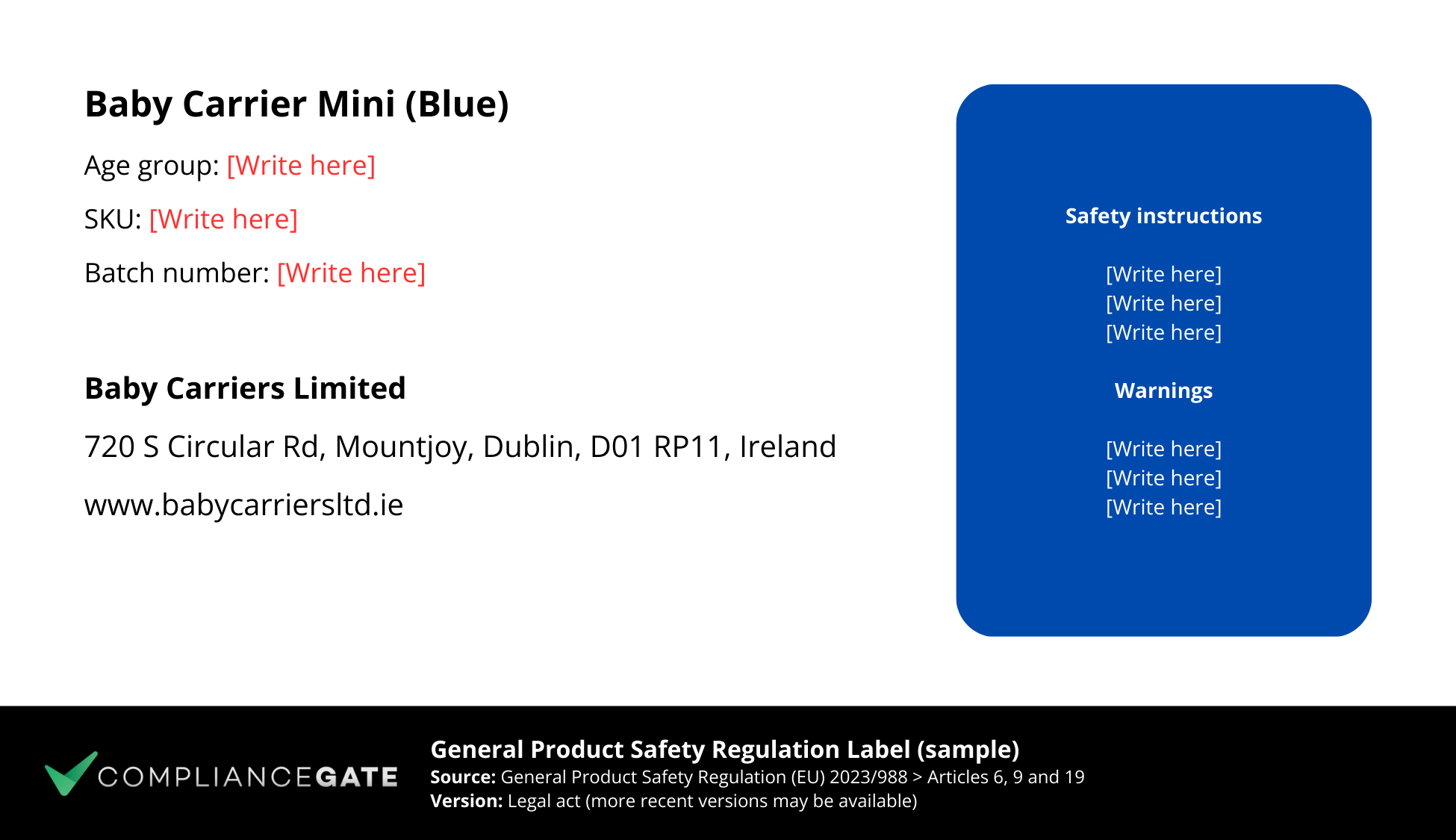
The GPSR mandates that furniture is labelled with the following:
- Furniture type, batch or serial number
- Manufacturer name
- Manufacturer postal and electronic address
- Importer name
- Importer postal and electronic address
- EU AR name
- EU AR postal and electronic address
Note that instructions (written and visual) may need to be affixed directly on the product as well.
Wooden Furniture – EUDR
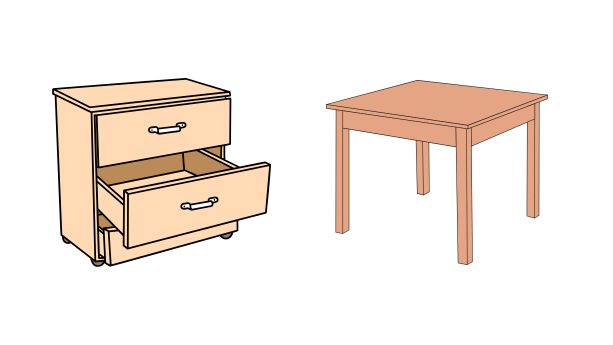
Wooden furniture is generally covered by the EU Deforestation Regulation (EUDR). In particular, the EUDR covers the products and materials whose Combined Nomenclature (CN) codes are listed in Annex I.
Covered furniture
I found the following wooden furniture and parts listed in Annex I:
ex 9401 31 00 Swivel seats with variable height adjustment, of wood (not including used products and second-hand products)
ex 9401 41 00 Seats other than garden seats or camping equipment, convertible into beds, of wood (not including used products and second-hand products)
ex 9401 61 00 Other seats, with wooden frames, upholstered (not including used products and second-hand products)
ex 9401 69 00 Other seats, with wooden frames, other than upholstered (not including used products and second-hand products)
ex 9401 80 00 Other seats, of wood (not including used products and second-hand products)
ex 9401 91 90 Other parts of seats, of wood (not including used products and second-hand products)
ex 9403 30 , ex 9403 40 , ex 9403 50 , ex 9403 60 and ex 9403 91 Wooden furniture, and parts thereof (not including used products and second-hand products)
Note: The prefix “ex” before the CN code means that the product described in the annex is an “extract” from all the products that can be classified under the CN code. This means that, of all products classified under a specific CN code, only some of them are covered by the EUDR.
Not covered
However, I found that the Regulation does not apply to:
- Bamboo
- Rattan
- Other materials of a woody nature
As such, it also does not apply to relevant products that are listed in Annex I under ‘Wood’, so far as they are made of the above-mentioned materials.
More in general, the EUDR does not apply to furniture that falls under CN codes that are not listed in Annex I.
Requirements
Here we list the key requirements of the EUDR.
Entities
Some of the EUDR requirements differ according to the type of entity, as defined in Article 2 of the Regulation:
- Operators
- SME operators
- Micro or small primary operators
- Traders
In general, SME operators do not need to apply due diligence if a due diligence statement for their products has already been submitted.
Also, Article 4a sets a simplified regime for micro or small primary operators, which are micro or small companies (as defined in Directive 2013/34/EU) that are established in a country classified as low risk and grow the relevant commodities themselves.
Country risk classification
The EUDR classifies countries under three categories:
- Low risk
- Standard risk
- High risk
The main difference in the requirements is that operators whose products are made in low-risk countries do not need to comply with all due diligence requirements. Instead, they can apply “simplified due diligence”.
Note that most countries are classified as low risk.
Due diligence requirements
In general, compliance with due diligence requirements involves the following:
a. Collecting information, data and documents necessary to comply with the regulation
b. Adopting a risk assessment
c. Adopting risk mitigation measures
However, if your product is made in a low-risk country, only information requirements apply.
Further, SME operators do not need to comply with all the information requirements set in Article 12 – Establishment and maintenance of due diligence systems, reporting and record keeping
Documentation
I found the following documentation requirements:
a. Due diligence statement (or Simplified declaration, for micro or small primary operators)
b. Due diligence system (e.g. recordkeeping, reporting)
Furniture Textiles – Textile Labelling
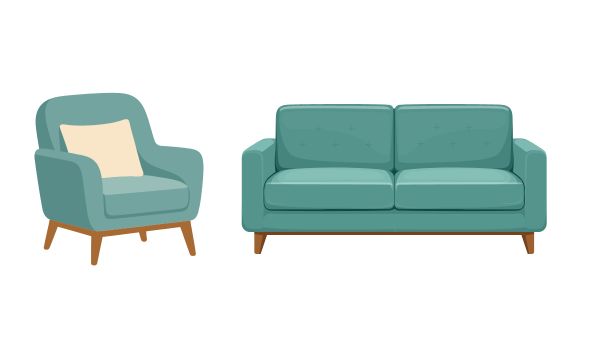
The Textile Labelling Regulation (EU) No 1007/2011 mandates that textile products sold in the European Union must be marked with the textile fibre composition.
The scope explicitly states that furniture is also defined as textile products.
2. For the purposes of this Regulation, the following products shall be treated in the same way as textile products:
(a) products containing at least 80 % by weight of textile fibres;
(b) furniture, umbrella and sunshade coverings containing at least 80 % by weight of textile components;
(c) the textile components of:
(i) the upper layer of multi-layer floor coverings;
(ii) mattress coverings;
(iii) coverings of camping goods;
provided such textile components constitute at least 80 % by weight of such upper layers or coverings;
(d) textiles incorporated in other products and forming an integral part thereof, where their composition is specified.
Examples
100% cotton
100% polyester
90% cotton 10% polyester
Exemption
The following parts are not to be taken into account for the determination of fibre composition when it comes to upholstery fabrics:
Binding and filling warps and wefts which do not form part of the use-surface
Substance Regulations
The REACH Regulation (EC) 1907/2006 and the Persistent Organic Pollutant Regulation (EU) 2019/1021 restrict substances that may be found in materials used to manufacture furniture.
For example, furniture coatings containing excessive amounts of DEHP violate Annex XVII of REACH and cannot be sold in the EU. There are also many cases where furniture has been subject to recalls due to substance content.
Risk examples
| Material | Substance risk (example) |
| Furniture coating | DEHP and other phthalates |
| Furniture paint | Lead |
| Furniture fabrics | PFAS |
| Furniture leather cover | Hexavalent Chromium, Formaldehyde |
| Furniture PU cover | DEHP and other phthalates |
| Furniture PU parts | DEHP and other phthalates |
Testing is generally required to verify compliance with both regulations.
FAQ
Is CE marking required for furniture?
No, furniture should generally not be CE marked unless:
a. The furniture is classified as a medical device
b. The furniture product has play features and is therefore defined as a toy
c. The furniture has electronics incorporated
“Normal” living room or bedroom furniture is not subject to CE marking regulations and directives and must therefore not be CE marked. Further, furniture is generally not defined as construction products and therefore not within the scope of the CPR 2011 or CRP 2024.
Does the GPSR apply to furniture?
Yes, the EU GPSR sets safety requirements for all consumer products, which includes furniture.
Further, several harmonised standards under the GPSR are applicable to furniture.
Is compliance with furniture flammability standards mandatory in the EU?
In practice, yes.
While many EN standards are theoretically voluntary, the GPSR is clear in that you must ensure that your furniture product is safe. Voluntary standards for flammability are therefore critical as they provide a pathway to ensuring that furniture is safe.
For example, EN 1021-1 and EN 1021-2 are widely adopted flammability standards followed by IKEA and many other furniture companies. While voluntary on paper, they are recognised by businesses and authorities as sort of “de facto” mandatory.
There are also many cases reported on the EU Safety Gate involving furniture that were recalled for posing flammability hazards. I could not find any example explicitly mentioning EN 1021-1 and EN 1021-2 (or any other standard, for that matter).
But it is clear that furniture flammability safety requirements must be met, and these standards provide a pathway to achieve that.
Does REACH apply to furniture?
Yes, the REACH regulation sets substance restrictions for “articles”, which also includes furniture. Several substances listed under Annex XVII and SVHCs can be found in materials used to manufacture furniture, so testing is often necessary.


Dear Sir,
Our product is a soundproof pod; a room inside a room.
If all the electrical parts used are having CE marking,
1) how can we market our product in Europe?
2) how can we say our product is having CE marking?
Based on our CE consultant, our pod is considered as a furniture and CE is not mandatory.
Dear Madam/Sir,
We are interested on investing with Ergonomic Mesh Chair for European Market, we would like to confirm what are the needed certificates for this type of product? Like if CE Certificate is needed or what is mandatory.
I tried to search and read the directives but there is no direct answer, we are hoping for your response and help for this matter.
Hoping to hear from you.
Hi Kristel,
I suggest you book a consultation call so we can discuss this further
Regulation should be kept by the company for this safety buying furniture