





 Find US, EU, UK, CA, & AU requirements













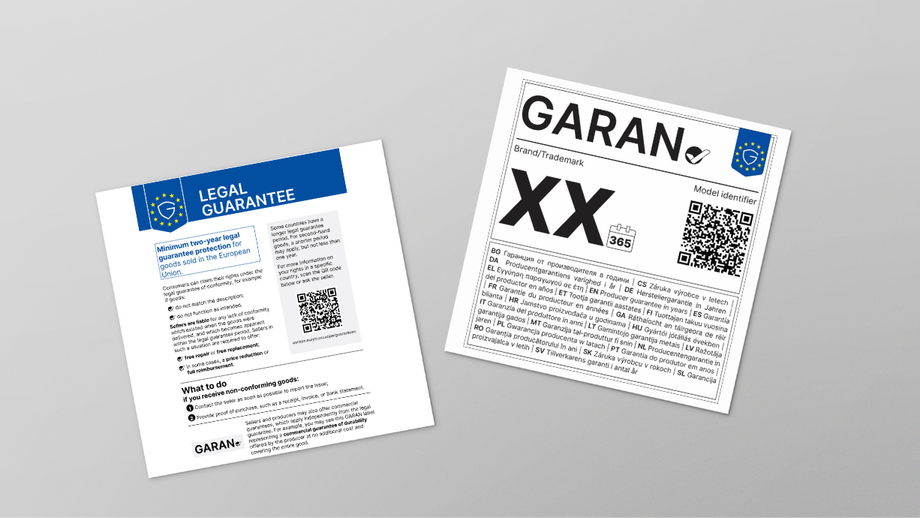
Regulation (EU) 2025/1960 introduces two guarantee notices starting from 27 September 2026. A harmonised notice must be displayed in all physical and online stores selling consumer goods from this date. It informs consumers of their 2 years of legal guarantee protection.
If you provide a voluntary guarantee beyond 2 years, then you also need to provide a product-specific GARAN label.
- A 2-year legal guarantee protection is required for consumer products
- The EU legal guarantee notice is mandatory when selling consumer products
- The GARAN label is optional (only if an extended guarantee is offered)
Content Overview

FREE CONSULTATION CALL (30 MIN)
 Ask questions about compliance requirements
- Countries/markets:
.png)
.png)
.png)


- Learn how we can help your business
You will speak with:Ivan Malloci
Overview
| EU Legal Guarantee Notice HARMONISED NOTICE ON THE LEGAL GUARANTEE OF CONFORMITY |
GARAN Label HARMONISED LABEL FOR THE COMMERCIAL GUARANTEE OF DURABILITY |
|
| Image | 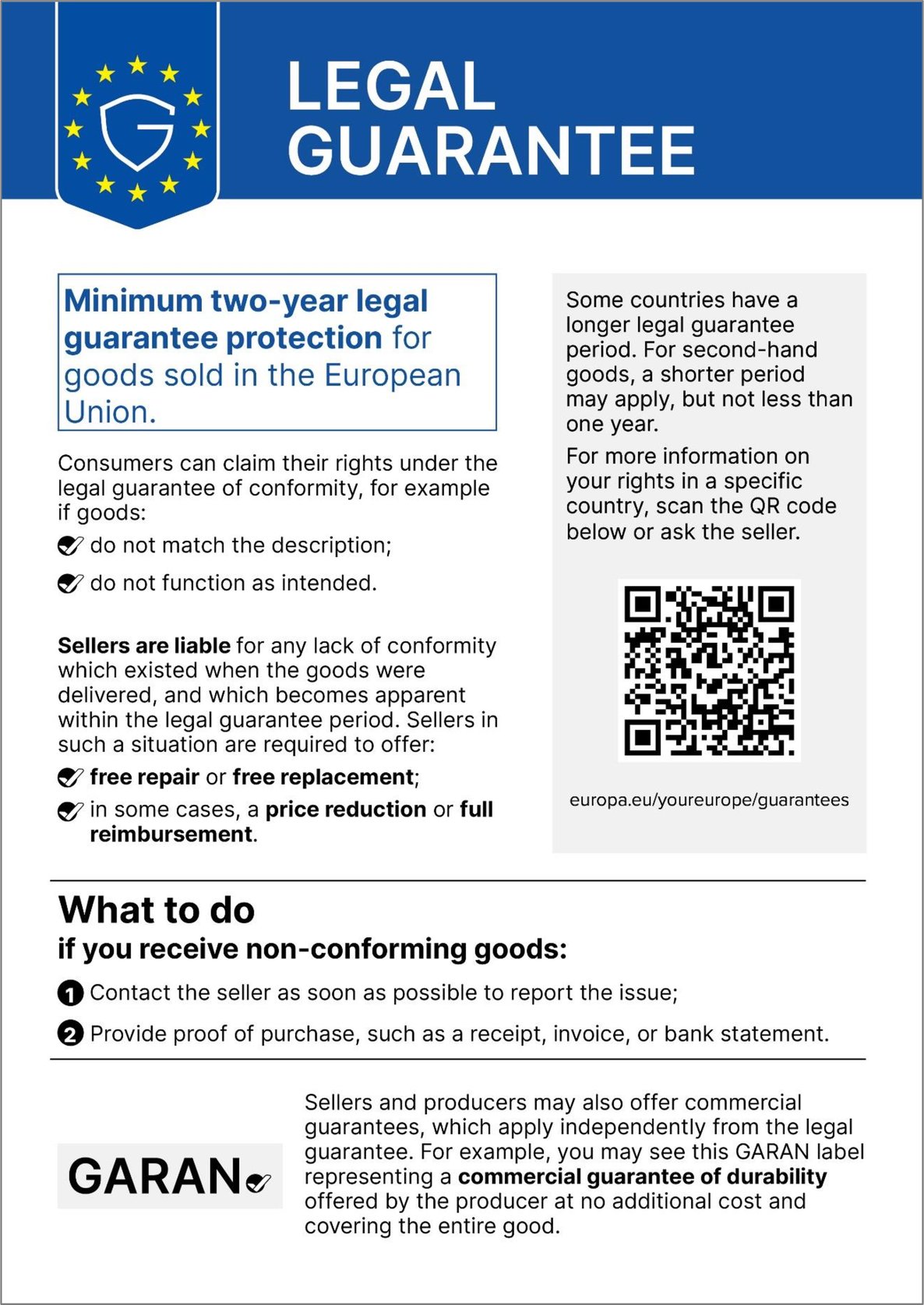
|
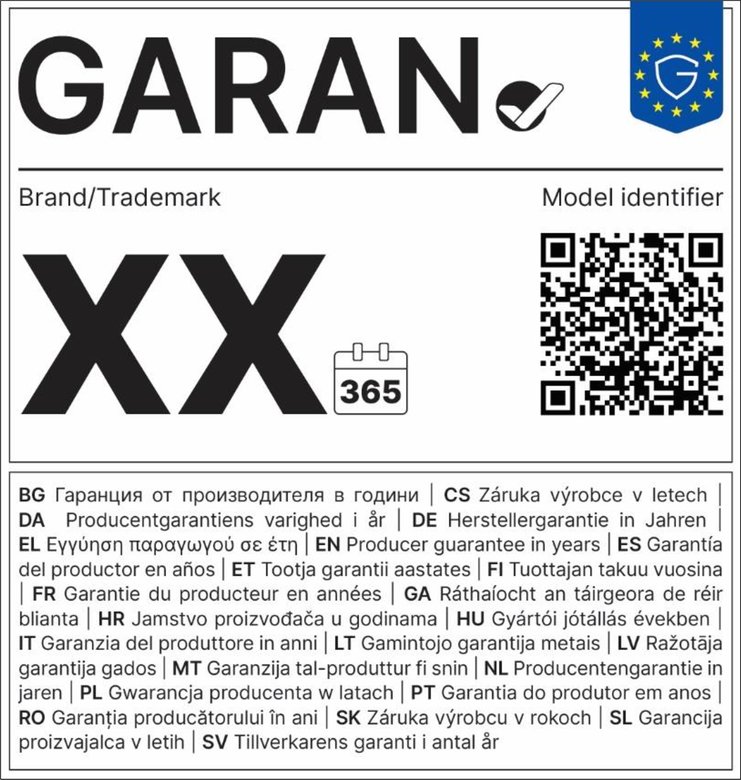 |
| Mandated by | Directive 2011/83/EU – Article 22a(1) | Directive 2011/83/EU – Article 22a(1) |
| Design | Regulation (EU) 2025/1960 – Annex I | Regulation (EU) 2025/1960 – Annex II |
| Purpose | Informs the consumer that they have the right to 2 years of legal guarantee for any consumer goods sold in the EU | Specifies a (voluntary) additional guarantee expressed in years for a particular product |
| Date | 27 September 2026 | 27 September 2026 |
| Who is responsible | Seller of consumer goods in the EU | ‘Producer’ means a manufacturer of goods, an importer of goods into the Union or any person purporting to be a producer by placing its name, trade mark or other distinctive sign on the goods;
Note: May still be displayed by sellers |
| Required | Yes – Mandatory notice at the point of sale | Voluntary – Offered by producers who wish to assure consumers of the durability of their goods |
| Scope | Any consumer goods sold in the EU | Any consumer goods sold in the EU |
| Product specific | No – Provides general information only | Yes |
| Required edits | None identified | 1. Specify length of guarantee in years
2. Specify your brand or trademark 3. Specify the model ID for the covered product |
| Printed version | Placement: Poster or near counter
Minimum size: A4 Colour: Colour or black and white |
Placement: On product or packaging
Minimum size: 95 x 100 mm Colour: Colour or black and white |
| Digital version | Placement: Website image
Minimum size: Not found Colour: Required (not black and white) |
Placement: Website image
Minimum size: Not found Colour: Required (not black and white) |
Background
| Legislation | Information |
| Sale of Goods Directive (EU) 2019/771 | Declares that sellers must provide a 2-year guarantee:
“The seller shall be liable to the consumer for any lack of conformity which exists at the time when the goods were delivered and which becomes apparent within two years of that time. Without prejudice to Article 7(3), this paragraph shall also apply to goods with digital elements” |
| Directive (EU) 2024/825 | Added Article 22a to Consumer Rights Directive 2011/83/EU, which in turn resulted in the two new visual labels |
| Consumer Rights Directive 2011/83/EU | Article 22a(1) states that guarantees shall be communicated to consumers using a harmonised label |
| Regulation (EU) 2025/1960 | Introduces two types of harmonised labels:
|
| Other | An EU guidance page clarifies that the legal guarantee is required for “any consumer goods sold in the EU”. |
Do we need to provide a 2-year guarantee for all consumer products sold in the EU?
Yes, but there are conditions that can be found in Article 5 of Directive (EU) 2019/771.
Article 5 – Conformity of goods
The seller shall deliver goods to the consumer that meet the requirements set out in Articles 6, 7 and 8, where applicable, without prejudice to Article 9.
Note that this specifically requires that sellers must deliver goods that are in a certain condition. It does not state that goods must be indestructible or that you must provide unconditional returns, repairs or refunds just because your customers ask for it.
The specific conditions that must be met are defined in Articles 6, 7, and 8:
Article 6 – Subjective requirements for conformity
Article 7 – Objective requirements for conformity
Article 8 – Incorrect installation of the goods
Do we need to replace any consumer product that breaks within 2 years?
No, the 2-year guarantee does not mandate that any product that breaks within 2 years must be replaced, repaired, or refunded. Here are scenarios when this can become a requirement:
1. The product does not match the description
2. Quality standard differs from advertising
3. Not fit for the purposes for which goods of the same type would normally be used
4. The product quality and performance do not match what is considered normal for the product type
5. The product was installed incorrectly due to insufficient or non-existent user instructions
This does not mean that a company selling toilet paper must provide an unconditional money-back guarantee valid for 2 years. Nor does it mean that you are expected to sell products that are indestructible.
But if you sell, for example, a quartz watch that falls apart after 6 months of normal use, then the customer could ask for a replacement or other measure.
The EU market has been flooded with low-cost items for a long time, and this puts pressure on sellers to improve general product quality and be honest with product descriptions.
At the same time, I can understand that a two-year window can be problematic from a seller’s perspective too. It can be hard to prove what “acceptable” quality is, and there is also a risk that some consumers could abuse this right.
EU legal guarantee notice (harmonised notice)
Who is responsible for providing the EU legal guarantee notice?
Companies selling consumer products within the EU or to consumers in the EU. A seller could be the brand owner, or a retailer (online or offline) reselling the same product.
What is an EU legal guarantee notice?
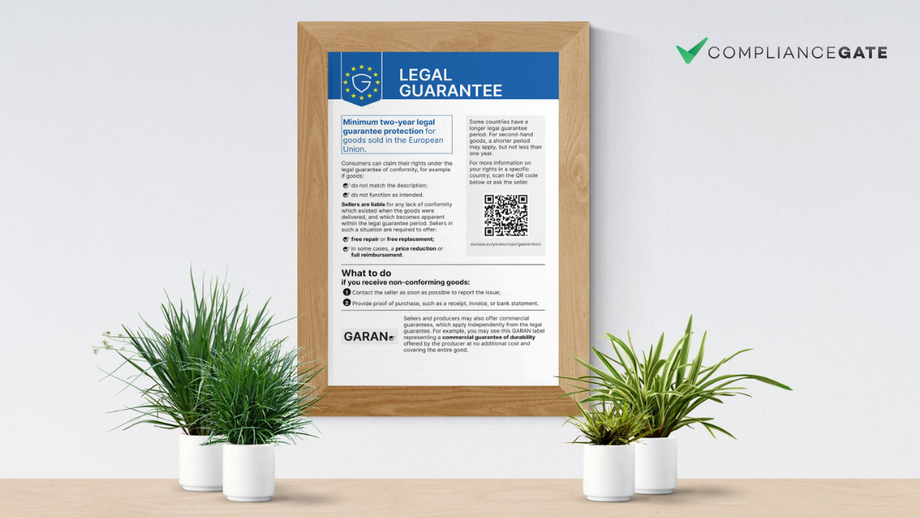
The EU legal guarantee notice, or harmonised notice, is a general notice that must be displayed in physical stores or online stores. Its purpose is to inform the consumer of their 2-year guarantee right for consumer products.
It is not product-specific, but applies to consumer products in general.
Is the EU legal guarantee notice mandatory?
Yes, the EU legal guarantee notice is required when selling “ any consumer goods sold in the EU”, both in physical and online stores.
Which products require an EU legal guarantee notice?
The EU guidance page states that the guarantee applies to “any consumer goods sold in the EU”.
Which products are exempt?
We cannot find any exemptions.
GARAN label
Who is responsible for the GARAN label?
The producer, which is defined as follows in the Sale of Goods Directive (EU) 2019/771:
‘Producer’ means a manufacturer of goods, an importer of goods into the Union or any person purporting to be a producer by placing its name, trade mark or other distinctive sign on the goods;
This makes sense, as stores generally do not provide a warranty.
What is a GARAN label?
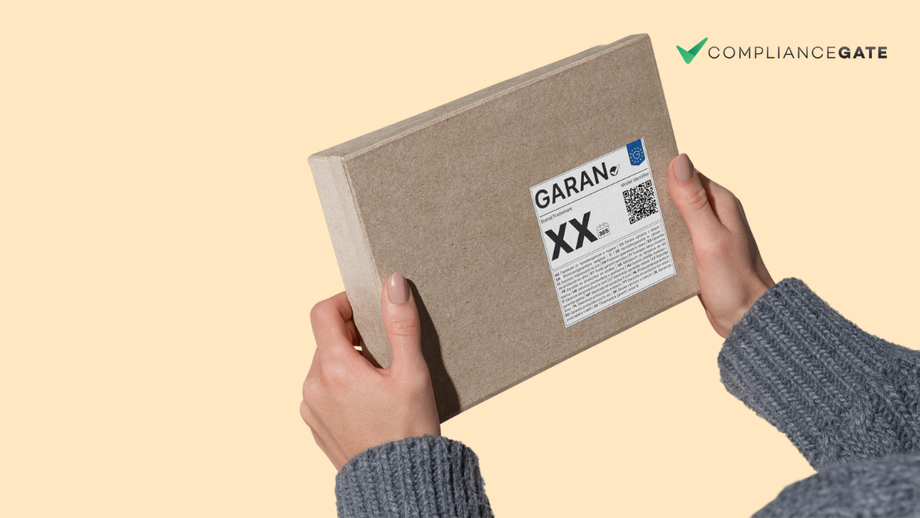
The purpose of the GARAN label is to inform your consumers when you offer a voluntary guarantee for consumer products beyond the mandatory 2 years.
Are GARAN labels mandatory?
Only if you choose to offer an extended guarantee beyond 2 years. When you do so, you must also provide your consumers with a commercial guarantee statement.
Which products require a GARAN label?
We can only find that the GARAN label is required for consumer products, and only if you choose to provide an extended guarantee.
Which products do not require a GARAN label?
We cannot find any exemption.