




 Product assessments in 2 minutes














Planning to import products from China? Then it is essential that you understand how product compliance must be managed.
Make the wrong assumption, and the entire process can derail to the point where you have your imported goods confiscated and destroyed by the customs authorities.
In this guide, I share what I have learned dealing with product compliance and manufacturing in China. I would also argue that most lessons can be applied if you also import from India, Vietnam, or elsewhere in Asia.
Content Overview

Find new and updated regulations for your products today
Worried you might lose track of new and updated labelling, certification and other requirements? We spend around 12 h each month checking 490+ regulations in the US, EU, UK, Canada & Australia each month (so that you don’t have to).


Free Consultation (30 min)
Do you have questions about US, EU, or UK product compliance requirements?
Key Challenges for Importers
Here are some of the key challenges related to product safety and compliance when importing from China.
1. Not all products are designed to meet US, EU and UK rules
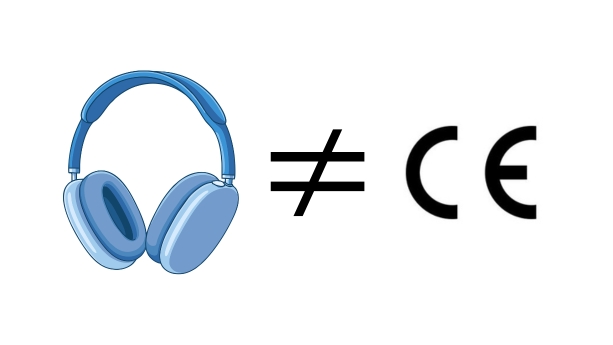
China is often known as the “world’s factory”. This is also relevant in the context of product compliance, as Chinese manufacturers do not exclusively make products intended for the United States, the EU or the UK.
As such, many products are not engineered and manufactured to meet US and European product standards, labelling, and certification requirements.
This does not necessarily mean that such products are inherently unsafe. But products must comply with country- and market-specific standards, labelling and documentation requirements.
In short, you can never assume that a product sold by a Chinese manufacturer is by default compliant with requirements in your country.
2. Factories are not compliance consultants

Chinese manufacturers are what they claim to be: manufacturers that make products. They are generally not marketing experts, accountants, logistics experts, or customs agents. Further, they are not product compliance experts either.
At best, staff at Chinese manufacturers may understand how to implement specific EN, IEC, ISO or ASTM standards. It can be very valuable to discuss product safety and standards from a hardware perspective.
But never expect your factory to guarantee that your product is correctly labelled or comes with pre-written instructions in 28 European languages.
Because that is not their job, it’s yours.
3. Factories do not have test reports for all products
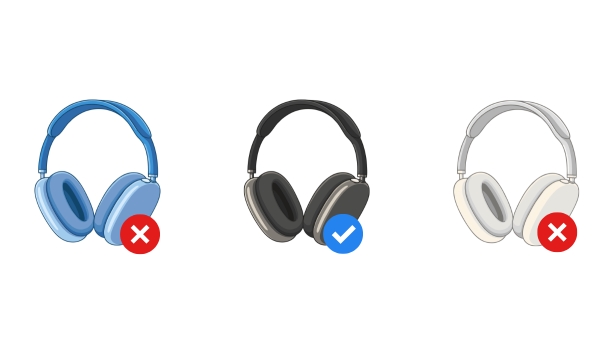
“I want to find a factory that sells CE-marked products only”
Sounds great, on paper. But in reality, there are barely any factories in any industry that can provide an entire product range with complete and up-to-date test reports.
Would it not be great for business if they did? No, quite the opposite. Let’s say that you are a factory making LED bulb lights. You have 50 SKUs, and you sell in the US and EU.
Ensuring that these 50 SKUs are continuously tested as the components, materials, and standards change would cost astronomical amounts of money.
It would price them out of the market, as most buyers value price before compliance.
4. Lack of substance data
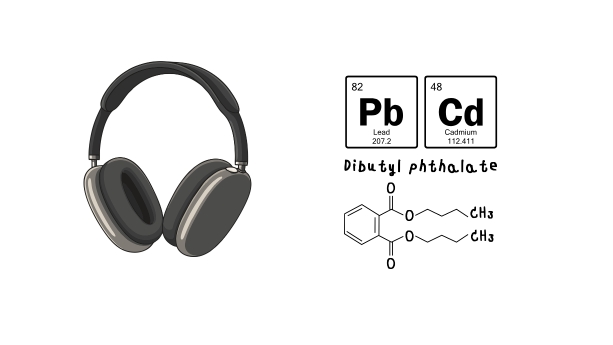
Most factories do not have complete substance data, if any at all. If you, for example, go to a textiles factory, they likely do not have test reports corresponding to REACH or California Proposition 65.
What this means is that substance testing is often required to verify compliance before you import products from China.
Case Study: LED Light Factory in Ningbo
In 2015, we were approached by a European company that intended to buy LED bulb lights from a factory in China. They had, according to their own claims, identified the LED lighting manufacturer of one of the world’s largest retailers.
The idea was that a factory making products for one of the world’s largest retailers would surely make compliant products.
It would not make any sense if their products were not already CE marked.
Unfortunately, that is not how the situation panned out.
We called the factory and asked for a list of “already CE marked” products. They had none. Not a single test report, DoC or other compliance document.
Had we uncovered a massive conspiracy and compliance fraud by one of the world’s largest retailers?
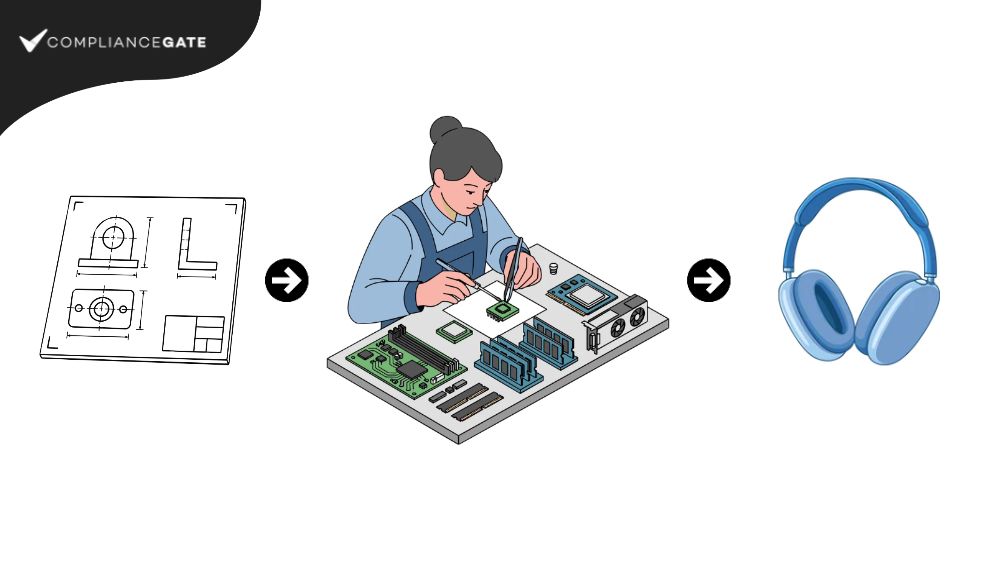
No, not at all. What we had uncovered was that the retailer had created their own technical specifications, PCB schematics, label files and packaging artwork. The factory just did what factories are supposed to do, which is to assemble and pack products.
They were not even aware of the fact that compliance was built into the PCB designs and components. They were not aware of the fact that the instructions and packaging artwork they printed were carefully designed to meet obligations concerning CE marking and energy labelling.
They just made the product, and compliance was built in the whole time.
This is how professionals work.
I never heard from the company that approached us again. I assume the reason is that their business model did not factor in the time and expense to do the same job.
How to Manage Product Compliance in China
So with all that said, let’s look into a compliance methodology that actually works when importing products from China.
There are two pathways that depend entirely on whether you are buying factory-designed (ODM) products or custom-designed (OEM) products.
Factory design (ODM)
✅ Research applicable regulations and standards
✅ Determine if your company is responsible for compliance (which is almost always the case)
✅ Request and verify existing test reports
✅ Arrange testing for close gaps
Example: A supplier may have test reports for EN 71-1 and EN 71-2, but lack test reports for EN 71-3 and REACH.
✅ Review label files and make adjustments
✅ Review and update instructions
Example: If you sell in the EU, then you will almost certainly need to translate instructions into several languages. This assumes there are sufficient instructions in the first place, which may or may not be the case.
✅ Review existing documentation
Example: Do they have a Declaration of Conformity, and does it contain the required information?
Custom design (OEM)
✅ Research applicable regulations and standards
✅ Create technical drawings and specifications that are compliant by design
✅ Create label files and packaging artwork
✅ Write instructions
✅ Create compliance documentation (i.e., a DoC or CPC)
✅ Arrange product safety testing
✅ Arrange substance testing
FAQ
How do I know if a Chinese supplier is compliant?
For starters, a company is generally not “compliant” as an organisation. What you need to do is to determine if individual products are compliant which requires that you request a test report, label files, and documentation.
It also requires that you know which specific test reports, documents, and labels you need to sell your product.
Are products made in China safe?
Yes, many products made in China are perfectly safe and reach high quality standards because they are designed to do so.
But product safety can never be taken for granted, no matter where in the world you manufacture products. The only solution, if you ask me at least, is to ensure that product compliance and safety are built into your product by design.
There is no such thing as a uniform quality or safety level that is applicable to the products of an entire country.
Do products made in China meet US, EU or UK standards?
Some do, some don’t.
Whether a product made in China meets US, EU, or UK standards depends entirely on if the product was designed to be sold in these markets.
If not, then it is likely not designed to comply with US, EU or UK standards.
Does that mean that the product is unsafe? Not necessarily. Perhaps it was designed to comply with a national GB standard. But that does not make it ready to import and sell in the USA or Europe.
Are Chinese factories responsible for ensuring product safety?
Yes, if they sell directly to consumers and have their own distribution.
If you are buying from a factory? No, at least not in practice. It is generally the responsibility of the company that brings a particular product to market.
Who pays for safety testing?
The buyer always pays for testing one way or another. Your supplier could pay, but then that results in a higher unit price.
My recommendation is that you never let the supplier book and manage testing. It is essential that you have a first-hand conversation with the lab to understand the costs and what their quote is based on.
What can happen if we import non-compliant products from China?
Then the customs may confiscate and destroy your product upon arrival. You could also face recalls later on if a government agency decides to investigate your product.
That can be the result of random action, or a targeted investigation that can come months or even years after a product has been imported.
Can we return non-compliant prodiuts to the supplier?
I am aware of cases when this has happened, but I am also aware of cases when no such chance was given, which resulted in the goods being destroyed upon arrival.
Returns also hinge on the supplier’s willingness to accept a return, which should absolutely not be taken for granted.

