





 Find US, EU, UK, CA, & AU requirements














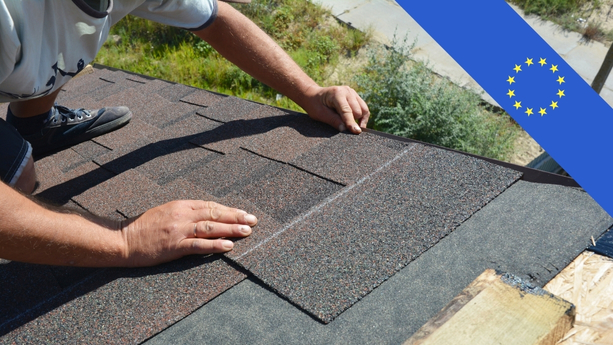
Importers and manufacturers of roofing products and related accessories looking to supply their products in the European Union must comply with the requirements under the Construction Products Regulation 2011 (CPR 2011).
This guide is limited to products that are covered by harmonised standards under the CPR 2011. These products are subjected to requirements such as those related to the declaration of performance, technical documentation, instructions, CE marking, and testing.
Roofing
Here are the roofing products we found that are subject to harmonised standards under the CPR 2011:
- Concrete roofing tiles and fittings for roof covering
- Light transmitting single skin profiled plastics sheets for internal and external roofs
- Clay roofing tiles and fittings
- Slate and stone for discontinuous roofing
- Precast concrete products – Special roof elements
- Reinforced bitumen sheets for roof waterproofing
- Underlays for discontinuous roofing
- Plastic and rubber sheets for roof waterproofing
- Self-supporting metal sheet for roofing
- Fully supported metal sheet and strip for roofing
- Rigid underlays for discontinuous roofing
- Light transmitting flat multiwall polycarbonate (PC) sheets for internal and external use in roofs
- Light transmitting flat solid polycarbonate (PC) sheets for internal and external use in roofs
Other roofing products
Here we list the accessories for roofing we found that are subject to harmonised standards under the CPR 2011:
- Installations for roof access (Walkways, treads and steps)
- Roof safety hooks
- Individual roof lights of plastics
- Permanently fixed roof ladders
- Continuous rooflights of plastics with or without upstands
Note that in this guide, we do not cover other regulations or directives that may be relevant for roofing products and accessories of roofing.
Content Overview

FREE CONSULTATION CALL (30 MIN)
 Ask questions about compliance requirements
- Countries/markets:
.png)
.png)
.png)


- Learn how we can help your business
You will speak with:Ivan Malloci
Harmonised standards for roofing
Under the CPR 2011, manufacturers of roofing products that are subject to harmonised standards must create a declaration of performance. The act of creating a declaration triggers other requirements. For instance, after creating the declaration of performance, the manufacturer must affix the CE marking to the roofing product according to Article 8 of the regulation.
Additionally, when the roofing product is subject to harmonised standards, the standards should specify the system of assessment and verification of constancy of performance that the manufacturer must take part in. The specified system may also require the involvement of a notified body.
Finally, the CPR 2011 requires the manufacturer to create technical documentation that contains information about the system of assessment and verification used.
Thus, to comply with the requirements of the CPR 2011, it is necessary to assess whether the product is subject to a harmonised standard. Here is a list of harmonised standards whose titles contain the keywords “roof” or “roofing” under the CPR 2011:
EN 490 Concrete roofing tiles and fittings for roof covering and wall cladding – Product specifications
EN 1013 Light transmitting single skin profiled plastics sheets for internal and external roofs, walls and ceilings – Requirements and test methods
EN 1304 Clay roofing tiles and fittings – Product definitions and specifications
EN 12326-1 Slate and stone for discontinuous roofing and external cladding – Part 1: Specifications for slate and carbonate slate
EN 13693 Precast concrete products – Special roof elements
EN 13707 Flexible sheets for waterproofing – Reinforced bitumen sheets for roof waterproofing – Definitions and characteristics
EN 13859-1 Flexible sheets for waterproofing – Definitions and characteristics of underlays – Part 1: Underlays for discontinuous roofing
EN 13956 Flexible sheets for waterproofing – Plastic and rubber sheets for roof waterproofing – Definitions and characteristics
EN 14782 Self-supporting metal sheet for roofing, external cladding and internal lining – Product specification and requirements
EN 14783 Fully supported metal sheet and strip for roofing, external cladding and internal lining – Product specification and requirements
EN 14963 Roof coverings – Continuous rooflights of plastics with or without upstands – Classification, requirements and test methods
EN 14964 Rigid underlays for discontinuous roofing – Definitions and characteristics
EN 16153 Light transmitting flat multiwall polycarbonate (PC) sheets for internal and external use in roofs, walls and ceilings – Requirements and test methods
EN 16240 Light transmitting flat solid polycarbonate (PC) sheets for internal and external use in roofs, walls and ceilings – Requirements and test methods
By accessing the CEN-CENELEC site, we are able to search for the above harmonised standards and read their descriptions. There, we found that the harmonised standards have information relating to certain topics like test methods, minimum performance requirements, evaluation of conformity, and marking requirements.
Harmonised standards for other roofing products
We also found that there are harmonised standards that mention certain accessories related to roofing products. Here is a list of such standards whose titles contain the keywords “roof” or “roofing”:
EN 516 Prefabricated accessories for roofing – Installations for roof access – Walkways, treads and steps
EN 517 Prefabricated accessories for roofing – Roof safety hooks
EN 1873 Prefabricated accessories for roofing – Individual roof lights of plastics – Product specification and test methods
EN 12951 Prefabricated accessories for roofing – Permanently fixed roof ladders – Product specification and test methods
Declaration of performance (DoP)
Manufacturers who find that there are harmonised standards that cover their roofing products and accessories for roofing should create a declaration of performance. The manufacturer should base it on the technical documentation for the covered products.
The declaration must be created using the model found in Annex III and follow the content requirements contained in Article 6 of CPR 2011. Annex III also contains detailed instructions on how to draft the declaration.
The manufacturer should keep the declaration for record-keeping purposes for 10 years. When supplying their roofing products and accessories for roofing, the manufacturer must provide a copy of the declaration following the requirements found in Article 7 of the regulation.
CE marking and other requirements
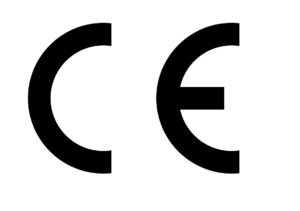
The manufacturer must affix the CE marking to their roofing product or accessory for roofing, where their products are subject to harmonised standards and a declaration of performance exists. Article 9 lists placement requirements and the information that must follow the CE marking.
The CPR 2011 also requires certain labelling information for traceability purposes to be featured on the product. Here are some examples of the required traceable information under Article 11 of the regulation:
- Product information (e.g., batch, model, serial number)
- Manufacturer’s name
- Manufacturer’s contact address
Instructions
Manufacturers must ensure that their roofing products and related accessories come with instructions and safety information. Depending on where it is sold, the manufacturer may have to translate instructions and safety information to ensure that consumers are able to easily understand them.
Technical documentation
The manufacturer of roofing products and accessories related to roofing must create a declaration of performance on the basis of technical documentation. According to Article 11 of CPR 2011, the technical documentation must contain a description of all the relevant elements related to the required system of assessment and verification.
Systems of assessment and verification are mentioned in harmonised standards. All the possible systems that can be found in harmonised standards are listed in Annex V of the CPR 2011. The system specifies tasks for the manufacturer and the notified body (if any).
Product testing
The CPR 2011 requires manufacturers to declare the performance of products subject to the requirements of the regulation and harmonised standards. These standards set several requirements, including those that are related to testing.
Generally, a manufacturer must outsource testing to a third-party lab. However, the harmonised standard may specify a system of assessment and verification that requires the involvement of a notified body in the testing of the product.
Here are some examples of different tests for roofing products that are subject to harmonised standards:
- Chemical resistance testing
- Tests relating to durability and ageing
- Impact tests
- Hail resistance testing
After the testing of the roofing product or accessory for roofing is complete, the manufacturer should receive test reports. These documents serve as evidence that the product complies with the requirements of the harmonised standard.
FAQ
Must roofing be CE marked in the EU?
Yes, CE marking is required for many roofing products in the EU.
Under the CPR 2011, the CE marking must be present when the manufacturer creates the declaration of performance. When the manufacturer’s roofing product or accessory related to roofing is subject to a harmonised standard under the CPR 2011, the manufacturer must draw up the declaration of performance.
Thus, the CE marking is not required for all construction products, but it is required for those that are subject to harmonised standards.
Is testing required for roofing products?
Yes, testing is generally required to verify the performance of the roofing product according to the requirements of harmonised standards and the regulations. By testing the product, the manufacturer can confirm their compliance with the requirements of the CPR 2011.
Do we need to involve a notified body?
The harmonised standards that cover roofing products and accessories for roofing specify the system of assessment and verification required to assess the performance of the product under the CPR 2011. All the possible systems found in harmonised standards are found in Annex V of the regulation. Annex V lists the systems that mention tasks for manufacturers and the notified body (if applicable).
Thus, the relevant harmonised standard may specify a system that requires a notified body to be involved.