




 Find US, EU, UK, CA, & AU requirements












This guide provides an overview of various US product labeling requirements. We also provide label samples and information about covered products, label information, and placement.
Content Overview

FREE CONSULTATION CALL (30 MIN)
 Ask questions about compliance requirements
- Countries/markets:
.png)
.png)
.png)


- Learn how we can help your business
You will speak with:Ivan Malloci
Overview
| Example | Label | Notes |
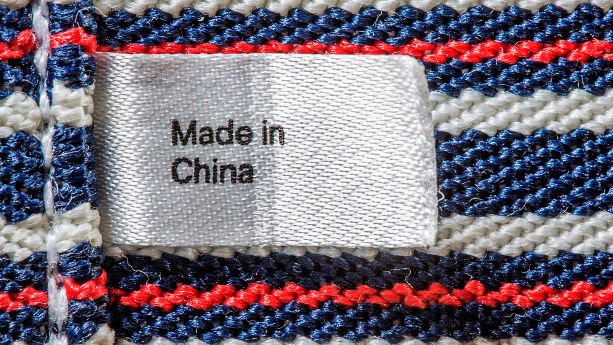 |
Country of origin marking | Most products sold in the United States require country of origin marking |
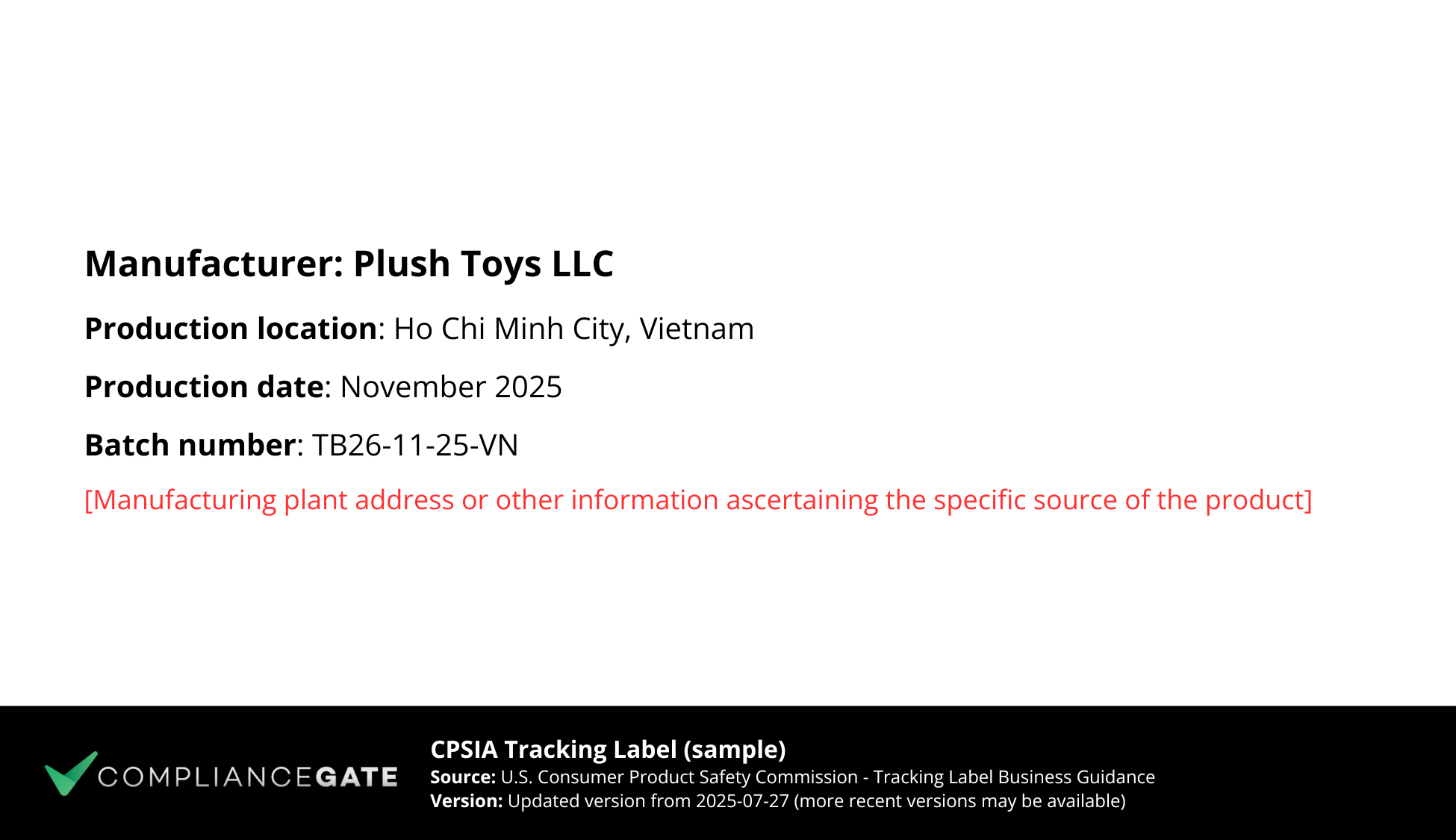 |
CPSIA tracking label | Required for children’s products (0 – 12 years old) |
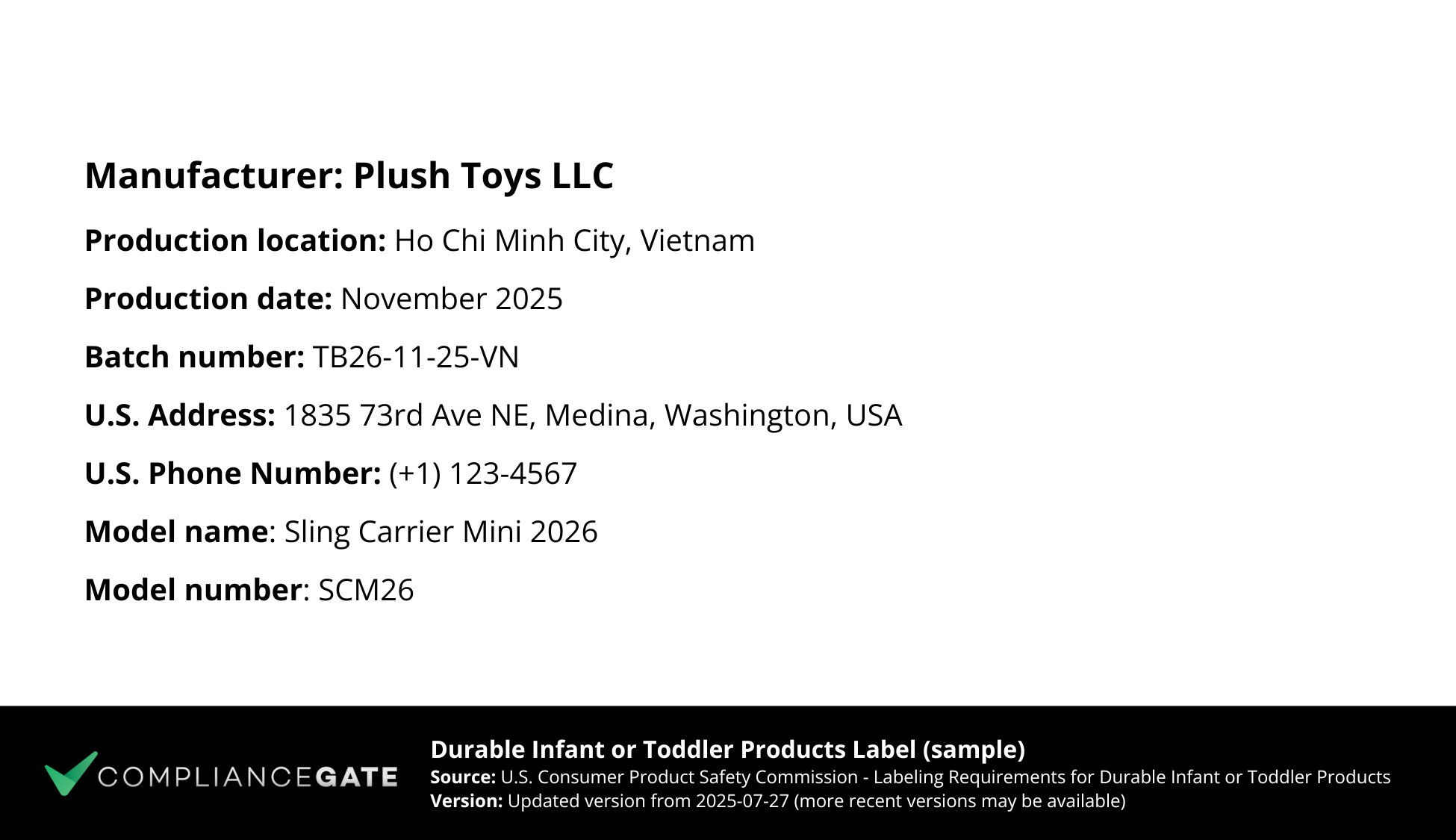 |
CPSIA tracking label for durable infant and toddler products | Required for children’s products defined as durable infant and toddler products
Examples: Baby carriers and cribs |
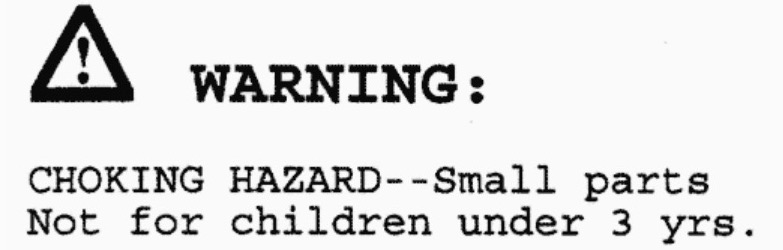 |
Small parts warning | Warnings apply under certain children’s product safety rules |
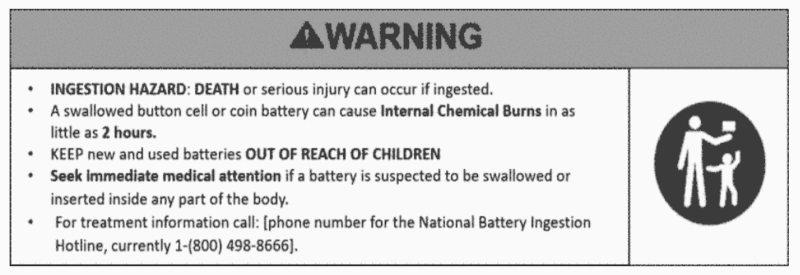 |
Part 1263 button cell battery warning label | Warning labels apply to button cell battery packaging and consumer products containing such batteries |
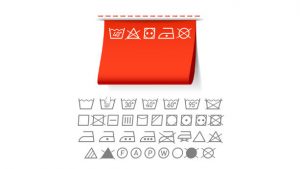 |
Textile label | Fiber composition and care label instructions |
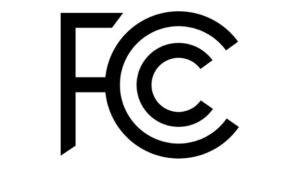 |
FCC logo | The FCC logo can be voluntarily affixed on products that are subjected to the SDoC procedure to indicate compliance |
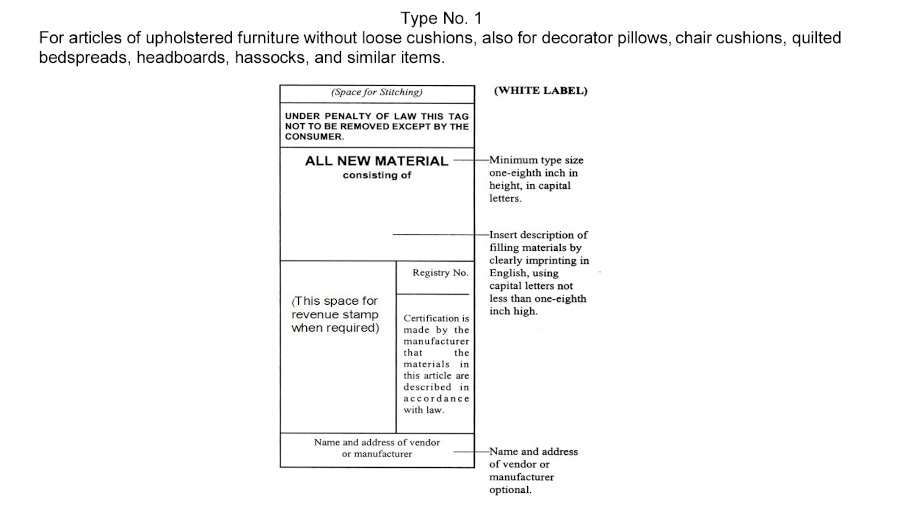 |
US Law Label | Certain products with filling materials require law labels in many US states |
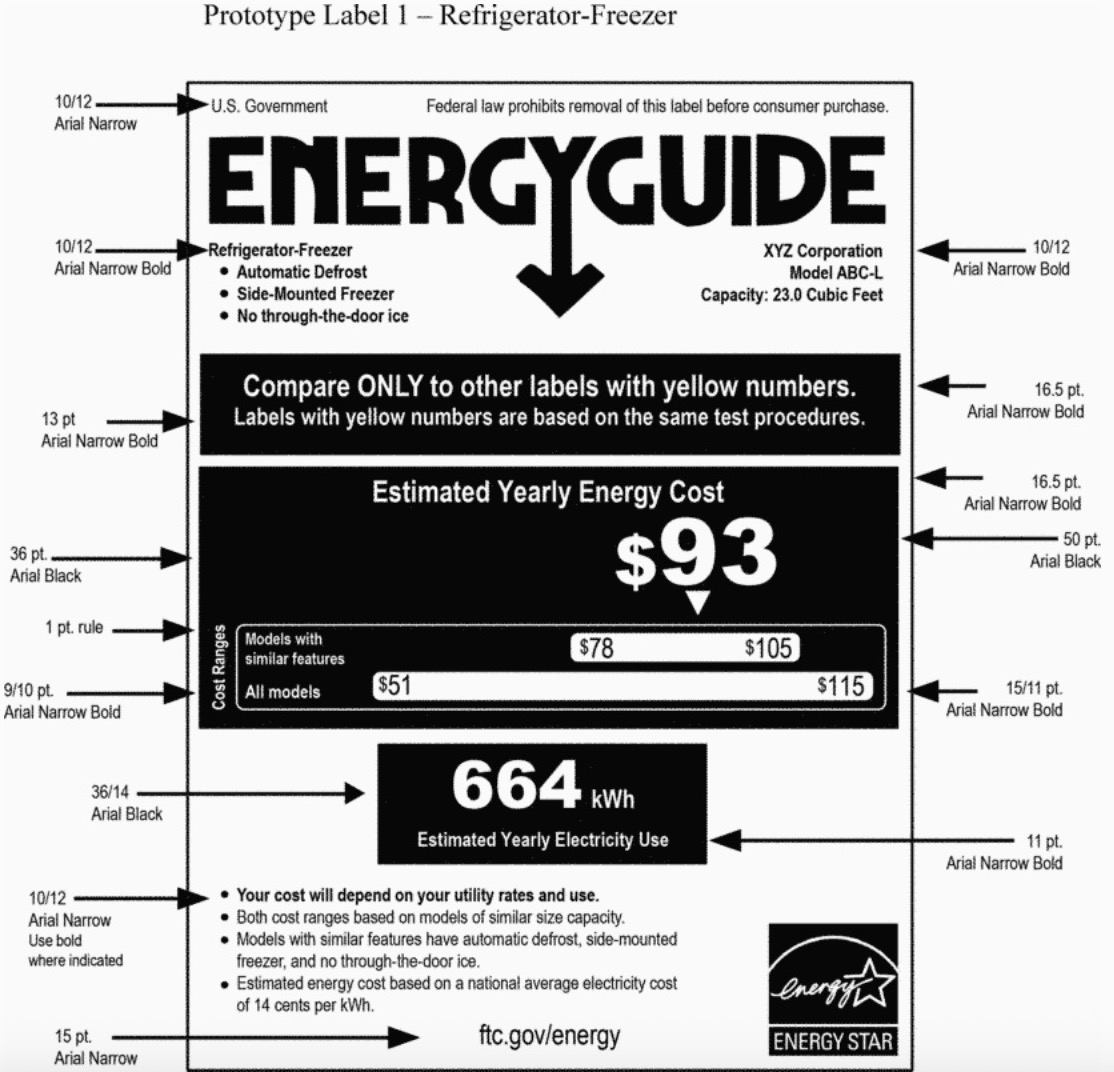 |
16 CFR Part 305 Energy label | Required for certain products covered by 16 CFR Part 305 |
16 CFR Part 134 – Country of Origin Marking
Country of origin marking is mandatory for most products sold in the United States. For example, products manufactured in Vietnam should be labeled as Made in Vietnam.
Examples
- Made in Vietnam
- Made in Germany
- Made in China
Placement
The marking can either be applied to the product or the packaging, depending on the size and various exemptions. However, many brands choose to apply the country of origin marking both to the products and the packaging, as it can be difficult to navigate the exemptions.
Special rules
Further, special rules concerning country of origin marking for the following products:
- Watches
- Native American style jewelry
- Native American style accessories
- Assembled products
Recommended article: Country of Origin Requirements in the United States: An Overview
16 CFR Part 323 – Made in USA Labelling
16 CFR Part 323 defines “Made in the United States” as products, including its components, that are built, crafted, created, made, manufactured, or produced in the United States.
Products should generally not bear the “Made in the United States” label unless the following take place within the United States:
- Processing of the product
- Final assembly
- Component sourcing
Children’s Products (CPSIA)
Children’s products subject to the CPSIA are subject to various labeling requirements. Note that the CPSIA covers toys and other children’s products, such as baby carriers and cribs.
CPSIA Tracking Label
Tracking labels must be affixed to the product and packaging when possible. The tracking label should generally include the following information:
1. Company name (Manufacturer, importer, or private labeler)
2. Production location
3. Production date
4. Batch or run number or other identifying manufacturing process characteristics
5. Any other information to facilitate ascertaining the specific source of the product (e.g., address of the manufacturing plant)
Recommended article: CPSIA Tracking Label Guide For Importers & Amazon Sellers
Durable infant and toddler products
Additional CPSIA labelling requirements apply to products defined as durable infant and toddler products. This includes children’s furniture, baby carriers, and many other products.
1. Company name (manufacturer or private labeler)
2. Production location (city, state)
3. Production date
4. Batch or production run number
5. Manufacturer contact information (U.S. address and telephone number, toll-free if available)
6. Model name
7. Model number
Warnings labels
Certain children’s product safety rules and incorporated standards (such as ASTM F963) set warning labeling requirements applicable to particular types of children’s products and risks.
The example above comes from 16 CFR Part 1500.19, which sets choking hazard labeling requirements for:
- Small parts
- Balls and small balls
- Latex balloons
- Marbles
Note that additional warning labeling requirements can apply under other parts and standards.
Recommended article: Warning Labeling Requirements for Children’s Products in the United States
General Use Products
Various types of general-use products are also subject to labelling requirements. Below follow two examples of such products.
Button Cell Batteries
Part 1263 – Safety Standard for Button Cell Batteries mandates that button cell batteries and consumer products that contain such batteries comply with specific labeling requirements.
1. The example above is relevant for button cell battery packaging
2. Additional requirements can be found in ANSI/UL 4200A
Recommended article: Part 1263 – Safety Standard for Button Cell Batteries
Mattresses
Mattresses are subject to labeling requirements set out by the following standards:
a. 16 CFR Part 1632 – Standard for the Flammability of Mattresses and Mattress Pads
b. 16 CFR Part 1633 – Standard for the Flammability (Open Flame) of Mattress Sets
Importers and manufacturers should provide labels that bear information such as the following:
- Protection instructions
- Importer’s or manufacturer’s name and address
- Compliance statement
- Information concerning fire retardants
Recommended article: Mattress Regulations in the United States: An Overview
Upholstered Furniture
16 CFR Part 1640 mandates that covered upholstered furniture must comply with California Technical Bulletin 117-2013. Assuming the product passes testing, it should carry this certification statement:
“Complies with U.S. CPSC requirements for upholstered furniture flammability”
Art Material Labels
The Labeling of Hazardous Art Materials Act (LHAMA) sets labeling requirements for products defined as art materials.
Labeling information
ASTM D-4236, which is incorporated by reference in 16 CFR Part 1500, requires labeling information such as the following:
- Statement of conformance
- Signal word “WARNING” (when chronic hazards exist)
- List of potentially chronic hazards
- Name of chronically hazardous components
- Safe handling instructions
- List of sensitizing components
- Combined statement (for more than one chronic hazardous component)
- Phrases stating information sources
- Chronic hazard statements
- Precautionary statements
- Product examples
Product examples
- Paints
- Colored pencils
- Glues
- Model and Hobby kits
Recommended article: Labeling of Hazardous Art Materials Act (LHAMA): An Essential Guide
Textiles Labeling
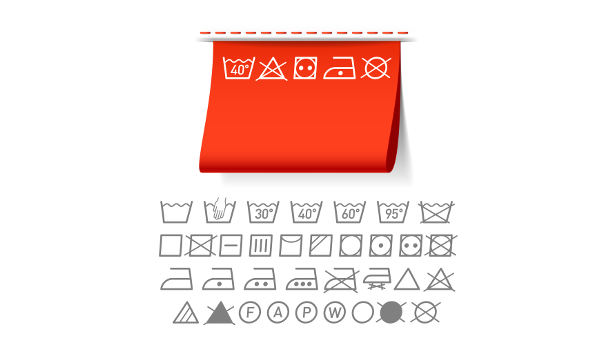
Clothing and other textile products sold in the United States are subject to various labeling requirements. Below follows an overview for the following parts:
- 16 CFR Part 303 – Rules and Regulations Under the Textile Fiber Products Identification Act
- 16 CFR Part 301 – Rules and Regulations Under Fur Products Labeling Act
- 16 CFR Part 300 – Rules and Regulations Under the Wool Products Labeling Act of 1939
- 16 CFR Part 423 – Care Labeling of Textile Wearing Apparel and Certain Piece Goods as Amended
Overview
| Part | Scope | Requirements |
| 16 CFR Part 303 | Textile products | Textile products must include a label that contains the fibre composition and traceability information
Example: 100% cotton |
| 16 CFR Part 301 | Fur products | Fur product labels must be labelef with the applicable animal name as listed and traceability information |
| 16 CFR Part 300 | Wool products | Wool product labels must specify the contents and provide traceability information |
| 16 CFR Part 423 | Care labels | 1. Manufacturers must provide care labels on their clothing textile products.
2. They must either use the care terms found in Appendix A to 16 Part 423, or the symbols found in ASTM D5489-96c. |
Recommended article: Textiles Labeling Requirements in the United States
Guides for Select Leather and Imitation Leather Products
16 CFR PART 24 – GUIDES FOR SELECT LEATHER AND IMITATION LEATHER PRODUCTS
16 CFR Part 24 – Guides for select leather and imitation leather products provide guidance regarding how not to misrepresent leather products on labels that bear information such as the following:
- Material content
- Trade names
- Properties (e.g., “waterproof”)
If the product is made of or includes imitation leather, the label should disclose the product’s material, such as the following information:
- “Not leather”
- “Imitation leather”
- “Simulated leather”
- “Top Grain Cowhide With Simulated Pigskin Grain”
Recommended article: Leather Product Regulations in the United States: An Overview
Jewelry Marking
Jewelry products may be subject to different requirements, such as 16 CFR Part 23 and the National Gold and Silver Stamping Act of 1906.
16 CFR Part 23 – Guides for the Jewelry, Precious Metals, and Pewter Industries
These guides apply to jewelry and other products that contain precious metals such as gold, silver, and platinum. They set requirements for claims that are used in labels, advertising, and other marketing material, such as:
- The misuses of certain terms, such as “handmade” or “hand-polished”.
- Misrepresentation of precious metal content (e.g., gold or silver)
- Misuse of certain words, such as “flawless” or “perfect”
You can read the full guides in 16 CFR Part 23.
National Gold and Silver Stamping Act of 1906
This act aims to protect consumers by ensuring that articles that are marked as being made in gold or silver meet specific fineness standards. It sets:
- Standard of fineness of gold articles
- Standard of fineness of silver articles
- Requirements for stamping plated articles
California Proposition 65 Warning Label
California Proposition 65 restricts around 900 chemicals and heavy metals in consumer products sold in California.
As such, you can either get the product lab-tested to prove that it doesn’t contain any of the listed chemicals or ensure that the product carries a warning label.
Warning label example
“This product can expose you to chemicals including [name of chemicals] which are known to the State of California to cause [cancer/birth defects or other reproductive harm]. For more information go to www.P65Warnings.ca.gov”
Recommended article: California Proposition 65 Guide for US Importers & Amazon Sellers
US Law Label
Example: Type No. 1 in California’s HFTI Laws and Regulations
More than 30 US states mandate that certain products with filling materials carry law labels.
Product examples
- Bedding
- Furniture
- Feather and down products
- Stuffed toys
- Mattresses
- Mattress pads
Label Information
- “Do Not Remove” Statement
- Filling materials (Weight %)
- Uniform Registry Number (URN)
- Company Name
Uniform Registry Number (URN)
Note that you might need to register to obtain a Uniform Registry Number (URN).
Recommended article: US Law Label Requirements: A Complete Guide
USDA Organic Seal
The USDA Organic Seal is a federally-protected official mark used by certified companies and farms to indicate that their products are organic.
Examples
- Textiles
- Beef
- Fruits
- Nuts
Labeling information
There are four different cases to take into consideration:
a. Products that contain 100% organic ingredients may bear a “100 Percent Organic” claim and/or the USDA organic seal.
b. Products containing at least 95% organic ingredients may bear an “Organic” claim and/or the USDA organic seal.
c. Products that contain at least 70% of organically-produced ingredients may use the “Made with Organic [insert 1–3 ingredients]” claim, but must not carry the USDA Organic Seal.
d. Products that contain less than 70% of organic content must not bear the word “organic” or the USDA Organic Seal.
Note that organic ingredients may need to be listed on the label. You can find more information on this page.
FCC Labeling Requirements
Electronics sold in the United States are subject to several FCC labeling requirements, such as those set by 47 CFR Part 15 – Radio Frequency Devices for unintentional and intentional radiators, and thus set by 47 CFR Part 8 Subpart B – Cybersecurity Labeling Program for IoT Products.
Overview
| Part | Product examples | Requirements |
| Unintentional radiators | Coffee pots
Motors Electrical power tools |
1. Compliance information (as specified in 47 CFR Part 15.19
2. Responsible party identification information 3. Information to the user/instructions 4. FCC Logo (optional) 5. Requirements for specific products (e.g., some microphones) |
| Intentional radiators | Wireless microphones
Wi-Fi transmitters Bluetooth radio devices |
1. Compliance information (as specified in 47 CFR Part 15.19
2. FCC ID 3. Information to the user/instructions 4. Requirements for specific products |
FCC Logo
You can affix the FCC logo on a voluntary basis to products that are subject to the Supplier Declaration of Conformity authorisation procedure in order to indicate that the products comply with the relevant requirements.
Cyber security
The FCC has established a labeling program for Internet of Things (IoT) products in order to improve cybersecurity in the country and inform consumers about the cybersecurity of such products.
The FCC IoT Label can only be affixed to products that have been certified by a Cybersecurity Testing Laboratory (CyberLAB) accredited by the FCC.
Recommended article: Electronics Labelling Requirements in the United States
Energy Labeling Rule
Sample from Appendix L to 16 CFR Part 305 in the eCFR
16 CFR Part 305, Energy and water use labeling for consumer products under the Energy Policy and Conservation Act (“Energy Labeling Rule”), covers products such as energy and water use appliances.
Product examples
- Dishwashers
- Furnaces
- Television sets
- Faucets
- Ceiling fans
Labeling Information
The Energy Labeling Rule requires importers and manufacturers of energy and water appliance products to include information on labels such as the following on their products:
- Operating cost
- Water use rate
- Conformance with relevant standards
- Energy consumption
- Energy efficiency
- Energy cost
- Water cost
The above information may be different according to the product (e.g., lighting, washing machine) and should be placed in the following places:
- On product catalogs
- On labels attached to the product
- In written advertising
- In broadcast advertising
- On printed materials at the point of sale
Label design
Appendix L to Part 305 provides examples of prototype labels that include instructions regarding font, color, label size, and so on.
The specifics of each instruction depend on the appliance that the label is attached to, e.g., the font and label sizes for refrigerator-freezer energy labels differ from those for specialty consumer lamp energy labels.
Recommended article: Energy Policy and Conservation Act (EPCA) Guide: An Overview
OSHA Labeling Requirements
The Occupational Safety and Health Act (OSH Act) sets safety requirements for workers, including labelling requirements for certain products that are used in the workplace.
For example, 29 CFR Part 1910 – Occupational Safety and Health Standards sets labelling requirements for some types of personal protective equipment, such as:
- Eye and face protection products
- Respiratory protection products
- Electrical protective equipment
Additionally, the OSH Administration lists products for which approval from Nationally Recognized Testing Laboratories (NRTL) is required.
Once you certify your product, you must affix the certification mark of the NRTL of your choice, such as UL Solutions or Eurofins.
Recommended article: Occupational Safety and Health Act: An Essential Guide
Packaging Labelling
You can find information about US packaging labeling requirements in the following guides:
- Fair Packaging Labeling Act (FPLA)
- Poison Prevention Packaging Act (PPPA)
- Uniform Packaging and Labeling Regulation (UPLR)
- Bag suffocation warning
- ISPM 15 Mark
- Packaging recycling symbols
Certification labels
Some companies provide markings indicating that a product has undergone a voluntary certification process.
UL Marking
The Underwriter Laboratories (UL) mark indicates that the product has passed the UL testing and certification process. As such, you cannot affix the UL mark to a product that has not passed the relevant testing.
- UL Listed
- UL Certified
- UL Classified
- UL Recognized Component
- UL Performance Verified
Note that UL compliance is not mandatory unless a standard is incorporated by reference in a regulation. That said, many retailers and distributors will not consider products that are not UL tested and compliant. It can also help you verify product safety, even if this is voluntary.
Recommended article: UL Standards for Importers and Amazon Sellers: An Essential Guide
ETL Mark
Intertek has its own compliance program called the ETL Certification program. Products that pass the necessary testing can use the ETL Mark, which signals compliance with standards in the United States and Canada.
The ETL Mark is therefore not mandatory but still recognized by consumers, retailers, and the authorities as a reliable compliance mark.
Recommended article: ETL Certification and Marking: A Complete Guide
FAQ
Can we use QR codes instead of printed labels in the United States?
QR codes are a relatively new concept and are not addressed in US regulations concerning labeling requirements, as far as I am aware. Many regulations specifically mandate that label information must be present on the product or packaging.
As such, I would personally not consider using QR codes instead of affixing label information on the product and packaging.
How do I know which US labeling and marking requirements apply?
The specific labeling requirements are determined by the regulations and standards that cover your product. As such, the first step is to assess which regulations and standards apply to your product.
Can more than one US labeling requirement cover a product?
Yes, several regulations that set labeling requirements can apply to the same product. For example, an electronic device can be subject to both country of origin and FCC marking requirements.
If it’s also a children’s product, then it would additionally require a tracking label.
Note that one set of labeling requirements does not exclude other legislation mandating labeling requirements.
Can products be marked or labeled inside the United States?
Products manufactured in the United States can, of course, be labeled domestically. That said, it is not a good idea to import finished products that are incorrectly labeled, as this can result in action taken by the customs authorities or other government agencies, such as the CPSC.
Are barcodes required when selling in the United States?
Barcodes are generally voluntary, but can be required by resellers or logistics providers.
What are the potential consequences of incorrect labeling in the US?
Importing or manufacturing incorrectly labeled products for sale in the United States can result in fines or recalls. It is essential that you affix all applicable labels according to the placement requirements.




Trying to find out if translations on multi-lingual packages need to be same size as English?
MADE FOR/ MADE BY.
When we use Made For in Law Label?
When we use Made By in Law Label?
What is manufacturer definition in these US States Laws?
A trading business company is placing their upholstered product order at local factories and selling in US market. Can they registery as Manufacturer even if they are trading business company?
Hi Fredrik
I’m trying to check labelling requirements for the US for natural firestarters made in the UK. Do you know anyone who can tell me what I need to add/change to teh UK pack in order to comply?. Thanks.
Hi, I am a sole proprietor selling on Amazon. For package labeling where it required the manufacturer/importer name, can I put my brand name even though it is not registered or do I have to put my legal name? thanks!
I am a small business I purchased a private label product that just needs to be labeled which I did not do through the company to save on funds. on the label would I be required to put manufactured by the said company with their address then for with my business name?
Hi Frederic ,I have question regarding product packaging , I have recently had a inspection , and the product witch is a set of baby clothing is packed in a clear plastic bag with suffocation warning on the multiple languages but does not specified were the bag was made ? Will that be a problem and What should I do ? Thank You !
Fredrik,
As a consumer, I understand products imported to the US must be labeled with country of origin. It appears that Amazon is a creditable enforcer of that requirement. However the country of origin is rairly ever indicated in the product descriptions on Amazon. If I go to a brick & motar store I can see the product label. Why are internet retailers not required to indicate country of origin in the product descriptions? I would definitely like to know the country of origin of a product before I buy. I would like to see this as an added requirement.
Hey Fredrik, love the site! Very helpful. We are looking to import cosmetic products to the US from the UK. Do you know if it is acceptable to leave our UK business address for this? We don’t have a US address. Thanks! Ross
Hi Ross,
I don’t think we can ever find a source stating if that is acceptable
Hello Andrew,
We are looking to import herbal the from Asia to the US. We are looking for a Cie that can do our marketing and sell online, and eventually re-package (not re-label) into smaller Qantity to meet each customer ‘s demand (ex: from a large box of a 100 small box of 6 items, ship only 5), sell online, and also provide the customer support (ie: complains/ refund etc)
Do you know any such Companies? I heard that some free zones do have such companies?
Thank you
Thanks in advance for your
Hi Frederick,
I’m planning to import a rag doll to import into the USA for our customers brand(fans). This is not really a toy for children but mostly for fans to collect the brand item. Can I mention “ This is not a toy in the labelin”?
Hi Udonis,
I suggest you read this:
https://www.cpsc.gov/Business–Manufacturing/Business-Education/childrens-products#:~:text=The%20law%20defines%20a%20%22children's,with%20further%20explanation%20and%20examples.
Hi Fredrik,
I have “Made in China” under a barcode on the bottom of the packaging. I also want to add the prop65 warning to the bottom underneath this. “Made in China” is set to 6 pts. Can the warning also be 6 pts or does it have to be no smaller than the smallest of info on the packaging?
Thanks!
Hi Matt,
Not sure if there is any specific requirement concerning the font size but it must be readable
Hi Fredrik!
I wanted to ask you if a device uses cell batteries, does it need to have the FCC mark?
Also wanted to confirm if the CPSIA tracking label should be printed on the product or if it is ok to have it on the packing and on the product just the batch number. And if it has to be on the product, could it be with a sticker?
And the last question is to confirm if we could use a sticker label for the legal information on the packaging. Scince we are exporting to different markets we would preffer to design just one packaging and use sticker labels when we need to specify some information.
Thank you in advance!
Kind regards,
Does the CPSIA Tracking Label need to be printed on each unit if selling on Amazon?
Yes, if you intend to sell on Amazon in the USA.
“Children’s products that are designed or intended primarily for use by children ages 12 or younger must have distinguishing permanent marks (generally referred to as “tracking labels”) that are
Affixed to the product and its packaging and
Provide certain identifying information.”
Source: https://www.cpsc.gov/Business–Manufacturing/Business-Education/tracking-label
thanks, Fredrik, for your advice, that is great
Hi, Fredrik,
how are you
would like to ask a silly question, if mandatory labeling such as FCC CE etc. can be printed on a detachable sleeve wrapping around a carton box, but not printed on carton box itself.
Pls advise
Hi Raymond,
Compliance marks must generally be permanently affixed. I think there is some flexibility when it comes to FCC symbols though.
I have some labeling questions on a new product that I am manufacturing in China. I want to make sure I have all the correct labeling on the packaging
Hi Andrew,
I suggest you try our compliance info tool: https://www.compliancegate.com