






 Find US, EU, UK, CA, & AU requirements














Importers and manufacturers of construction products interested in supplying their products in the EU must comply with the requirements of the Construction Products Regulation 305/2011.
This guide lists all the harmonised standards that we could find under the Construction Products Regulation 305/2011, ordering them by type of construction product (e.g. fire detection and fire alarm systems or glass in building products). It also lists examples of covered products, based on the titles of the relevant harmonised standards.
Note that, according to the regulation, products that are covered by harmonised standards must be CE marked.
Content Overview

FREE CONSULTATION CALL (30 MIN)
 Ask questions about compliance requirements
- Countries/markets:
.png)
.png)
.png)


- Learn how we can help your business
You will speak with:Ivan Malloci
Definition of Construction Products
The Construction Products Regulation 305/2011 defines a “construction product” in Article 2:
‘construction product’ means any product or kit which is produced and placed on the market for incorporation in a permanent manner in construction works or parts thereof and the performance of which has an effect on the performance of the construction works with respect to the basic requirements for construction works;
This guide mentions the groups of construction products for which there exist relevant harmonised standards under the regulation. For each group, we provide product examples and list out the relevant harmonised standards.
Construction products that are subject to a harmonised standard require a declaration of performance to be drawn up. When the declaration is created, the construction product must come with the CE marking.
Lighting columns
The Construction Product Regulation 305/2011 covers lighting columns, which are generally found in public and commercial spaces. Such products must meet performance requirements concerning resistance to horizontal (wind) loads and performance under vehicle impact, for example.
Product examples
- Reinforced and prestressed concrete lighting columns
- Steel lighting columns
- Aluminium lighting columns
- Fibre reinforced polymer composite lighting columns
Harmonised standards
- EN 40-4 – Lighting columns – Part 4: Requirements for reinforced and prestressed concrete lighting columns
- EN 40-5 – Lighting columns – Part 5: Requirements for steel lighting columns
- EN 40-6 – Lighting columns – Part 6: Requirements for aluminium lighting columns
- EN 40-7 – Lighting columns – Part 7: Requirements for fibre reinforced polymer composite lighting columns
Fire detection and fire alarm systems
The Construction Product Regulation 305/2011 covers fire detection and fire alarm systems typically used in residential and commercial buildings. Such products must meet performance requirements such as point heat detectors and voice alarm control.
Product examples
- Fire alarm devices
- Heat detectors
- Smoke detectors
- Voice alarm systems
- Smoke alarm devices
Harmonised standards
- EN 54-2 – Fire detection and fire alarm systems – Part 2: Control and indicating equipment
- EN 54-3 – Fire detection and fire alarm systems – Part 3: Fire alarm devices – Sounders
- EN 54-4 – Fire detection and fire alarm systems – Part 4: Power supply equipment
- EN 54-5 – Fire detection and fire alarm systems – Part 5: Heat detectors – Point heat detectors
- EN 54-7 – Fire detection and fire alarm systems – Part 7: Smoke detectors – Point smoke detectors that operate using scattered light, transmitted light or ionization
- EN 54-10 – Fire detection and fire alarm systems – Part 10: Flame detectors – Point detectors
- EN 54-11 – Fire detection and fire alarm systems – Part 11: Manual call points
- EN 54-12 – Fire detection and fire alarm systems – Part 12: Smoke detectors – Line detectors using an optical beam
- EN 54-16 – Fire detection and fire alarm systems – Part 16: Voice alarm control and indicating equipment
- EN 54-17 – Fire detection and fire alarm systems – Part 17: Short-circuit isolators
- EN 54-18 – Fire detection and fire alarm systems – Part 18: Input/output devices
- EN 54-20 – Fire detection and fire alarm systems – Part 20: Aspirating smoke detectors
- EN 54-21 – Fire detection and fire alarm systems – Part 21: Alarm transmission and fault warning routing equipment
- EN 54-23 – Fire detection and fire alarm systems – Part 23: Fire alarm devices – Visual alarm devices
- EN 54-24 – Fire detection and fire alarm systems – Part 24: Components of voice alarm systems – Loudspeakers
- EN 54-25 – Fire detection and fire alarm systems – Part 25: Components using radio links
- EN 14604 – Smoke alarm devices
Building hardware
The Construction Product Regulation 305/2011 covers building hardware generally used in residential and commercial settings. Such products must meet requirements concerning safety in use, for example.
Product examples
- Emergency exit devices operated by a lever handle or push pad
- Panic exit devices operated by a horizontal bar
- Controlled door closing device
- Hinges
- Locks and latches
Harmonised standards
- EN 179 – Building hardware – Emergency exit devices operated by a lever handle or push pad, for use on escape routes – Requirements and test methods
- EN 1125 – Building hardware – Panic exit devices operated by a horizontal bar, for use on escape routes – Requirements and test methods
- EN 1154 – Building hardware – Controlled door closing devices – Requirements and test methods
- EN 1155 – Building hardware – Electrically powered holdopen devices for swing doors – Requirements and test methods
- EN 1158 – Building hardware – Door coordinator devices – Requirements and test methods
- EN 1935 – Building hardware – Single-axis hinges – Requirements and test methods
- EN 12209 – Building hardware – Locks and latches – Mechanically operated locks, latches and locking plates – Requirements and test methods
- EN 14846 – Building hardware – Locks and latches – Electromechanically operated locks and striking plates – Requirements and test methods
Windows and doors
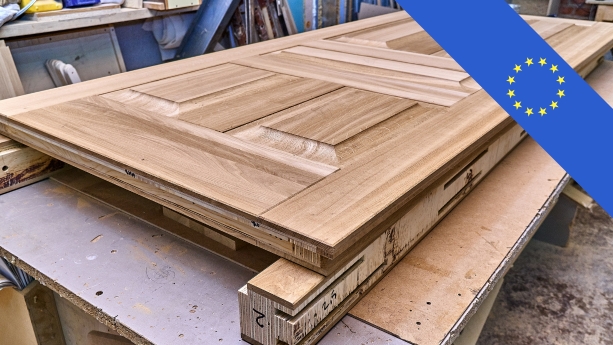
Windows and doors are subject to harmonised standards under the Construction Products Regulation 305/2011. Manufacturers of such products must ensure that they meet performance requirements like those relating to fire resistance and smoke control.
Product examples
- Windows
- Garage doors
- Gates
- Pedestrian doorsets
Harmonised standards
- EN 13241 – Industrial, commercial, garage doors and gates – Product standard, performance characteristics
- EN 14351-1 – Windows and doors – Product standard, performance characteristics – Part 1: Windows and external pedestrian doorsets
- EN 16034 – Pedestrian doorsets, industrial, commercial, garage doors and openable windows – Product standard, performance characteristics – Fire resisting and/or smoke control characteristics
Cement and concrete-related products
The Construction Product Regulation 305/2011 has many harmonised standards that cover cement and concrete-related products used in construction. Such products must meet performance requirements such as heat of hydration value, and labelling and marking requirements (if applicable).
Product examples
- Masonry cement
- Admixtures for concrete
- Concrete paving blocks
- Concrete kerb units
- Chimneys with concrete
- Walls with concrete
Harmonised standards
- EN 197-1 – Cement – Part 1: Composition, specifications and conformity criteria for common cements
- EN 413-1 – Masonry cement – Part 1: Composition, specifications and conformity criteria
- EN 492 – Fibre-cement slates and fittings – Product specification and test methods
- EN 494 – Fibre-cement profiled sheets and fittings – Product specification and test methods
- EN 588-2 – Fibre cement pipes for drains and sewers – Part 2: Manholes and inspection chambers
- EN 12467 – Fibre-cement flat sheets – Product specification and test methods
- EN 12878 – Pigments for the colouring of building materials based on cement and/or lime – Specifications and methods of test
- EN 14216 – Cement – Composition, specifications and conformity criteria for very low heat special cements
- EN 14647 – Calcium aluminate cement – Composition, specifications and conformity criteria
- EN 15743 – Supersulfated cement – Composition, specifications and conformity criteria
- EN 450-1 – Fly ash for concrete – Part 1: Definition, specifications and conformity criteria
- EN 490 – Concrete roofing tiles and fittings for roof covering and wall cladding – Product specifications
- EN 771-3 – Specification for masonry units – Part 3: Aggregate concrete masonry units (Dense and lightweight aggregates)
- EN 771-4 – Specification for masonry units – Part 4: Autoclaved aerated concrete masonry units
- EN 934-2 – Admixtures for concrete, mortar and grout – Part 2: Concrete admixtures – Definitions, requirements, conformity, marking and labelling
- EN 934-3 – Admixtures for concrete, mortar and grout – Part 3: Admixtures for masonry mortar – Definitions, requirements, conformity and marking and labelling
- EN 934-4 – Admixtures for concrete, mortar and grout – Part 4: Admixtures for grout for prestressing tendons – Definitions, requirements, conformity, marking and labelling
- EN 934-5 – Admixtures for concrete, mortar and grout – Part 5: Admixtures for sprayed concrete – Definitions, requirements, conformity, marking and labelling
- EN 1168 – Precast concrete products – Hollow core slabs
- EN 1338 – Concrete paving blocks – Requirements and test methods
- EN 1339 – Concrete paving flags – Requirements and test methods
- EN 1340 – Concrete kerb units – Requirements and test methods
- EN 1504-2 – Products and systems for the protection and repair of concrete structures – Definitions, requirements, quality control and evaluation of conformity – Part 2: Surface protection systems for concrete
- EN 1504-3 – Products and systems for the protection and repair of concrete structures – Definitions, requirements, quality control and evaluation of conformity – Part 3: Structural and nonstructural repair
- EN 1504-4 – Products and systems for the protection and repair of concrete structures – Definitions, requirements, quality control and evaluation of conformity – Part 4: Structural bonding
- EN 1504-5 – Products and systems for the protection and repair of concrete structures – Definitions, requirements, quality control and evaluation of conformity – Part 5: Concrete injection
- EN 1504-6 – Products and systems for the protection and repair of concrete structures – Definitions, requirements, quality control and evaluation of conformity – Part 6: Anchoring of reinforcing steel bar
- EN 1504-7 – Products and systems for the protection and repair of concrete structures – Definitions, requirements, quality control and evaluation of conformity – Part 7: Reinforcement corrosion protection
- EN 1520 – Prefabricated reinforced components of lightweight aggregate concrete with open structure with structural or non-structural reinforcement
- EN 1857 – Chimneys – Components – Concrete flue liners
- EN 1858 – Chimneys – Components – Concrete flue blocks
- EN 1916 – Concrete pipes and fittings, unreinforced, steel fibre and reinforced
- EN 1917 – Concrete manholes and inspection chambers, unreinforced, steel fibre and reinforced
- EN 12446 – Chimneys – Components – Concrete outer wall elements
- EN 12602 – Prefabricated reinforced components of autoclaved aerated concrete
- EN 12620 – Aggregates for concrete
- EN 12737 – Precast concrete products – Floor slats for livestock
- EN 12794 – Precast concrete products – Foundation piles
- EN 12839 – Precast concrete products – Elements for fences
- EN 12843 – Precast concrete products – Masts and poles
- EN 13055-1 – Lightweight aggregates – Part 1: Lightweight aggregates for concrete, mortar and grout
- EN 13108-1 – Bituminous mixtures – Material specifications – Part 1: Asphalt Concrete
- EN 13108-2 – Bituminous mixtures – Material specifications – Part 2: Asphalt Concrete for very thin layers
- EN 13224 – Precast concrete products – Ribbed floor elements
- EN 13225 – Precast concrete products – Linear structural elements
- EN 13263-1 – Silica fume for concrete – Part 1: Definitions, requirements and conformity criteria
- EN 13693 – Precast concrete products – Special roof elements
- EN 13747 – Precast concrete products – Floor plates for floor systems
- EN 13877-3 – Concrete pavements – Part 3: Specifications for dowels to be used in concrete pavements
- EN 13978-1 – Precast concrete products – Precast concrete garages – Part 1: Requirements for reinforced garages monolithic or consisting of single sections with room dimensions
- EN 14695 – Flexible sheets for waterproofing – Reinforced bitumen sheets for waterproofing of concrete bridge decks and other trafficked areas of concrete – Definitions and characteristics
- EN 14843 – Precast concrete products – Stairs
- EN 14844 – Precast concrete products – Box culverts
- EN 14889-1 – Fibres for concrete – Part 1: Steel fibres – Definitions, specifications and conformity
- EN 14889-2 – Fibres for concrete – Part 2: Polymer fibres – Definitions, specifications and conformity
- EN 14991 – Precast concrete products – Foundation elements
- EN 14992 – Precast concrete products – Wall elements
- EN 15037-1 – Precast concrete products – Beam-and-block floor systems – Part 1: Beams
- EN 15037-2 – Precast concrete products – Beam-and-block floor systems – Part 2: Concrete blocks
- EN 15037-3 – Precast concrete products – Beam-and-block floor systems – Part 3: Clay blocks
- EN 15037-4 – Precast concrete products – Beam-and-block floor systems – Part 4: Expanded polystyrene blocks
- EN 15037-5 – Precast concrete products – Beam-and-block floor systems – Part 5: Lightweight blocks for simple formwork
- EN 15050 – Precast concrete products – Bridge elements
- EN 15167-1 – Ground granulated blast furnace slag for use in concrete, mortar and grout – Part 1: Definitions, specifications and conformity criteria
- EN 15258 – Precast concrete products – Retaining wall elements
- EN 15435 – Precast concrete products – Normal weight and lightweight concrete shuttering blocks – Product properties and performance
- EN 15498 – Precast concrete products – Wood-chip concrete shuttering blocks – Product properties and performance
Pipes, fittings, drains and sewers
The Construction Products Regulation 305/2011 covers pipes and fittings used for different applications, including drainage and sewers. Such products must meet requirements like safety and performance, and quality control requirements.
Product examples
- Pipes, fittings and joints used in drains and sewers
- Elastomeric seals used in water and drainage applications
- Adhesives for thermoplastic piping systems
Harmonised standards
- EN 295-1 – Vitrified clay pipe systems for drains and sewers – Part 1: Requirements for pipes, fittings and joints
- EN 295-4 – Vitrified clay pipe systems for drains and sewers – Part 4: Requirements for adaptors, connectors and flexible couplings
- EN 295-5 – Vitrified clay pipe systems for drains and sewers – Part 5: Requirements for perforated pipes and fittings
- EN 295-6 – Vitrified clay pipes systems for drain and sewers – Part 6: Requirements for components of manholes and inspection chambers
- EN 295-7 – Vitrified clay pipe systems for drains and sewers – Part 7: Requirements for pipes and joints for pipe jacking
- EN 588-2: Fibre cement pipes for drains and sewers – Part 2: Manholes and inspection chambers
- EN 598 – Ductile iron pipes, fittings, accessories and their joints for sewerage applications – Requirements and test methods
- EN 681-1 – Elastomeric seals – Materials requirements for pipe joint seals used in water and drainage applications – Part 1: Vulcanized rubber
- EN 681-2 – Elastomeric Seals – Materials requirements for pipe joint seals used in water and drainage applications – Part 2: Thermoplastic elastomers
- EN 681-3 – Elastomeric seals – Materials requirements for pipe joint seals used in water and drainage applications – Part 3: Cellular materials of vulcanized rubber
- EN 681-4 – Elastomeric seals – Materials requirements for pipe joint seals used in water and drainage applications – Part 4: Cast polyurethane sealing elements
- EN 877 – Cast iron pipes and fittings, their joints and accessories for the evacuation of water from buildings – Requirements, test methods and quality assurance
- EN 969 – Ductile iron pipes, fittings, accessories and their joints for gas pipelines – Requirements and test methods
- EN 1123-1 – Pipes and fittings of longitudinally welded hotdip galvanized steel pipes with spigot and socket for waste water systems – Part 1: Requirements, testing, quality control
- EN 1124-1 – Pipes and fittings of longitudinally welded stainless steel pipes with spigot and socket for waste water systems – Part 1: Requirements, testing, quality control
- EN 1433 – Drainage channels for vehicular and pedestrian areas – Classification, design and testing requirements, marking and evaluation of conformity
- EN 1916 – Concrete pipes and fittings, unreinforced, steel fibre and reinforced
- EN 10224 – Non-alloy steel tubes and fittings for the conveyance of aqueous liquids including water for human consumption – Technical delivery conditions
- EN 10311 – Joints for the connection of steel tubes and fittings for the conveyance of water and other aqueous liquids
- EN 12380 – Air admittance valves for drainage systems – Requirements, tests methods and evaluation of conformity
- EN 13252 – Geotextiles and geotextile-related products – Characteristics required for use in drainage systems
- EN 14680 – Adhesives for non-pressure thermoplastic piping systems – Specifications
- EN 14814 – Adhesives for thermoplastic piping systems for fluids under pressure – Specifications
Heaters, radiators, and convectors
The Construction Product Regulation 305/2011 has harmonised standards that cover various heaters, radiators and convectors found in both residential and commercial settings. Such products must meet safety and performance requirements to ensure that they are safe to operate.
Product examples
- Radiators
- Tube heater systems
- Inset appliances
- Air heaters
Harmonised standards
- EN 416-1 – Single burner gas-fired overhead radiant tube heaters for non-domestic use – Part 1: Safety
- EN 442-1 – Radiators and convectors – Part 1: Technical specifications and requirements
- EN 621 – Non-domestic gas-fired forced convection air heaters for space heating not exceeding a net heat input of 300 kW, without a fan to assist transportation of combustion air and/or combustion products
- EN 777-1 – Multi-burner gas-fired overhead radiant tube heater systems for non-domestic use – Part 1: System D – Safety
- EN 777-2 – Multi-burner gas-fired overhead radiant tube heater systems for non-domestic use – Part 2: System E – Safety
- EN 777-3 – Multi-burner gas-fired overhead radiant tube heater systems for non domestic use – Part 3: System F – Safety
- EN 777-4 – Multi-burner gas-fired overhead radiant tube heater systems for non-domestic use – Part 4: System H – Safety
- EN 778 – Domestic gas-fired forced convection air heaters for space heating not exceeding a net heat input of 70 kW, without a fan to assist transportation of combustion air and/or combustion products
- EN 1020 – Non-domestic forced convection gas-fired air heaters for space heating not exceeding a net heat input of 300 kW incorporating a fan to assist transportation of combustion air or combustion products
- EN 1319 – Domestic gas-fired forced convection air heaters for space heating, with fan-assisted burners not exceeding a net heat input of 70 kW
- EN 14037-1 – Free hanging heating and cooling surfaces for water with a temperature below 120°C – Part 1: Pre-fabricated ceiling mounted radiant panels for space heating – Technical specifications and requirements
- EN 16510-2-1 – Residential solid fuel burning appliances – Part 2-1: Roomheaters
- EN 16510-2-6 – Residential solid fuel burning appliances – Part 2-6: Mechanically by wood pellets fed roomheaters, inset appliances and cookers
Roof-related products and accessories for roofs
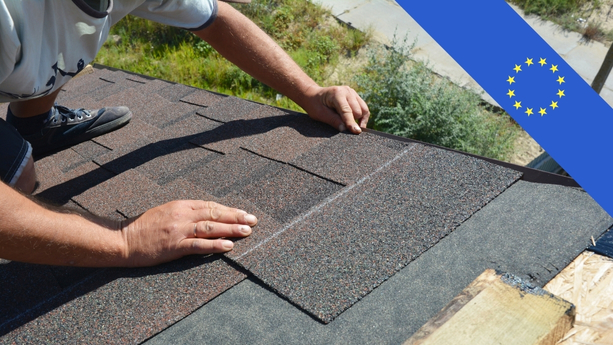
The Construction Product Regulation 305/2011 covers roofing products and certain accessories related to roofs. Such products must meet performance requirements concerning mechanical safety.
Product examples
- Roofing tiles and fittings
- Walkway installations for roof access
- Roof ladders
Harmonised standards
- EN 490 – Concrete roofing tiles and fittings for roof covering and wall cladding – Product specifications
- EN 516 – Prefabricated accessories for roofing – Installations for roof access – Walkways, treads and steps
- EN 517 – Prefabricated accessories for roofing – Roof safety hooks
- EN 1013 – Light transmitting single skin profiled plastics sheets for internal and external roofs, walls and ceilings – Requirements and test methods
- EN 1304 – Clay roofing tiles and fittings – Product definitions and specifications
- EN 1873 – Prefabricated accessories for roofing – Individual roof lights of plastics – Product specification and test methods
- EN 12951 – Prefabricated accessories for roofing – Permanently fixed roof ladders – Product specification and test methods
- EN 12326-1 – Slate and stone for discontinuous roofing and external cladding – Part 1: Specifications for slate and carbonate slate
- EN 13693 – Precast concrete products – Special roof elements
- EN 13707 – Flexible sheets for waterproofing – Reinforced bitumen sheets for roof waterproofing – Definitions and characteristics
- EN 13859-1 – Flexible sheets for waterproofing – Definitions and characteristics of underlays – Part 1: Underlays for discontinuous roofing
- EN 13956 – Flexible sheets for waterproofing – Plastic and rubber sheets for roof waterproofing – Definitions and characteristics
- EN 14782 – Self-supporting metal sheet for roofing, external cladding and internal lining – Product specification and requirements
- EN 14783 – Fully supported metal sheet and strip for roofing, external cladding and internal lining – Product specification and requirements
- EN 14963 – Roof coverings – Continuous rooflights of plastics with or without upstands – Classification, requirements and test methods
- EN 16153 – Light transmitting flat multiwall polycarbonate (PC) sheets for internal and external use in roofs, walls and ceilings – Requirements and test methods
- EN 16240 – Light transmitting flat solid polycarbonate (PC) sheets for internal and external use in roofs, walls and ceilings – Requirements and test methods
Gypsum-related products
There are several harmonised standards under the Construction Product Regulation 305/2011 that cover products related to gypsum. Such products must meet performance requirements such as reaction to fire, water vapour permeability, and thermal resistance.
Product examples
- Gypsum plasterboards
- Gypsum blocks
- Gypsum binders
- Gypsum plasters
Harmonised standards
- EN 520 – Gypsum plasterboards – Definitions, requirements and test methods
- EN 12859 – Gypsum blocks – Definitions, requirements and test methods
- EN 12860 – Gypsum based adhesives for gypsum blocks – Definitions, requirements and test methods
- EN 13279-1 – Gypsum binders and gypsum plasters – Part 1: Definitions and requirements
- EN 13815 – Fibrous gypsum plaster casts – Definitions, requirements and test methods
- EN 13915 – Prefabricated gypsum plasterboard panels with a cellular paperboard core – Definitions, requirements and test methods
- EN 13950 – Gypsum board thermal/acoustic insulation composite panels – Definitions, requirements and test methods
- EN 13963 – Jointing materials for gypsum plasterboards – Definitions, requirements and test methods
- EN 14190 – Gypsum board products from reprocessing – Definitions, requirements and test methods
- EN 14195 – Metal framing components for gypsum plasterboard systems – Definitions, requirements and test methods
- EN 14246 – Gypsum elements for suspended ceilings – Definitions, requirements and test methods
- EN 14353 – Metal beads and feature profiles for use with gypsum plasterboards – Definitions, requirements and test methods
- EN 14496 – Gypsum based adhesives for thermal/acoustic insulation composite panels and plasterboards – Definitions, requirements and test methods
- EN 14566 – Mechanical fasteners for gypsum plasterboard systems – Definitions, requirements and test methods
- EN 15283-1 – Gypsum boards with fibrous reinforcement – Definitions, requirements and test methods – Part 1: Gypsum boards with mat reinforcement
- EN 15283-2 – Gypsum boards with fibrous reinforcement – Definitions, requirements and test methods – Part 2: Gypsum fibre boards
Bitumen-related products
The Construction Product Regulation 305/2011 has harmonised standards that cover construction products containing bitumen. Such products must meet performance requirements related to its uses for waterproofing for instance.
Product examples
- Corrugated bitumen sheets
- Bitumen shingles
- Bitumen and bituminous binders
Harmonised standards
- EN 534 – Corrugated bitumen sheets – Product specification and test methods
- EN 544 – Bitumen shingles with mineral and/or synthetic reinforcements – Product specification and test methods
- EN 12591 – Bitumen and bituminous binders – Specifications for paving grade bitumens
- EN 13707 – Flexible sheets for waterproofing – Reinforced bitumen sheets for roof waterproofing – Definitions and characteristics
- EN 13808 – Bitumen and bituminous binders – Framework for specifying cationic bituminous emulsions
- EN 13924 – Bitumen and bituminous binders – Specifications for hard paving grade bitumens
- EN 13969 – Flexible sheets for waterproofing – Bitumen damp proof sheets including bitumen basement tanking sheets – Definitions and characteristics
- EN 13970 – Flexible sheets for waterproofing – Bitumen water vapour control layers – Definitions and characteristics
- EN 14023 – Bitumen and bituminous binders – Specification framework for polymer modified bitumens
- EN 14695 – Flexible sheets for waterproofing – Reinforced bitumen sheets for waterproofing of concrete bridge decks and other trafficked areas of concrete – Definitions and characteristics
- EN 14967 – Flexible sheets for waterproofing – Bitumen damp proof courses – Definitions and characteristics
- EN 15322 – Bitumen and bituminous binders – Framework for specifying cut-back and fluxed bituminous binders
Glass in building products

The Construction Product Regulation 305/2011 has harmonised standards that cover specific glass products used in buildings. Such products must meet performance requirements like those pertaining to mechanical safety.
Product examples
- Basic soda lime silicate glass products
- Glass ceramics
- Laminated glass
- Laminated safety glass
Harmonised standards
- EN 572-9 – Glass in building – Basic soda lime silicate glass products – Part 9: Evaluation of conformity/Product standard
- EN 1036-2 – Glass in building – Mirrors from silver-coated float glass for internal use – Part 2: Evaluation of conformity; product standard
- EN 1051-2 – Glass in building – Glass blocks and glass pavers – Part 2: Evaluation of conformity/Product standard
- EN 1096-4 – Glass in building – Coated glass – Part 4: Product standard
- EN 1279-5 – Glass in building – Insulating glass units – Part 5: Product standard
- EN 1748-1-2 – Glass in building – Special basic products – Borosilicate glasses – Part 1-2: Evaluation of conformity/Product standard
- EN 1748-2-2 – Glass in building – Special basic products – Glass ceramics – Part 2-2: Evaluation of conformity/Product standard
- EN 1863-2 – Glass in building – Heat strengthened soda lime silicate glass – Part 2: Evaluation of conformity/Product standard
- EN 12150-2 – Glass in building – Thermally toughened soda lime silicate safety glass – Part 2: Evaluation of conformity/Product standard
- EN 12337-2 – Glass in building – Chemically strengthened soda lime silicate glass – Part 2: Evaluation of conformity/Product standard
- EN 13024-2 – Glass in building – Thermally toughened borosilicate safety glass – Part 2: Evaluation of conformity/Product standard
- EN 14178-2 – Glass in building – Basic alkaline earth silicate glass products – Part 2: Evaluation of conformity/Product standard
- EN 14179-2 – Glass in building – Heat soaked thermally toughened soda lime silicate safety glass – Part 2: Evaluation of conformity/Product standard
- EN 14305 – Thermal insulation products for building equipment and industrial installations – Factory made cellular glass (CG) products – Specification
- EN 14321-2 – Glass in building – Thermally toughened alkaline earth silicate safety glass – Part 2: Evaluation of conformity/Product standard
- EN 14449 – Glass in building – Laminated glass and laminated safety glass – Evaluation of conformity/Product standard
- EN 15681-2 – Glass in Building – Basic alumino silicate glass products – Part 2: Product standard
- EN 15682-2 – Glass in building – Heat soaked thermally toughened alkaline earth silicate safety glass – Part 2: Evaluation of conformity/Product standard
- EN 15683-2 – Glass in building – Thermally toughened soda lime silicate channel shaped safety glass – Part 2: Evaluation of conformity/Product standard
Fixed firefighting systems and other firefighting products
Harmonised standards under the Construction Product Regulation 305/2011 cover fixed firefighting systems and other firefighting products. Such products must meet performance requirements concerning fire detection and safety in use.
Product examples
- Hose systems
- Gas extinguishing systems
- Alarm devices
- Spinkley and water spray systems
Harmonised standards
- EN 671-1 – Fixed firefighting systems – Hose systems – Part 1: Hose reels with semi-rigid hose
- EN 671-2 – Fixed firefighting systems – Hose systems – Part 2: Hose systems with lay-flat hose
- EN 12094-1 – Fixed firefighting systems – Components for gas extinguishing systems – Part 1: Requirements and test methods for electrical automatic control and delay devices
- EN 12094-2 – Fixed firefighting systems – Components for gas extinguishing systems – Part 2: Requirements and test methods for non-electrical automatic control and delay devices
- EN 12094-3 – Fixed firefighting systems – Components for gas extinguishing systems – Part 3: Requirements and test methods for manual triggering and stop devices
- EN 12094-4 – Fixed firefighting systems – Components for gas extinguishing systems – Part 4: Requirements and test methods for container valve assemblies and their actuators
- EN 12094-5 – Fixed firefighting systems – Components for gas extinguishing systems – Part 5: Requirements and test methods for high and low pressure selector valves and their actuators
- EN 12094-6 – Fixed firefighting systems – Components for gas extinguishing systems – Part 6: Requirements and test methods for non-electrical disable devices
- EN 12094-7 – Fixed firefighting systems – Components for gas extinguishing systems – Part 7: Requirements and test methods for nozzles for CO2 systems
- EN 12094-8 – Fixed firefighting systems – Components for gas extinguishing systems – Part 8: Requirements and test methods for connectors
- EN 12094-9 – Fixed firefighting systems – Components for gas extinguishing systems – Part 9: Requirements and test methods for special fire detectors
- EN 12094-10 – Fixed firefighting systems – Components for gas extinguishing systems – Part 10: Requirements and test methods for pressure gauges and pressure switches
- EN 12094-11 – Fixed firefighting systems – Components for gas extinguishing systems – Part 11: Requirements and test methods for mechanical weighing devices
- EN 12094-12 – Fixed firefighting systems – Components for gas extinguishing systems – Part 12: Requirements and test methods for pneumatic alarm devices
- EN 12094-13 – Fixed firefighting systems – Components for gas extinguishing systems – Part 13: Requirements and test methods for check valves and nonreturn valves
- EN 12259-1 – Fixed firefighting systems – Components for sprinkler and water spray systems – Part 1: Sprinklers
- EN 12259-2 – Fixed firefighting systems – Components for sprinkler and water spray systems – Part 2: Wet alarm valve assemblies
- EN 12259-3 – Fixed firefighting systems – Components for automatic sprinkler and water spray systems – Part 3: Dry alarm valve assemblies
- EN 12259-4 – Fixed firefighting systems – Components for sprinkler and water spray systems – Part 4: Water motor alarms
- EN 12259-5 – 2002 Fixed firefighting systems – Components for sprinkler and water spray systems – Part 5: Water flow detectors
- EN 14339 – Underground fire hydrants
- EN 14384 – Pillar fire hydrants
Elastomeric Seals
Elastomeric seals are subject to harmonised standards under the Construction Products Regulation 305/2011. Such products must comply with the material requirements specified in the standards.
Product examples
- Elastomeric pipe joint seals used in water applications
- Elastomeric pipe joint seals used in drainage applications
- Elastomeric seals used in pipes and fittings carrying gas
Harmonised standards
- EN 681-1 – Elastomeric seals – Materials requirements for pipe joint seals used in water and drainage applications – Part 1: Vulcanized rubber
- EN 681-2 – Elastomeric Seals – Materials requirements for pipe joint seals used in water and drainage applications – Part 2: Thermoplastic elastomers
- EN 681-3 – Elastomeric seals – Materials requirements for pipe joint seals used in water and drainage applications – Part 3: Cellular materials of vulcanized rubber
- EN 681-4 – Elastomeric seals – Materials requirements for pipe joint seals used in water and drainage
applications – Part 4: Cast polyurethane sealing elements
- EN 682 – Elastomeric Seals – Materials requirements for seals used in pipes and fittings carrying gas and hydrocarbon fluids
Masonry-related products
The Construction Products Regulation has harmonised standards that contain information that is specific to masonry-related products. Such products must meet performance and safety requirements, and if applicable, comply with labelling and marking requirements.
Product examples
- Masonry cement
- Clay masonry units
- Natural stone masonry units
- Admixtures for masonry mortar
Harmonised standards
- EN 413-1 – Masonry cement – Part 1: Composition, specifications and conformity criteria
- EN 771-1 – Specification for masonry units – Part 1: Clay masonry units
- EN 771-2 – Specification for masonry units – Part 2: Calcium silicate masonry units
- EN 771-3 – Specification for masonry units – Part 3: Aggregate concrete masonry units (Dense and lightweight aggregates)
- EN 771-4 – Specification for masonry units – Part 4: Autoclaved aerated concrete masonry units
- EN 771-5 – Specification for masonry units – Part 5: Manufactured stone masonry units
- EN 771-6 – Specification for masonry units – Part 6: Natural stone masonry units
- EN 845-1 – Specification for ancillary components for masonry – Part 1: Wall ties, tension straps, hangers and brackets
- EN 845-2 – Specification for ancillary components for masonry – Part 2: Lintels
- EN 845-3 – Specification for ancillary components for masonry – Part 3: Bed joint reinforcement of steel meshwork
- EN 934-3 – Admixtures for concrete, mortar and grout – Part 3: Admixtures for masonry mortar – Definitions, requirements, conformity and marking and labelling
- EN 998-1 – Specification for mortar for masonry – Part 1: Rendering and plastering mortar
- EN 998-2 – Specification for mortar for masonry – Part 2: Masonry mortar
- EN 13139 – Aggregates for mortar
Structural bearings
Certain structural bearings are subject to harmonised standards under the Construction Product Regulation 305/2011. Such structural bearings must meet the harmonised standard’s safety and performance requirements.
Product examples
- Elastomeric bearings
- Roller bearings
- Pot bearings
- Rocker bearings
Harmonised standards
- EN 1337-3 – Structural bearings – Part 3: Elastomeric bearings
- EN 1337-4 – Structural bearings – Part 4: Roller bearings
- EN 1337-5 – Structural bearings – Part 5: Pot bearings
- EN 1337-6 – Structural bearings – Part 6: Rocker bearings
- EN 1337-7 – Structural bearings – Part 7: Spherical and cylindrical PTFE bearings
- EN 1337-8 – Structural bearings – Part 8: Guide Bearings and Restraint Bearings
Chimneys
The Construction Product Regulation 305/2011 covers chimneys and has harmonised standards that specify requirements relating to such products. Such products must meet performance requirements, for instance, chimney’s flue liners operating under dry and wet conditions.
Product examples
- Clay/ceramic flue liners
- Clay/ceramic flue blocks for single wall chimneys
- Metal chimneys
- System chimneys with plastic flue liners
Harmonised standards
- EN 1457-1 – Chimneys – Clay/ceramic flue liners – Part 1: Flue liners operating under dry conditions – Requirements and test methods
- EN 1457-2 – Chimneys – Clay/ceramic flue liners – Part 2: Flue liners operating under wet conditions – Requirements and test methods
- EN 1806 – Chimneys – Clay/ceramic flue blocks for single wall chimneys – Requirements and test methods
- EN 1856-1 – Chimneys – Requirements for metal chimneys – Part 1: System chimney products
- EN 1856-2 – Chimneys – Requirements for metal chimneys – Part 2: Metal flue liners and connecting flue pipes
- EN 1857 – Chimneys – Components – Concrete flue liners
- EN 1858 – Chimneys – Components – Concrete flue blocks
- EN 12446 – Chimneys – Components – Concrete outer wall elements
- EN 13063-1 – Chimneys – System chimneys with clay/ceramic flue liners – Part 1: Requirements and test methods for sootfire resistance
- EN 13063-2 – Chimneys – System chimneys with clay/ceramic flue liners – Part 2: Requirements and test methods under wet conditions
- EN 13063-3 – Chimneys – System chimneys with clay/ceramic flue liners – Part 3: Requirements and test methods for air flue system chimneys
- EN 13069 – Chimneys – Clay/ceramic outer walls for system chimneys – Requirements and test methods
- EN 13084-5 – Free-standing chimneys – Part 5: Material for brick liners – Product specifications
- EN 13084-7 – Free-standing chimneys – Part 7: Product specifications of cylindrical steel fabrications for use in single wall steel chimneys and steel liners
- EN 13502 – Chimneys – Requirements and test methods for clay/ceramic flue terminals
- EN 14471 – Chimneys – System chimneys with plastic flue liners – Requirements and test methods
- EN 14989-1 – Chimneys – Requirements and test methods for metal chimneys and material independent air supply ducts for roomsealed heating applications – Part 1: Vertical air/flue terminals for C6-type appliances
- EN 14989-2 – Chimneys – Requirements and test methods for metal chimneys and material independent air supply ducts for roomsealed heating applications – Part 2: Flue and air supply ducts for room sealed appliances
Road, pavement, and pedestrian walkway-related products
The Construction Product Regulation 305/2011 covers many products that are used in public surfaces like roads, pavements and pedestrian walkways. The regulation contains standards that set requirements like performance and composition requirements.
Product examples
- Road restraint systems
- Clay pavers
- Traffic control equipment
- Road vertical signs
- Road traffic noise reducing devices
Harmonised standards
- EN 1317-5 – Road restraint systems – Part 5: Product requirements and evaluation of conformity for vehicle restraint systems
- EN 1341 – Slabs of natural stone for external paving – Requirements and test methods
- EN 1342 – Setts of natural stone for external paving – Requirements and test methods
- EN 1343 – Kerbs of natural stone for external paving – Requirements and test methods
- EN 1344 – Clay pavers – Requirements and test methods
- EN 1423 – Road marking materials – Drop on materials – Glass beads, antiskid aggregates and mixtures of the two
- EN 1463-1 – Road marking materials – Retroreflecting road studs – Part 1: Initial performance requirements
- EN 12271 – Surface dressing – Requirements
- EN 12273 – Slurry surfacing – Requirements
- EN 12352 – Traffic control equipment – Warning and safety light devices
- EN 12368 – Traffic control equipment – Signal heads
- EN 12676-1 – Anti-glare systems for roads – Part 1: Performance and characteristic
- EN 12899-1 – Fixed, vertical road traffic signs – Part 1: Fixed signs
- EN 12899-2 – Fixed, vertical road traffic signs – Part 2: Transilluminated traffic bollards (TTB)
- EN 12899-3 – Fixed, vertical road traffic signs – Part 3: Delineator posts and retroreflectors
- EN 12966-1 – Road vertical signs – Variable message traffic signs – Part 1: Product standard
- EN 13043 – Aggregates for bituminous mixtures and surface treatments for roads, airfields and other trafficked areas
- EN 13242 – Aggregates for unbound and hydraulically bound materials for use in civil engineering work and road construction
- EN 13249 – Geotextiles and geotextile-related products – Characteristics required for use in the construction of roads and other trafficked areas (excluding railways and asphalt inclusion)
- EN 13282-1 – Hydraulic road binders – Part 1: Rapid hardening hydraulic road binders – Composition, specifications and conformity criteria
- EN 14388 – Road traffic noise reducing devices – Specifications
- EN 15651-1 – Sealants for non-structural use in joints in buildings and pedestrian walkways – Part 1: Sealants for facade elements
- EN 15651-2 – Sealants for non-structural use in joints in buildings and pedestrian walkways – Part 2: Sealants for glazing
- EN 15651-3 – Sealants for non-structural use in joints in buildings and pedestrian walkways – Part 3: Sealants for sanitary joints
- EN 15651-4 – Sealants for non-structural use in joints in buildings and pedestrian walkways – Part 4: Sealants for pedestrian walkways
Steel-related products
There are many harmonised standards under the Construction Product Regulation 305/2011 that cover steel-related products. The standards can set requirements like testing and quality control requirements for such products.
Product examples
- Steel lighting columns
- Steel pipes
- Steel castings for structural uses
- Steels for quenching and tempering for construction purposes
Harmonised standards
- EN 40-5 – Lighting columns – Part 5: Requirements for steel lighting columns
- EN 523 – Steel strip sheaths for prestressing tendons – Terminology, requirements, quality control
- EN 845-3 – Specification for ancillary components for masonry – Part 3: Bed joint reinforcement of steel meshwork
- EN 1090-1 – Execution of steel structures and aluminium structures – Part 1: Requirements for conformity assessment of structural components
- EN 1123-1 – Pipes and fittings of longitudinally welded hotdip galvanized steel pipes with spigot and socket for waste water systems – Part 1: Requirements, testing, quality control
- EN 1124-1 – Pipes and fittings of longitudinally welded stainless steel pipes with spigot and socket for waste water systems – Part 1: Requirements, testing, quality control
- EN 1504-6 – Products and systems for the protection and repair of concrete structures – Definitions, requirements, quality control and evaluation of conformity – Part 6: Anchoring of reinforcing steel bar
- EN 1916 – Concrete pipes and fittings, unreinforced, steel fibre and reinforced
- EN 1917 – Concrete manholes and inspection chambers, unreinforced, steel fibre and reinforced
- EN 10025-1 – Hot rolled products of structural steels – Part 1: General technical delivery conditions
- EN 10088-4 – Stainless steels – Part 4: Technical delivery conditions for sheet/plate and strip of corrosion resisting steels for construction purposes
- EN 10088-5 – Stainless steels – Part 5: Technical delivery conditions for bars, rods, wire, sections and bright products of corrosion resisting steels for construction purposes
- EN 10210-1 – Hot finished structural hollow sections of nonalloy and fine grain steels – Part 1: Technical delivery conditions
- EN 10219-1 – Cold formed welded structural hollow sections of non-alloy and fine grain steels – Part 1: Technical delivery conditions
- EN 10224 – Non-alloy steel tubes and fittings for the conveyance of aqueous liquids including water for human consumption – Technical delivery conditions
- EN 10255 – Non-Alloy steel tubes suitable for welding and threading – Technical delivery conditions
- EN 10311 – Joints for the connection of steel tubes and fittings for the conveyance of water and other aqueous liquids
- EN 10312 – Welded stainless steel tubes for the conveyance of aqueous liquids including water for human consumption – Technical delivery conditions
- EN 10340 – Steel castings for structural uses
- EN 10343 – Steels for quenching and tempering for construction purposes – Technical delivery conditions
- EN 12285-2 – Workshop fabricated steel tanks – Part 2: Horizontal cylindrical single skin and double skin tanks for the aboveground storage of flammable and non-flammable water polluting liquids
- EN 13084-7 – Free-standing chimneys – Part 7: Product specifications of cylindrical steel fabrications for use in single wall steel chimneys and steel liners
- EN 14889-1 – Fibres for concrete – Part 1: Steel fibres – Definitions, specifications and conformity
Adhesives
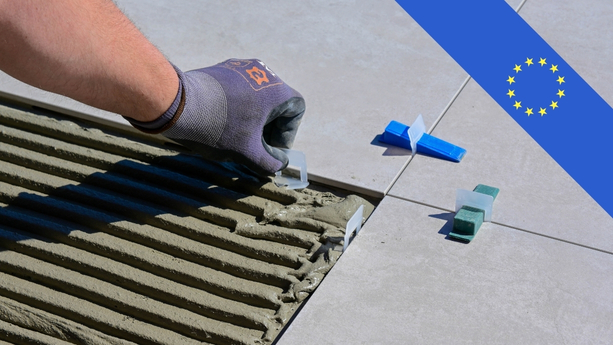
Many types of adhesives are subject to harmonised standards under the Construction Products Regulation 305/2011. These standards contain safety and performance requirements and test methods.
Product examples
- Adhesives for tiles
- Gypsum based adhesives for gypsum blocks
- Adhesives for non-pressure thermoplastic piping systems
- Adhesives for thermoplastic piping systems for fluids under pressure
Harmonised standards
- EN 12004 – Adhesives for tiles – Requirements, evaluation of conformity, classification and designation
- EN 12860 – Gypsum based adhesives for gypsum blocks – Definitions, requirements and test methods
- EN 14496 – Gypsum based adhesives for thermal/acoustic insulation composite panels and plasterboards – Definitions, requirements and test methods
- EN 14680 – Adhesives for non-pressure thermoplastic piping systems – Specifications
- EN 14814 – Adhesives for thermoplastic piping systems for fluids under pressure – Specifications
- EN 14891 – Liquid-applied water impermeable products for use beneath ceramic tiling bonded with adhesives – Requirements, test methods, evaluation of conformity, classification and designation
- EN 15274 – General purpose adhesives for structural assembly – Requirements and test methods
- EN 15275 – Structural adhesives – Characterisation of anaerobic adhesives for co-axial metallic assembly in building and civil engineering structures
Wastewater-related products
The Construction Products Regulation 305/2011 covers construction products that are related to wastewater. Under the regulation, there are harmonised standards that contain information like principles of construction and testing for wastewater lifting plants.
Product examples
- Wastewater lifting plants for buildings and sites
- Small wastewater treatment systems
Harmonised standards
- EN 12050-1 – Wastewater lifting plants for buildings and sites – Principles of construction and testing – Part 1: Lifting plants for wastewater containing faecal matter
- EN 12050-2 – Wastewater lifting plants for buildings and sites – Principles of construction and testing – Part 2: Lifting plants for faecal-free wastewater
- EN 12050-3 – Wastewater lifting plants for buildings and sites – Principles of construction and testing – Part 3: Lifting plants for wastewater containing faecal matter for limited applications
- EN 12050-4 – Wastewater lifting plants for buildings and sites – Principles of construction and testing – Part 4: Non-return valves for faecal-free wastewater and wastewater containing faecal matter
- EN 12566-1 – Small wastewater treatment systems for up to 50 PT – Part 1: Prefabricated septic tanks
- EN 12566-3 – Small wastewater treatment systems for up to 50 PT – Part 3: Packaged and/or site assembled domestic wastewater treatment plants
- EN 12566-4 – Small wastewater treatment systems for up to 50 PT – Part 4: Septic tanks assembled in situ from prefabricated kits
- EN 12566-6 – Small wastewater treatment systems for up to 50 PT – Part 6: Prefabricated treatment units for septic tank effluent
- EN 12566-7 – Small wastewater treatment systems for up to 50 PT – Part 7: Prefabricated tertiary treatment units
Natural stone products
Natural stone products used as construction products are subject to certain harmonised standards under the Construction Products Regulation 305/2011. Such standards specify safety and performance requirements.
Product examples
- Slabs of natural stone for external paving
- Slabs for cladding
- Natural stones used in modular tiles
- Slabs for floors and stairs
Harmonised standards
- EN 1341 – Slabs of natural stone for external paving – Requirements and test methods
- EN 1342 – Setts of natural stone for external paving – Requirements and test methods
- EN 1469 – Natural stone products – Slabs for cladding – Requirements
- EN 12057 – Natural stone products – Modular tiles – Requirements
- EN 12058 – Natural stone products – Slabs for floors and stairs – Requirements
Smoke and heat control systems
There are harmonised standards for smoke and heat control systems under the Construction Products Regulation 2011. The standards specify performance requirements like those relating to smoke control dampers, the ventilation of natural smoke and heat.
Product examples
- Smoke and heat control systems
- Power supplies for smoke and heat control systems
Harmonised standards
- EN 12101-1 – Smoke and heat control systems – Part 1: Specification for smoke barriers
- EN 12101-2 – Smoke and heat control systems – Part 2: Specification for natural smoke and heat exhaust ventilators
- EN 12101-3 – Smoke and heat control systems – Part 3: Specification for powered smoke and heat control ventilators (Fans)
- EN 12101-6 – Smoke and heat control systems – Part 6: Specification for pressure differential systems – Kits
- EN 12101-7 – Smoke and heat control systems – Part 7: Smoke duct sections
- EN 12101-8 – Smoke and heat control systems – Part 8: Smoke control dampers
- EN 12101-10 – Smoke and heat control systems – Part 10: Power supplies
Insulation products
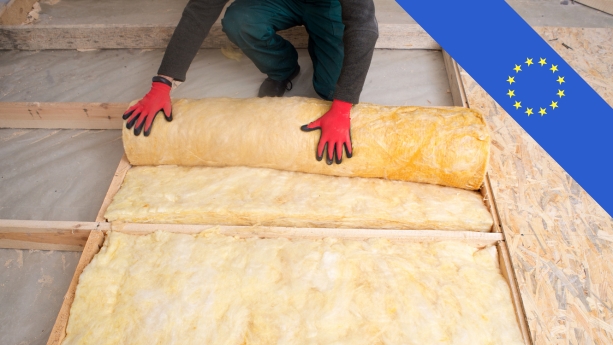
Certain groups of insulation products are subject to harmonised standards under the Construction Products Regulation 305/2011. The standards specify requirements relating to heat resistance, for example.
Product examples
- Thermal insulation products for buildings
- Thermal insulation products for building equipment and industrial installations
Harmonised standards
- EN 13162 – Thermal insulation products for buildings – Factory made mineral wool (MW) products – Specification
- EN 13163 – Thermal insulation products for buildings – Factory made expanded polystyrene (EPS) products – Specification
- EN 13164 – Thermal insulation products for buildings – Factory made extruded polystyrene foam (XPS) products – Specification
- EN 13165 – Thermal insulation products for buildings – Factory made rigid polyurethane foam (PU) products – Specification
- EN 13166 – Thermal insulation products for buildings – Factory made phenolic foam (PF) products – Specification
- EN 13167 – Thermal insulation products for buildings – Factory made cellular glass (CG) products – Specification
- EN 13168 – Thermal insulation products for buildings – Factory made wood wool (WW) products – Specification
- EN 13169 – Thermal insulation products for buildings – Factory made expanded perlite board (EPB) products – Specification
- EN 13170 – Thermal insulation products for buildings – Factory made products of expanded cork (ICB) – Specification
- EN 13171 – Thermal insulation products for buildings – Factory made wood fibre (WF) products – Specification
- EN 14063-1 – Thermal insulation products for buildings – Insitu formed expanded clay lightweight aggregate products – Part 1: Specification for the loose-fill products before installation
- EN 14064-1 – Thermal insulation products for buildings – Insitu formed loose-fill mineral wool (MW) products – Part 1: Specification for the loose-fill products before installation
- EN 14303 – Thermal insulation products for building equipment and industrial installations – Factory made mineral wool (MW) products – Specification
- EN 14304 – Thermal insulation products for building equipment and industrial installations – Factory made flexible elastomeric foam (FEF) products – Specification
- EN 14305 – Thermal insulation products for building equipment and industrial installations – Factory made cellular glass (CG) products – Specification
- EN 14306 – Thermal insulation products for building equipment and industrial installations – Factory made calcium silicate (CS) products – Specification
- EN 14307 – Thermal insulation products for building equipment and industrial installations – Factory made extruded polystyrene foam (XPS) products – Specification
- EN 14308 – Thermal insulation products for building equipment and industrial installations – Factory made rigid polyurethane foam (PUR) and polyisocyanurate foam (PIR) products – Specification
- EN 14309 – Thermal insulation products for building equipment and industrial installations – Factory made products of expanded polystyrene (EPS) – Specification
- EN 14313 – Thermal insulation products for building equipment and industrial installations – Factory made polyethylene foam (PEF) products – Specification
- EN 14314 – Thermal insulation products for building equipment and industrial installations – Factory made phenolic foam (PF) products – Specification
- EN 14315-1 – Thermal insulating products for buildings – Insitu formed sprayed rigid polyurethane (PUR) and polyisocyanurate (PIR) foam products – Part 1: Specification for the rigid foam spray system before installation
- EN 14316-1 – Thermal insulation products for buildings – Insitu thermal insulation formed from expanded perlite (EP) products – Part 1: Specification for bonded and loose-fill products before installation
- EN 14317-1 – Thermal insulation products for buildings – Insitu thermal insulation formed from exfoliated vermiculite (EV) products – Part 1: Specification for bonded and loose-fill products before installation
- EN 14318-1 – Thermal insulating products for buildings – Insitu formed dispensed rigid polyurethane (PUR) and polyisocyanurate (PIR) foam products – Part 1: Specification for the rigid foam dispensed system before installation
- EN 14319-1 – Thermal insulating products for building equipment and industrial installations – In-situ formed dispensed rigid polyurethane (PUR) and polyisocyanurate foam (PIR) products – Part 1: Specification for the rigid foam dispensed system before installation
- EN 14320-1 – Thermal insulating products for building equipment and industrial installations – In-situ formed sprayed rigid polyurethane (PUR) and polyisocyanurate foam (PIR) products – Part 1: Specification for the rigid foam spray system before installation
- EN 14509 – Self-supporting double skin metal faced insulating panels – Factory made products – Specifications
- EN 15501 – Thermal insulation products for building equipment and industrial installations – Factory made expanded perlite (EP) and exfoliated vermiculite (EV) products – Specification
- EN 15599-1 – Thermal insulation products for building equipment and industrial installations – In-situ thermal insulation formed from expanded perlite (EP) products – Part 1: Specification for bonded and loose-fill products before installation
- EN 15600-1 – Thermal insulation products for building equipment and industrial installations – In-situ thermal insulation formed from exfoliated vermiculite (EV) products – Part 1: Specification for bonded and loose-fill products before installation
- EN 15732 – Light weight fill and thermal insulation products for civil engineering applications (CEA) – Expanded clay lightweight aggregate products (LWA)
- EN 16069 – Thermal insulation products for buildings – Factory made products of polyethylene foam (PEF) – Specification
Geotextiles and geotextile-related products
The Construction Product Regulation 305/2011 covers geotextiles and geotextile related products used as construction products. There are harmonised standards that are specific to the products and contain safety and performance requirements.
Product examples
- Geotextiles and geotextile-related products used in tunnels and underground structures
- Geotextiles and geotextile-related products used in erosion control works
Harmonised standards
- EN 13249 – Geotextiles and geotextile-related products – Characteristics required for use in the construction of roads and other trafficked areas (excluding railways and asphalt inclusion)
- EN 13250 – Geotextiles and geotextile-related products – Characteristics required for use in the construction of railways
- EN 13251 – Geotextiles and geotextile-related products – Characteristics required for use in earthworks, foundations and retaining structures
- EN 13252 – Geotextiles and geotextile-related products – Characteristics required for use in drainage systems
- EN 13253 – Geotextiles and geotextile-related products – Characteristics required for use in erosion control works (coastal protection, bank revetments)
- EN 13254 – Geotextiles and geotextile-related products – Characteristics required for the use in the construction of reservoirs and dams
- EN 13255 – Geotextiles and geotextile-related products – Characteristics required for use in the construction of canals
- EN 13256 – Geotextiles and geotextile-related products – Characteristics required for use in the construction of tunnels and underground structures
- EN 13257 – Geotextiles and geotextile-related products – Characteristics required for use in solid waste disposals
- EN 13265 – Geotextiles and geotextile-related products – Characteristics required for use in liquid waste containment projects
- EN 15381 – Geotextiles and geotextile-related products – Characteristics required for use in pavements and asphalt overlays
Geosynthetic barriers
There are harmonised standards that are specific to geosynthetic barriers under the Construction Products Regulation 305/2011. The standards specify performance requirements relating to its safety in use.
Product examples
- Geosynthetic barriers for use in reservoirs and dams
- Geosynthetic barriers for use in the construction of solid waste storage and disposal sites
Harmonised standards
- EN 13361 – Geosynthetic barriers – Characteristics required for use in the construction of reservoirs and dams
- EN 13362 – Geosynthetic Barriers – Characteristics required for use in the construction of canals
- EN 13491 – Geosynthetic barriers – Characteristics required for use as a fluid barrier in the construction of tunnels and underground structures
- EN 13492 – Geosynthetic barriers – Characteristics required for use in the construction of liquid waste disposal sites, transfer stations or secondary containment
- EN 13493 – Geosynthetic barriers – Characteristics required for use in the construction of solid waste storage and disposal sites
- EN 15382 – Geosynthetic barriers – Characteristics required for use in transportation infrastructure
Bathroom and other sanitary products
Many products found in the bathroom and other sanitary sites are subject to harmonised standards under the Construction Products Regulation 305/2011. The standards contain functional requirements and specify test methods relating to their performance, for instance.
Product examples
- Whirlpool baths
- Shower enclosures
- Wash basins
- Shower trays
Harmonised standards
- EN 997 – WC pans and WC suites with integral trap
- EN 1057 – Copper and copper alloys – Seamless, round copper tubes for water and gas in sanitary and heating applications
- EN 12764 – Sanitary appliances – Specification for whirlpool baths
- EN 13407 – Wall-hung urinals – Functional requirements and test methods
- EN 14055 – WC and urinal flushing cisterns
- EN 14296 – Sanitary appliances – Communal washing troughs
- EN 14428 – Shower enclosures – Functional requirements and test methods
- EN 14516 – Baths for domestic purposes
- EN 14527 – Shower trays for domestic purposes
- EN 14528 – Bidets – Functional requirements and test methods
- EN 14688 – Sanitary appliances – Wash basins – Functional requirements and test methods
- EN 16510-2-4 – Residential solid fuel burning appliances – Part 2-4: Independent boilers – Nominal heat output up to 50 kW
Wood and other timber products

Construction products that are made of wood are subject to harmonised standards when used as certain construction products. The standards specify safety and performance requirements for such products.
Product examples
- Wood-based panels in construction
- Wood poles for overhead lines
- Wood flooring and parquet
- Dowel-type fasteners
Harmonised standards
- EN 13986 – Wood-based panels for use in construction – Characteristics, evaluation of conformity and marking
- EN 14080 – Timber structures – Glued laminated timber and glued solid timber – Requirements
- EN 14081-1 – Timber structures – Strength graded structural timber with rectangular cross section – Part 1: General requirements
- EN 14229 – Structural timber – Wood poles for overhead lines
- EN 14250 – Timber structures – Product requirements for prefabricated structural members assembled with punched metal plate fasteners
- EN 14342 – Wood flooring and parquet – Characteristics, evaluation of conformity and marking
- EN 14374 – Timber structures – Structural laminated veneer lumber – Requirements
- EN 14545 – Timber structures – Connectors – Requirements
- EN 14592 – Timber structures – Dowel-type fasteners – Requirements
- EN 14915 – Solid wood panelling and cladding – Characteristics, evaluation of conformity and marking
- EN 15497 – Structural finger jointed solid timber – Performance requirements and minimum production requirements
- EN 15498 – Precast concrete products – Wood-chip concrete shuttering blocks – Product properties and performance
Joint fillers and sealants
The Construction Products Regulation 305/2011 covers joint fillers and sealants and has harmonised standards that cover them when used for specific applications. Such standards contain specifications concerning their application in specific environments.
Product examples
- Hot applied sealants
- Cold applied sealants
- Preformed joint seals
Harmonised standards
- EN 14188-1 – Joint fillers and sealants – Part 1: Specifications for hot applied sealants
- EN 14188-2 – Joint fillers and sealants – Part 2: Specifications for cold applied sealants
- EN 14188-3 – Joint fillers and sealants – Part 3: Specifications for preformed joint seals
Kitchen-related products
Many products found in residential and commercial kitchens are subject to harmonised standards under the Construction Products Regulation 305/2011. Such standards contain functional requirements and specify test methods for their safe operation.
Product examples
- Flued oil stoves with vaporizing burners
- Kitchen sinks
- Cookers
Harmonised standards
- EN 1 – Flued oil stoves with vaporizing burners
- EN 13310 – Kitchen sinks – Functional requirements and test methods
- EN 14800 – Corrugated safety metal hose assemblies for the connection of domestic appliances using gaseous fuels
- EN 15069 – Safety gas connection valves for metal hose assemblies used for the connection of domestic appliances using gaseous fuel
- EN 16510-2-2 – Residential solid fuel burning appliances – Part 2-2: Inset appliances including open fires
- EN 16510-2-3 – Residential solid fuel burning appliances – Part 2-3: Cookers
Other construction products
Under the Construction Products Regulation 305/2011, there are several other harmonised standards that are specific to certain construction products that were not grouped above. Many of the harmonised standards specify more than just performance requirements and cover information relating to design requirements, marking and quality control requirements.
Product examples
- Grease separators
- Leak detection systems
- Anti-flood devices for buildings
- Cables for general applications in construction works
- Terrazzo tiles
- Metal lath and beads
Harmonised standards
- EN 331 – Manually operated ball valves and closed bottom taper plug valves for gas installations for buildings
- EN 438-7 – High-pressure decorative laminates (HPL) – Sheets based on thermosetting resins (Usually called Laminates) – Part 7: Compact laminate and HPL composite panels for internal and external wall and ceiling finishes
- EN 459-1 – Building lime – Part 1: Definitions, specifications and conformity criteria
- EN 523 – Steel strip sheaths for prestressing tendons – Terminology, requirements, quality control
- EN 858-1 – Separator systems for light liquids (e.g. oil and petrol) – Part 1: Principles of product design, performance and testing, marking and quality control
- EN 1825-1 – Grease separators – Part 1: Principles of design, performance and testing, marking and quality control
- EN 13101 – Steps for underground man entry chambers – Requirements, marking, testing and evaluation of conformity
- EN 13160-1 – Leak detection systems – Part 1: General principles
- EN 13245-2 – Plastics – Unplasticized poly(vinyl chloride) (PVCU) profiles for building applications – Part 2: PVC-U profiles and PVC-UE profiles for internal and external wall and ceiling finishes
- EN 13341 – Static thermoplastic tanks for above ground storage of domestic heating oils, kerosene and diesel fuels – Blow moulded and rotationally moulded polyethylene tanks and rotationally moulded tanks made of anionically polymerized polyamide 6 – Requirements and test methods
- EN 13383-1 – Armourstone – Part 1: Specification
- EN 13450 – Aggregates for railway ballast
- EN 13454-1 – Binders, composite binders and factory made mixtures for floor screeds based on calcium sulfate – Part 1: Definitions and requirements
- EN 13479 – Welding consumables – General product standard for filler metals and fluxes for fusion welding of metallic materials
- EN 13561 – External blinds – Performance requirements including safety
- EN 13564-1 – Anti-flooding devices for buildings – Part 1: Requirements
- EN 13616 – Overfill prevention devices for static tanks for liquid petroleum fuels
- EN 13658-1 – Metal lath and beads – Definitions, requirements and test methods – Part 1: Internal plastering
- EN 13658-2 – Metal lath and beads – Definitions, requirements and test methods – Part 2: External rendering
- EN 13659 – Shutters – Performance requirements including safety
- EN 13748-1 – Terrazzo tiles – Part 1: Terrazzo tiles for internal use
- EN 13748-2 – Terrazzo tiles – Part 2: Terrazzo tiles for external use
- EN 13813 – Screed material and floor screeds – Screed material – Properties and requirements
- EN 13830 – Curtain walling – Product standard
- EN 13859-2 – Flexible sheets for waterproofing – Definitions and characteristics of underlays – Part 2: Underlays for walls
- EN 13964 – Suspended ceilings – Requirements and test methods
- EN 13967 – Flexible sheets for waterproofing – Plastic and rubber damp proof sheets including plastic and rubber basement tanking sheet – Definitions and characteristics
- EN 13984 – Flexible sheets for waterproofing – Plastic and rubber vapour control layers – Definitions and characteristics
- EN 14016-1 – Binders for magnesite screeds – Caustic magnesia and magnesium chloride – Part 1: Definitions, requirements
- EN 14041 – Resilient, textile and laminate floor coverings – Essential characteristics
- EN 14209 – Preformed plasterboard cornices – Definitions, requirements and test methods
- EN 14396 – Fixed ladders for manholes
- EN 14399-1 – High-strength structural bolting assemblies for preloading – Part 1: General requirements
- EN 14411 – Ceramic tiles – Definitions, classification, characteristics, evaluation of conformity and marking
- EN 14716 – Stretched ceilings – Requirements and test methods
- EN 14904 – Surfaces for sports areas – Indoor surfaces for multi-sports use – Specification
- EN 14909 – Flexible sheets for waterproofing – Plastic and rubber damp proof courses – Definitions and characteristics
- EN 15048-1 – Non-preloaded structural bolting assemblies – Part 1: General requirements
- EN 15088 – Aluminium and aluminium alloys – Structural products for construction works – Technical conditions for inspection and delivery
- EN 15102 – Decorative wall coverings – Roll and panel form
- EN 15129 – Anti-seismic devices
- EN 15250 – Slow heat release appliances fired by solid fuel – Requirements and test methods
- EN 15285 – Agglomerated stone – Modular tiles for flooring and stairs (internal and external)
- EN 15286 – Agglomerated stone – Slabs and tiles for wall finishes (internal and external)
- EN 15368 – Hydraulic binder for non-structural applications – Definition, specifications and conformity criteria
- EN 15650 – Ventilation for buildings – Fire dampers
- EN 15821 – Multi-firing sauna stoves fired by natural wood logs – Requirements and test methods
- EN 15824 – Specifications for external renders and internal plasters based on organic binders
- EN 50575 – Power, control and communication cables – Cables for general applications in construction works subject to reaction to fire requirements
Construction Products Regulation (EU) 2024/3110
Starting from the 8th of January 2026, the Construction Products Regulation 2024 is in effect. However, we understand that its requirements only apply to products for which harmonised standards under the new regulation are published.
We could not find any standard under the Construction Products Regulation 2024. With that said, likely, the new regulation will at least apply to products covered by the Construction Products Regulation 305/2011. It may also be the case that new harmonised standards published under the new regulation will cover additional construction products.