






 Find US, EU, UK, CA, & AU requirements













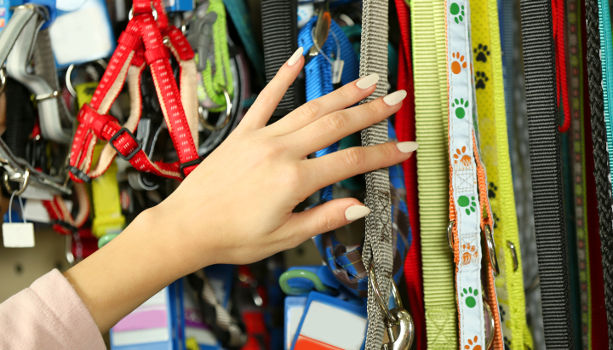
Pet products and pet toys sold in the European Union are subject to various regulations, directives, and standards. While these are generally not specific to pet products, it is still essential to ensure that pet products are mechanically safe, don’t contain certain chemicals, and are correctly labelled.
In this guide, we explain how the General Product Safety Regulation, EN standards, REACH and other compliance requirements relate to pet products and pet toys imported or manufactured for the EU market.
Note: We do not cover requirements relating to pet food, or packaging. Additionally, we do not cover specific EU national requirements that may apply to pet products.
Content Overview

FREE CONSULTATION CALL (30 MIN)
 Ask questions about compliance requirements
- Countries/markets:
.png)
.png)
.png)


- Learn how we can help your business
You will speak with:Ivan Malloci
Which EU regulations apply to pet products and pet toys?
Below follows a list of selected compliance requirements for pet products in the EU market. Note that additional requirements can apply. Further, the listed requirements are relevant to the following types of pet products:
- Cat toys
- Dog toys
- Cat climbing trees
- Electronic pet products and accessories
- Textile pet products
- Wooden pet products
- Disinfectants for veterinary hygiene, food, and feed areas
- Repellents and attractants for pest control
General Product Safety Regulation (GPSR)
| Overview | Information |
| Relevancy | This regulation sets safety requirements for consumer products that are sold in the EU. As such, this would also include pet products such as furniture, accessories, and more.
You may also need to consider the safety of children who may be exposed to pet products and pet toys, even if the product is not a toy per se. |
| General requirements | 1. Comply with the general safety requirements
2. Conduct a safety assessment of your product 3. Assess whether there are any applicable harmonised standards 4. Comply with the responsible person requirement |
| Documentation | 1. GPSR technical documentation
2. Instructions and safety information |
| Labeling requirements | 1. Traceability information
2. Age suitability for children 3. Warnings |
Biocidal Products Regulation
| Overview | Information |
| Relevancy | 1. The regulation contains requirements for biocidal products and products treated with biocides. Specifically, the regulation aims to achieve a high level of protection of both human and animal health and the environment.
2. Here are some examples of covered pet products:
|
| General requirements | 1. Substance restrictions
2. Authorisation of biocidal products |
| Documentation | 1. Application for authorisation of biocidal products
2. Instructions for use |
| Labeling requirements | 1. Authorisation holders should comply with the labelling requirements
2. Statement that the treated article incorporates biocidal products (for treated articles) |
REACH Regulation
| Overview | Information |
| Relevancy | 1. The REACH Regulation sets requirements for the supply of chemical substances, mixtures, and certain articles. It contains a list of substances (Annex XVII) that are restricted in certain products.
2. These substance restrictions also apply to pet products made of plastics, alloys, ceramics, textiles, and other materials. 3. Further, the REACH regulation also sets requirements for liquid pet products (i.e., mixtures). |
| General requirements | 1. Substance restrictions
2. Registration of chemical substances (if needed) 3. Comply with notification requirements (if needed) |
| Documentation | There are requirements for some types of substances and mixtures:
1. Safety data sheet 2. Record-keeping obligations 3. Technical dossier 4. Chemical safety report |
Persistent Organic Pollutant Regulation (EU) 2019/1021
| Overview | Information |
| Relevancy | 1. This Regulation contains requirements for the production and use of persistent organic pollutants (POPs). It aims to minimise or eliminate the release of such substances and regulate waste containing or contaminated by POPs.
2. The regulation applies to pet products that contain POPs. Such substances can sometimes be found in textiles and other materials used to manufacture pet products. |
| General requirements | 1. Substance restrictions
2. Requirements relating to stockpiles 3. Comply with the waste management requirements |
EU Deforestation Regulation (EU) 2023/1115
| Overview | Information |
| Relevancy | 1. This Regulation sets rules covering products that are supplied in the EU as well as those that are exported. It covers products that contain, have been fed with, or are made using the following commodities:
2. The regulation covers pet products that are made of wood or other covered commodities. |
| General requirements | 1. Comply with due diligence requirements
2. Maintain due diligence systems, reporting, and record keeping |
| Documentation | 1. Due diligence statement
2. Supplier documentation |
Textile Labelling and Fibre Composition Regulation (EU) 1007/2011
| Overview | Information |
| Relevancy | 1. This regulation sets rules requiring textile products to disclose the textile name(s) used and the textile fibre composition. It applies to products made exclusively of textile fibres or those that contain at least 80% by weight of textile fibres.
2. It covers pet products that contain at least 80% by weight of textile fibres. |
| Labeling requirements | Comply with the applicable labelling requirements |
Electronic Pet Product Regulations and Directives
Some pet products come with electronic parts. These types of pet products are typically covered by several EU electronic regulations and directives (most of which require CE marking). This legislation covers:
- The electronic pet product
- Their batteries
- Their chargers
Here are some examples of EU electronic regulations and directives that are relevant to electronic pet products, their batteries, and their chargers:
- Electromagnetic Compatibility Directive
- RoHS Directive
- Waste Electrical and Electronic Equipment Directive
- Low Voltage Directive
- Radio Equipment Directive
- Ecodesign Directive
- Cyber Resilience Act
- Batteries Regulation
- Ecodesign for Sustainable Products Regulation
Note: We only list requirements directly related to pet products. We do not list requirements that apply to products in general or packaging.
EU Pet Product Standards
Product standards contain technical specifications and safety requirements that help you ensure that a product is safe to use. Specifically, you can comply with standards harmonised under specific regulations in order to satisfy the requirements of such regulations.
Here are some examples of harmonised standards that, although they are not specific to pet products, may also apply to them:
EN 71-1 – Safety of toys – Part 1: Mechanical and physical properties
EN ISO 12863 – Standard test method for assessing the ignition propensity of cigarettes (harmonised under the General Product Safety Regulation)
EN 50106 – Safety of household and similar electrical appliances – Particular rules for routine tests referring to appliances under the scope of EN 60335-1 (harmonised under the Low Voltage Directive)
EN 60335-2-29 – Household and similar electrical appliances – Safety – Part 2-29: Particular requirements for battery chargers (harmonised under the Low Voltage Directive)
Even when a standard is not harmonised, you should still comply with its requirements in order to ensure product safety. Here are some examples of standards that, to the best of our knowledge, are not harmonised under any directive or regulation:
EN 10333 – Steel for packaging – Flat steel products intended for use in contact with foodstuffs, products and beverages for human and animal consumption – Tin coated steel (tinplate)
EN 10334 – Steel for packaging – Flat steel products intended for use in contact with foodstuffs, products and beverages for human and animal consumption – Non-coated steel (blackplate)
EN 13704 – Chemical disinfectants – Quantitative suspension test for the evaluation of sporicidal activity of chemical disinfectants used in food, industrial, domestic and institutional areas – Test method and requirements (phase 2, step 1)
EN 14885 – Chemical disinfectants and antiseptics – Application of European Standards for chemical disinfectants and antiseptics
There can be more standards that apply to pet products.
Testing requirements
Testing is necessary to show compliance with the requirements set by regulations and standards. This also applies to pet products and their components.
Here are some aspects that can be part of the testing process for pet products:
- Mechanical properties (i.e., sharp points, small parts)
- Substance testing
- Flammability testing
- EMC testing
- Battery safety testing
- Charger electric safety testing
After testing, you should expect to receive lab test reports, which can serve as evidence that you have met the requirements of EU regulations.
FAQ
Are pet products regulated in the EU?
Yes, there are many regulations that are related to pet products and that cover them to some extent. An example is the Biocidal Products Regulation, which covers disinfectants and repellents for animals.
Additionally, some pet products may also contain components that are covered by specific regulations. For instance, pet products with electronic components must comply with the relevant EU electronic regulations.
Is CE marking required for pet products?
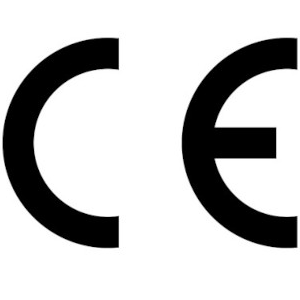
Pet products that fall under the scope of CE marking regulations and directives require the CE mark. This is the case even if pet products are not specifically mentioned in the scope.
For instance, electronic pet products typically require the CE mark because they are covered by CE marking directives and regulations like the EMC Directive and the RoHS Directive.
Is CE marking required for pet toys?
There isn’t a specific regulation or directive for pet toys that requires the CE marking. If CE marking were required, it would not be because of the fact that it’s for a pet or that it’s a pet toy, but because of the fact that it contains components or characteristics that trigger CE marking regulations and directives.
Does the Toy Safety Directive apply to pet toys?
The Toy Safety Directive applies to products designed or intended, whether or not exclusively, for children aged 14 years old or below to play with. Thus, the directive would not apply to pet products that are designed for animals to play with and not humans.
However, you could still choose to test your products against standards that are harmonised under the Toy Safety Directive (e.g., EN 71-1) in order to achieve a high degree of safety.
Does EN 71 cover pet toys?
No, EN 71 does not specifically cover pet products. However, as already said, there can be scenarios where the application of EN 71 can be advisable. For instance, if it is anticipated that children will be interacting with the product, then EN 71 standards could be applied to ensure that the product is safe for handling by a child.
It may also be the case that testing according to EN 71-1 could help you assess if a pet toy is sufficiently resistant (even if it is not a mandatory standard for pet toys).
Does the GPSR apply to pet products and pet toys?
Yes, the General Product Safety Regulation likely applies to both pet products and pet toys because they are consumer products. The regulation only mentions that it does not apply to:
- Food
- Feed
- Living animals
- Animal by-products and derived products
However, it does not explicitly exclude pet products or pet toys.
What labelling requirements apply to pet products in the EU?
Pet products must come with labelling information for the purposes of traceability (e.g., manufacturer’s name, product batch number, etc). Additionally, pet products may need additional labelling information like CE marking, warnings, and instructions.
All products, including pet products, must comply with all the labelling requirements set by the regulations that cover them.
Are there safety standards for pet products?
We could not find standards that are specific to pet products. However, there are many standards that would cover pet products, according to their characteristics. Here are some examples:
EN 60335-2-29 – Household and similar electrical appliances – Safety – Part 2-29: Particular requirements for battery chargers
EN 10333 – Steel for packaging – Flat steel products intended for use in contact with foodstuffs, products and beverages for human and animal consumption – Tin coated steel (tinplate)




Hi, i am i correct to assume that glass aquariums do not require any regulations or certification to be sold or re-sold in the EU market?
Hello Ruben,
The GPSR and REACH would still likely apply
There could also be EN standards
Am I correct to assume that pet toys do not have to have CE marking in the EU? it is though advisable to do certain testing like REACH for heavy metals, Phthalates, Azodyes an EN71-1,2,3.
Hello Mari,
Yes, at least not as part of the Toy Safety Directive. That said, pet toys that include electronic components and/or batteries must be CE marked.
REACH still applies, and many brands opt to follow EN 71 even if it is voluntary
hi ive invented a new pet therapy device. does this need testing? finding it hard to put my finger on anything concrete to do with pets. id have imagine I would need to but no idea of how to go about this. thanks.
Hi Fred, thank you as always.
Yep no standards, Regulation other than GPSD in the UK.
There is a real desire in the UK to instigate a British standard for Harnesses , leads collars etc. Obviously these are products that have serious safety implications/risks for dogs, cats, equines etc. if they are of poor quality/design.
‘Pet food’ is legally classed along with other animal feeds, and is covered by many Regulations; as many as human food almost! If you would like to know more, I can help..
Hello
Can you help please? what are the regulations for dogs/pets food supplements?
many thanks
REGULATION (EC) No 767/2009 OF THE EUROPEAN PARLIAMENT AND OF THE COUNCIL
of 13 July 2009 on the placing on the market and use of feed.
Regulation (EC) No 1831/2003 on Feed additives.
Regulation (EC) No 183/2005 laying down requirements for feed hygiene.
Regulation (EC) No. 1069/2009 of the European Parliament and of the Council laying down health rules as regards animal by-products and derived products not intended for human consumption and repealing Regulation (EC) No. 1774/2002 (Animal by-products Regulation).
Hello,
are fire retardants required for pet beds sold in the UK? we sell to the USA , Canada & Australia and do not include fire retardants at all.
thanks
An additional note that may be helpful:
The Textile Labelling and Fibre Composition Regulation (EU) 1007/2011 has an exception for having to state fibre composition for “Pet clothing” (Annex V, 41).
Everything else in textile is to be labelled like you described, except that is has to be on the product. It may only be on the packaging instead if you really can’t attach it permanently to the product (cost not being a good reason). Or I would assess that if for safety reasons it’s better not to (in case of the animal being able to get hold of the label and bite it off and choke on it). :)
I would personally asses that a bandana or bowtie for a dog would be exempted as a kind of clothing, and a cape or “shirt” for a pet certainly is, but a dog bed or Pet toy should be labeled with fibre composition as stated in 1007/2011 (human toys are exempt (annex V, 22), pet toys are not (mentioned in EU guidance documents)).
I would think it good customer information to label fibre composition anyway even if “Pet clothing”, at least on the packaging. :)
(P.S. if you anywhere in (EU) 1007/2011 find that you can place fibre composition on anyplace else than the product, for other than fabric sold on rolls in a store, then please refer to where. EU guidance documents says otherwise, but I would love to get an out, as it is costly)
Hello Spritt,
Thank you for sharing this. We will need to make changes next time we update this article.
Hi Chris thanks so much for this info, Do pet bowls need any certification to enter the UK? I’m finding the info a little unclear…thanks!
Thank you for the info. What about pet food (pets’ cookies)? Is there any kind of such information?
Hi Anna,
Food and beverage is not our area of expertise
Do dog shampoos fall under Detergents Regulations? :)
Hi there,
I have been asked to make 4 fleece blankets with the pups names on. I would use flock heat transfer vinyl. Is this okay?
Have done a lot of research and I can’t see anything that wouldn’t make it okay.
Do you know more, or have any advice?
Many thanks
Kirsty
Hi.
I am looking into Dog Bandanas made of cotton to sell in the UK.
Does this type of product need to be subject to any testing?
Many thanks in advance,
Andrea
Im based in the U.K. and make handmade plushy dog toys that are made from two layers of fabric, stuffing and a squeaker. Do these need CE certification and testing? I can’t find any information that details this!
Hi Emma,
Are these (human) children’s toys or pet toys?
Hi, one of our supplier wants to sell Furniture Protectors from Cats: https://www.amazon.com/Furniture-Protectors-Self-Adhesive-Deterrent-Protector/dp/B07PJ849KT/ref=sr_1_2?dchild=1&keywords=FTSTC&qid=1631119518&sr=8-2
Does it still falls under the pet accessories or the furniture ?
Hi, I am looking to import glow in the dark silicon pet tag attachments into the UK from China and am unsure of the legal CE (REACH) testing requirements I should ask for from my supplier.
Any guidance would be welcomed
Chris
Hi Chris,
Your supplier probably doesn’t know anything about compliance requirements in the UK
This is great, but what about plush soft dog toys? Do they need to be CE marked?
I don’t think the Toy Safety Directive applies to pet toys but you could still opt for applying EN 71 standards as a way to ensure that the product is safe. It’s not impossible that a pet toy could be subject to a recall.
https://www.europarl.europa.eu/doceo/document/E-6-2008-5104-ASW_EN.html#:~:text=The%20Commission%20would%20like%20to,under%2014%20years%20of%20age.