






 Product assessments in 2 minutes




















Understanding which obligations you have under the EU Deforestation Regulation (EU) 2023/1115 requires that you first identify your place in the supply chain.
Not all entities are equal under the EUDR, and some are subject to stricter requirements, and others less so.
This guide breaks down definitions under Article 2 of the EUDR to help you understand where your company belongs.
Methodology:
1. We identified definitions for operators and traders in Article 2 of the EUDR.
2. We further analysed the definitions to assess under which circumstances an entity falls under a particular definition.
Content Overview

Find Requirements for Your Product Free
Estimated time: 2 to 3 minutes
 Step 1: Select market
.png)
.png)
.png)


- Step 2: Select product/material modules
- Step 3: Compliance Requirements List Created View Sample >
 Data: Primarily based on official legislation databases (Learn >)


Free Consultation (30 min)
Do you have questions about US, EU, or UK product compliance requirements?
Overview
| Entity | Commercial activity Processing / Distribution / Use |
Places on the market First to introduce (EU) |
Exports Product leaves the EU |
Due diligence statement | Simplified declaration |
Makes available EU distribution /use |
| Operators | ✅ | ✅ | ✅ | ✅ | ||
| Down stream operator |
✅ | ✅ | ✅ | Must obtain | Must obtain | |
| Micro or small primary operator* | ✅ | ✅ | ✅ | ✅ | ||
| Trader | ✅ | ✅ |
*Only applicable to companies that meet certain criteria (balance sheet, turnover, and number of employees.
Operators
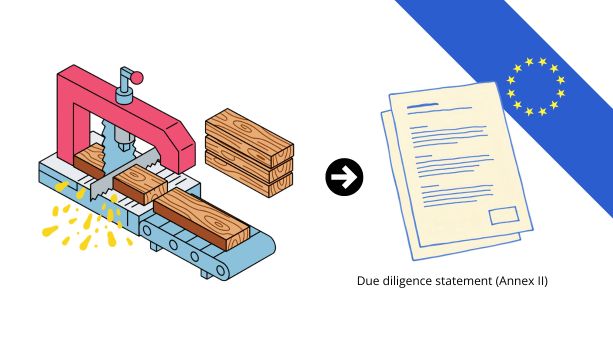
Any natural or legal person who, in the course of a commercial activity, places relevant products on the market or exports them, excluding downstream operators;
What does in the course of a commercial activity mean?
Under the EUDR, in the course of a commercial activity refers to:
- Purpose of processing
- For distribution to commercial or non-commercial consumers
- For use in the business of the operator, downstream operator or trader itself
What does placing on the market mean?
Placing on the market means first introducing a product or commodity covered by the EUDR on the EU market.
For example, a manufacturer who first introduces wooden chairs would be placing it on the market.
Likewise, a company importing wooden chairs would also be placing them on the market as they are the first to introduce the product.
What does export mean?
The term export refers to selling products to buyers outside the European Union. Transactions within the EU do not count as exports.
Examples
1. A German company importing wooden furniture from Vietnam
2. A French company exporting wooden furniture to the UK
3. A Spanish wooden furniture factory producing chairs for the EU market
Downstream operator
Any natural or legal person who, in the course of a commercial activity, places on the market or exports relevant products made using relevant products, all of which are covered by a due diligence statement or by a simplified declaration;
What does relevant products made using relevant products mean?
“Relevant products” are products covered by Annex I of the EUDR.
There is no definition for “relevant products made using relevant products” in the EUDR. That said, this could, for example, refer to a chair made of wood.
Note that Annex I cover both wooden materials and wooden furniture.
What is a due diligence statement?
An EUDR due diligence statement is a document which must contain the following:
- Operator name
- Operator address
- EORI number (for imports and exports)
- Product name, HS code and description
- Quantity
- Country of production
- Geolocation of all plots of land where the relevant commodities were produced
You can find the information in Annex II of the EUDR.
What is a simplified declaration?
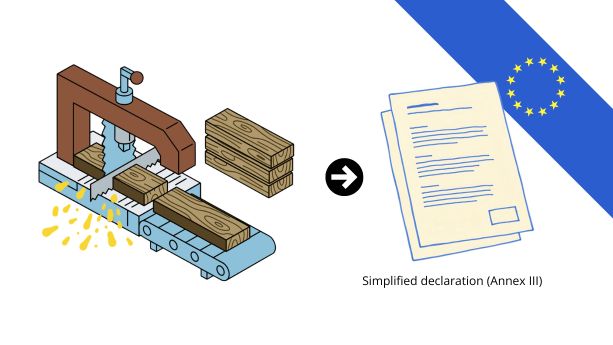
Micro or small primary operators can issue a simplified declaration, which can be found under Annex III of the EUDR.
This document must include:
- Micro or small primary operator’s name
- Micro or small primary operator’s address
- EORI-number (for imports and exports)
- Product name, HS code and description
- One-off estimated annual quantity
- Country of production
- Geolocation of all plots of land
- Or the postal address of the establishment or of all plots of land on which the micro or small primary operator produces relevant commodities
- Statement (Annex III(4)
When is a product covered by a due diligence statement or simplified declaration?
A product is covered by a due diligence statement or simplified declaration if the operator has already issued one for a particular product.
For example, if you buy wooden chairs from a factory which has already issued a due diligence statement or simplified declaration, then it is covered.
The fact that you are buying a product which is covered by such a document is what makes you a downstream operator instead of an operator (the latter which are subject to issuing the documents).
Micro or small primary operator
Operators that meet certain conditions related to their balance sheet, turn over, and number of employees are defined as micro or small primary operators.
Breakdown
The following is a breakdown of the definition for micro or small primary operators:
✅ Natural person or a micro-undertaking or small undertaking as defined in Directive 2013/34/EU.
Article 3(1) – Micro-undertakings
Entities defined as micro-undertakings must not exceed the limits of at least 2 of the 3 following criteria:
- Balance sheet total: EUR 450 000
- Net turnover: EUR 900 000
- Average number of employees during the financial year: 10
Article 3(2) – Small undertakings
Small undertakings do not exceed the limits of at least 2 of the 3 following criteria:
- Balance sheet total: EUR 5 000 000
- Net turnover: EUR 10 000 000
- Average number of employees during the financial year: 50
✅ Established in a country classified as low risk
✅ Places on the market or exports relevant products that this operator itself has
a. Grown, harvested, obtained from or raised on relevant plots of land, or,
a. As regards cattle, on establishments located in that country
✅ Includes operators who exceed the limits of at least 2 of the 3 criteria set out in Article 3(1) and (2) of Directive 2013/34/EU but who can demonstrate that the following, related to the relevant commodities and the relevant products, do not exceed the limits of at least 2 of 3 of those criteria:
a. The parts of their balance sheet total
b. Net turnover and
c. Average number of employees during the financial year
Note: The last part relates to companies that may, for example, have a balance sheet exceeding EUR 450,000 or more than 10 employees in the business as a whole. However, the turnover and number of staff related to an EUDR covered product may be much less than the total.
Traders
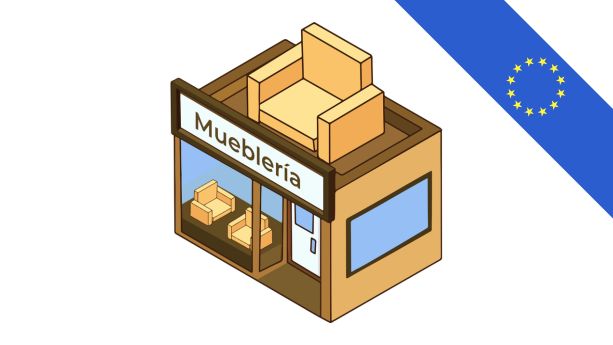
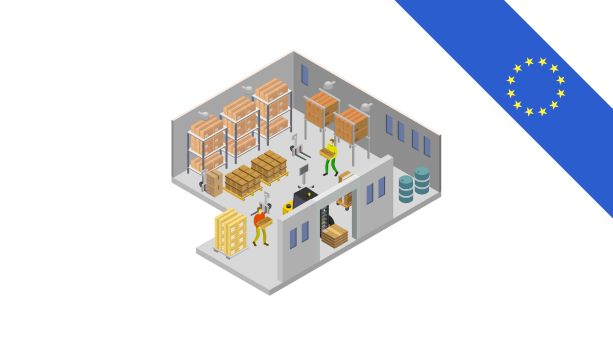
Any person in the supply chain other than the operator or downstream operator who, in the course of a commercial activity, makes relevant products available on the market;
What does making relevant products available on the market mean?
This term refers to distribution or consumption within the European Union.
However, unlike “placing on the market”, “making relevant products available” does not cover situations where a manufacturer or importer introduces a product or material for the very first time on the EU market.
Example
Retailers reselling products purchased from operators in the EU.


