




 Product assessments in 2 minutes

















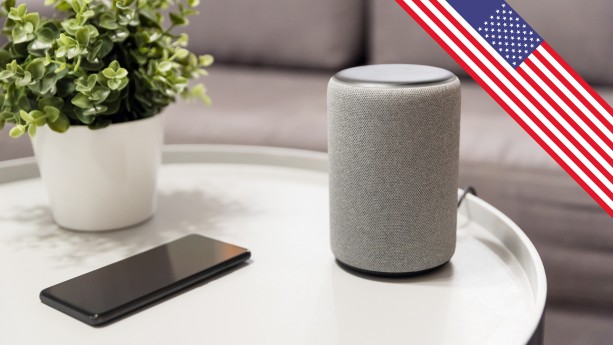
Speakers and sound systems sold in the United States are subject to regulations, standards, and licensing requirements. This guide explains what US importers and manufacturers must know about FCC rules, UL standards, and Bluetooth licensing for various types of speakers and other sound equipment.
Product examples
Here are some types of speakers and audio products covered by this guide:
- Surround speakers
- Smart speakers
- HiFi speakers
- Bluetooth speakers
- Portable speakers
- Children’s products with speakers
- USB speakers
- HDMI speakers
Content Overview
Find Requirements for Your Product Free
Estimated time: 2 to 3 minutes
 Step 1: Select market
.png)
.png)
.png)


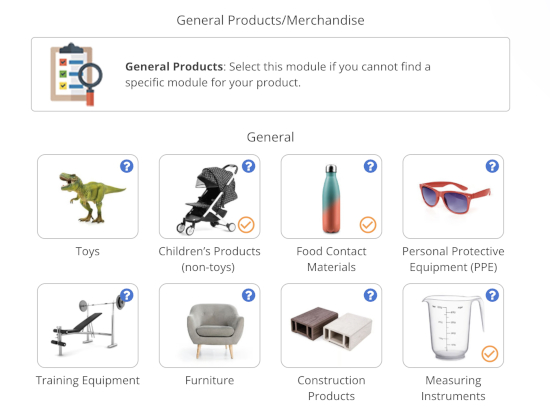
- Step 2: Select product/material modules
- Step 3: Compliance Requirements List Created View Sample >
 Data: Primarily based on data from official legislation databases (Learn >)
47 CFR Part 15 – FCC
47 CFR Part 15 sets labeling, documentation, testing, and other requirements for most electronic products in the United States, including speakers, sound systems, and similar products. The requirements differ depending on whether the speaker communicates via wireless technology (e.g., Bluetooth speakers) or via cable (e.g., USB speakers).
47 CFR PART 15 – RADIO FREQUENCY DEVICES – Unintentional Radiators

Unintentional radiators are electronics that generate radiofrequency energy within the device, but that are not intended to emit such energy via radiation or induction (e.g., via Bluetooth).
Product examples
- Wired speaker
- USB speaker
- Embedded audio system
Key requirements
✅ Supplier’s Declaration of Conformity (SDoC) authorization procedure
✅ SDoC Compliance Information Statement
✅ Labeling requirements (e.g., product identification, compliance statement, FCC logo)
✅ Instructions
✅ Testing
47 CFR PART 15 – RADIO FREQUENCY DEVICES – Intentional Radiators
Intentional radiators are defined as electronic products that intentionally generate and emit energy by radiation and induction. This includes, for example, wireless speakers.
Product examples
- Bluetooth speakers
- Smart speakers
- Shower waterproof speaker
Key requirements
✅ Certification authorization procedure
✅ Labeling requirements (e.g., FCC ID, compliance statement)
✅ Technical report
✅ Instructions
✅ Testing
UL Standards
UL standards are generally voluntary. That said, ensuring compliance with UL standards is generally a necessity if you want to ensure that your speakers are safe and meet certain technical specifications. This is of particular importance for portable speakers containing lithium batteries.
UL 62368-1 – Audio/Video, Information and Communication Technology Equipment – Part 1: Safety Requirements
This standard covers audio, video, information, and communication products with a voltage lower than 600 volts, which can be used indoors and outdoors. It also applies to components and subassemblies.
It sets safeguards and safety measures for different types of users (e.g., ordinary users and skilled users).
UL 813 – Standard for Commercial Audio Equipment
This standard covers audio equipment with a voltage up to 300 volts, which is intended to be used in a commercial setting such as churches, schools, theaters, factories, and other environments.
The standard page mentions that the scope includes the following products, among others:
- Integral amplifier-speakers
- Commercial sound systems
- Tuners
Battery standards
Any device containing lithium batteries can be a safety hazard. Not all batteries in the supply chain meet general safety requirements, which is why it is so important to ensure you only use batteries compliant with UL batteries.
The following battery standards are listed by the Consumer Product Safety Commission (CPSC):
- UL 1642 – Standard for Safety for Lithium Batteries
- UL 2054 – Standard for Household and Commercial Batteries
- UL 2056 – Outline of Investigation for Safety of Power Banks
- UL 2595 – Standard for Safety for General Requirements for Battery-Powered Appliances
These are generally voluntary. However, unsafe speakers and other audio products can be recalled if deemed to be unsafe. For example, Bluetooth speakers have been recalled in the United States in recent years due to battery safety issues.
CPSIA – Speakers for Children
Speakers designed for children (or built into toys and other children’s products) are subject to CPSIA requirements. You can find a summary of key requirements below.
✅ Identify and comply with applicable children’s product safety rules
✅ Ensure compliance with referenced standards (i.e., ASTM F963-23)
✅ Arrange third-party testing with a CPSC-accepted lab
✅ Create a Children’s Product Certificate (CPC)
✅ Affix tracking labels
✅ Submit eFiling via the CPSC portal
Note that CPSIA requirements impact everything from lead content to small parts.
California Proposition 65
California Proposition 65 restricts chemicals and heavy metals in consumer products sold in California. This generally also includes speakers and other audio products.
You have the option to verify that your product does not contain restricted substances above the set limit or affix warning labels.
Materials (including paints and coatings) used to make speakers can contain, for example, DEHP, lead, and other harmful substances.
Most speakers are manufactured in Asia, with deep supply chains often involving hundreds of component and material suppliers. Far from all of these make materials that specifically comply with California Proposition 65, which is why testing is often necessary to verify compliance.
Country of origin
Country of origin marking is generally required for products imported to the United States. Like most electronics, most speakers and other audio products are manufactured in Asia. It is therefore essential that the product or packaging is correctly marked with the correct country of origin.
Examples
- Made in China
- Made in Vietnam
- Made in Germany
License Requirements
Certain types of speakers can only be sold if the proper licenses have been obtained. This section outlines several licensing requirements that may be relevant to speakers and other sound systems.
| Bluetooth SIG | HDMI | USB | |
| Scope | Required for all Bluetooth products | Required to use the HDMI specifications and logos | Required if a USB trademarked logo is used |
| Requirements | 1. Bluetooth Patent/Copyright License Agreement
2. Bluetooth Trademark License Agreement 3. Qualification process 4. Testing |
1. Adopter license
2. Registration process 3. Testing |
1. USB-IF Logo Trademark License Agreement
2. Compliance program 3. Testing |
| Cost (examples) | Costs can be found on the “Bluetooth SIG schedule of dues and fees” page of the Bluetooth website.
They may vary greatly according to company size and other factors. Example: Membership fees vary from USD 3,500 to USD 52,500. |
Yearly fee for manufacturers of end products:
Annual license fee + royalties: USD 10,000, or Annual license fee: USD 5,000 + USD 1 for each licensed product |
Logo administration fee: USD 3,500 (for non-USB-IF members)
Member fee: USD 5,000 per year |
| Website | Link | Link | Link |
FAQ
Do we need a license to import or manufacture Bluetooth speakers in the US?
We found that there exist two types of Bluetooth license agreements:
a. Bluetooth Patent/Copyright License Agreement, which is usually required if you intend to use Bluetooth technology
b. Bluetooth Trademark License Agreement, which is usually required if you intend to feature Bluetooth trademarks in your product (e.g., the Bluetooth logo).
Having said that, I understand that companies that do not sell products “as their own” do not need a license. This would include, for example, original equipment manufacturers (OEM) that produce and sell devices to a brand.
In this case, I understand that it is the company that sells the products under its own brand that needs to have the license, not the OEM.
Do FCC requirements apply to speakers?
Yes, FCC 47 CFR Part 15 requirements cover most electronics, including speakers. Depending on the speaker’s functionality, such devices can be classified as:
a. Unintentional radiators (if the product does not have wireless functionalities)
b. Intentional radiators (if the product has wireless functionalities)