



How often should a product be lab tested?

Posted on — Leave a comment
Need help with compliance? Book a call here

Lab testing frequency

Are you an importer or a manufacturer looking to test your product? Whether you need to identify the chemical composition of your product or you want to assess if your product meets the relevant safety requirements, ‘laboratory testing’ should be considered.

That being said, lab testing is not necessarily a “one and done” thing. For starters, you can expect that you will need to re-arrange testing if you ever change materials, components, make design changes, or manufacturer. It is also necessary to re-test products as standards are amended, and new standards are implemented.

However, some regulations require that you go one step further and implement a periodic lab testing program – even without any such changes.

This article presents information relating to how frequently lab testing should be done. In addressing the question, we compare several US and EU product regulations. This includes the CPSIA and FCC 47 CFR Part 15 in the US, and the Toy Safety and the EMC Directive in the EU.

Continue reading How often should a product be lab tested?

UL 1642 Lithium Batteries Standard: An Overview

Posted on — 2 Comments
Need help with compliance? Book a call here

UL 1642

UL 1642 covers rechargeable and non-rechargeable lithium batteries that includes at least one electrochemical cell that contains either:

  • Metallic lithium
  • Lithium alloy
  • Lithium-ions

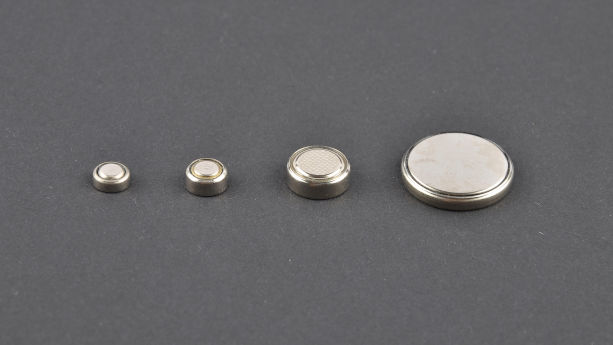
In this guide, we cover different aspects concerning UL 1642. This includes information about the standard’s product scope and requirements, lab testing, and where it is possible to buy the standard

Notice that this guide is written only based on publicly available information on this page. You need to buy the standard in order to access the contents of UL 1642.
Continue reading UL 1642 Lithium Batteries Standard: An Overview

UL 891 Switchboards Standard: An Overview

Posted on — Leave a comment
Need help with compliance? Book a call here

UL 891
UL 891 covers switchboards, which are electrical devices that distribute electrical energy from one or more main sources to different load circuits.

In this guide, we explain what importers and manufacturers must know about UL 891, including its scope, where you can purchase UL 891, and information about laboratory testing.

Notice that this guide is written only based on publicly available information on this page. You need to buy the standard in order to access the contents of UL 891.
Continue reading UL 891 Switchboards Standard: An Overview

UL 9540 Energy Storage Systems Standard: An Overview

Posted on — Leave a comment
Need help with compliance? Book a call here

ul 9540
UL 9540 covers energy storage systems and equipment. In this guide, we explain what importers and brands must know about this standard, including its scope, maximum energy capacity requirements, and lab testing.

Notice that this guide is written only based on publicly available information on this page. You need to buy the standard in order to access the contents of UL 9540.
Continue reading UL 9540 Energy Storage Systems Standard: An Overview

ASTM F2413 Protective Footwear Standard: An Overview

Posted on — 1 Comment
Need help with compliance? Book a call here

ASTM F2413
ASTM F2413 covers safety and performance requirements for protective footwear intended to protect wearers against potential workplace hazards. In this guide, we explain what manufacturers, importers, and brands must know about ASTM F2413, including its product scope, requirements, and lab testing.

Notice that this guide is written only based on publicly available information on this page. You need to buy the standard in order to access the contents of ASTM F2413.
Continue reading ASTM F2413 Protective Footwear Standard: An Overview

ASTM F2923 Children’s Jewelry Standard: An Overview

Posted on — 2 Comments
Need help with compliance? Book a call here

ASTM F2923

ASTM F2923 covers safety requirements for children’s jewelry. In this guide, we explain what importers and manufacturers must know about this standard, including its product scope, labeling requirements, and lab testing.

We also explain whether or not compliance with ASTM F2923 is mandatory when importing or manufacturing children’s jewelry in the United States.

Notice that this guide is written only based on publicly available information on this page. You need to buy the standard in order to access the contents of ASTM F2923.
Continue reading ASTM F2923 Children’s Jewelry Standard: An Overview

ASTM D4236 Labeling & Testing Requirements: An Overview

Posted on — Leave a comment
Need help with compliance? Book a call here

ASTM D4236

ASTM D4236 covers labeling requirements for art materials that might pose potential chronic health hazards. In this guide, we explain what importers, manufacturers and brands must know about this ASTM D4236, including its product scope, requirements, and testing.

Notice that this guide is written only based on publicly available information on this page. You need to buy the standard in order to access the contents of ASTM D4236.
Continue reading ASTM D4236 Labeling & Testing Requirements: An Overview

List of Products that Require Law Labels: An Overview

Posted on — Leave a comment
Need help with compliance? Book a call here

Products that Require Law Label
Law labels inform consumers about the filling materials inside beddings, plush toys, and other stuffed products. Although law labels are not part of federal regulations, many states in the US have such requirements – the principle of which is generally similar across the covered states.

US law labeling requirements cover products such as upholstered furniture, bedding products, sleeping bags, or cushions.

Although the labeling rules and contents are similar, the requirements pertaining to products and their registration may differ among states. In this guide, we list nine product categories covered by law labeling requirements and the corresponding labeling contents and other rules.

General requirements

In general, a law label should include information such as the following:

  • A “Do Not Remove” statement
  • Filling materials (weight in %)
  • Uniform Registry Number (URN)
  • Company name

Product List Creation Methodology

We list products that are covered by the law labels in the states of California and Pennsylvania. Note that, although the law labels of all states are similar, the list of covered products might vary. Hence, this is not a list of every single product covered by US law labeling requirements.
Continue reading List of Products that Require Law Labels: An Overview

List of Products Covered by the UPLR: An Overview

Posted on — Leave a comment
Need help with compliance? Book a call here

The Uniform Packaging and Labeling Regulation (UPLR) aims at providing consumers with accurate information regarding the product name, seller identity, and content quantity of packages so that the purchasers can compare quantity and price with other products.

The Uniform Packaging and Labeling Regulation (UPLR) covers products ranging from apparel and textiles to food and beverage. In this guide, we list some of the categories covered by the UPLR and the various ways that the regulation impacts the packaging labeling requirements.

Product List Creation Methodology

Though the UPLR may apply to many different categories of products, in this guide we only list products that are mentioned in the regulation itself. This article also lists some products that are covered by the UPLR, but which may be exempt from some requirements – under certain conditions.

Continue reading List of Products Covered by the UPLR: An Overview

Electronic Product Regulations in the United States: An Overview

Posted on — 1 Comment
Need help with compliance? Book a call here

Electronic products manufactured or imported to the United States are subject to product regulations, safety standards, labeling, documentation, and testing requirements. Failing to ensure compliance with the applicable requirements can result in fines or a recall.

This guide serves as an introduction to US compliance requirements applicable to consumer electronics, such as IoT products, wearables, kitchen appliances, white goods, and more.

Continue reading Electronic Product Regulations in the United States: An Overview