



Guide to PPWR EPR Symbols and QR Codes

Posted on — Leave a comment

Until now, there have been several symbols used to indicate an extended producer responsibility for packaging in the EU. However, the Packaging and Packaging Waste Regulation (PPWR) is set to replace standalone EPR scheme symbols like the Green Dot with a QR code.

This guide explains what you need to know before these rules start to apply on 12 February 2027.

Key points

  • QR codes replace EPR symbols like the Green Dot
  • Article 12(9) does not state that indicating an EPR symbol is mandatory
  • When doing so, you must use a QR code

Video correction

Triman is not strictly an EPR scheme symbol, so it is not affected by the new QR code requirements. However, the Green Dot is, and the general principle explained in the video is correct. Article 12(9) specifically mentions symbols used to indicate EPR schemes.

Continue reading Guide to PPWR EPR Symbols and QR Codes

How to Create PPWR Technical Documentation

Posted on — Leave a comment

EU Packaging and Packaging Waste Regulation (PPWR) 2025/40 introduces technical documentation requirements for packaging. This guide explains how to create technical documentation based on Annex VII.

  • Manufacturers must create technical documentation
  • Importers must review technical documentation
  • Must be kept for 5 to 10 years
  • Include artwork, dielines, test reports, and other files

Continue reading How to Create PPWR Technical Documentation

How to Create a PPWR Declaration of Conformity

Posted on — Leave a comment

The EU Packaging and Packaging Waste Regulation (PPWR) 2025/40 requires that companies defined as manufacturers must issue a Declaration of Conformity (DoC).

This guide explains how to create a PPWR DoC based on the model structure in Annex VIII.

  • The manufacturer must create the PPWR DoC
  • A DoC is required for each packaging type
  • Importers must request the DoC from the manufacturer

PPWR Declaration of Conformity

Continue reading How to Create a PPWR Declaration of Conformity

Guide to EU PPWR Testing Requirements

Posted on — Leave a comment

The EU Packaging and Packaging Waste Regulation (PPWR) 2025/40 sets requirements concerning the design and materials of packaging. The purpose of testing is to validate that a particular packaging type is technically compliant with these requirements.

This guide explains when testing is required to validate PPWR compliance, and to what extent you can use existing documentation and self-assessments.

Continue reading Guide to EU PPWR Testing Requirements

PPWR Requirements for Transport Packaging: Boxes, Pallets & More

Posted on — Leave a comment

Transportation packaging

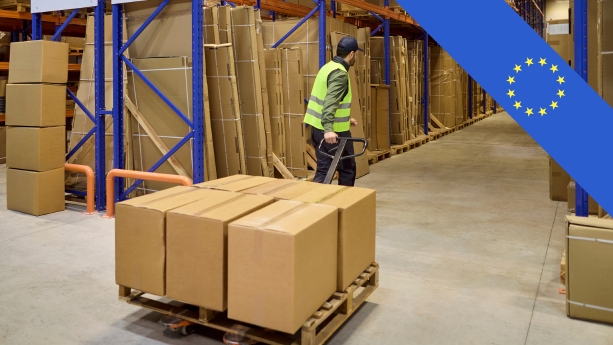
The Packaging and Packaging Waste Regulation (PPWR) 2025/40 sets requirements for packaging used for handling and delivery of products. This includes shipping cartons, pallets, protective plastic and other packaging used for transporting cargo.

Does this mean that you now need to create or obtain a DoC and other documentation for every single cardboard box arriving in your warehouse? The answer is that it depends.

This is a complex area, and this guide is our effort to piece together what we could find about transportation packaging in the PPWR text. It may not cover everything, and it will likely be updated, but it can hopefully help you understand some areas.

  • The PPWR covers packaging used for transportation
  • Transportation packaging is defined under Article 3
  • Specific requirements apply to certain types of transportation packaging
  • Transport packaging is exempt from some PPWR requirements
  • EPR obligations also apply to transportation packaging

Continue reading PPWR Requirements for Transport Packaging: Boxes, Pallets & More

PPWR Producers Requirements in 3 Steps

Posted on — Leave a comment

Companies that first introduce packaging or packaged products in an EU member state are generally considered to be producers under the Packaging and Packaging Waste Regulation (PPWR) 2025/40. This can also be the case for companies selling directly to end users in other EU member states.

The entity defined as a producer is generally responsible for extended producer responsibility tasks. This includes reporting packaging materials and volumes, and paying corresponding fees.

This guide explains how you can determine which company is the PPWR producer. I also share several practical examples of supply chains involving both EU and non-EU-based companies.

  • Manufacturers, importers, and distributors can be defined as producers
  • The producer is often the first entity that introduces packaging in a particular EU member state
  • The producer must comply with EPR obligations

Continue reading PPWR Producers Requirements in 3 Steps

Who is Responsible for EU PPWR Compliance?

Posted on — Leave a comment

The Packaging and Packaging Waste Regulation (PPWR) 2025/40 sets requirements applicable only to certain types of entities. In plain language, this means that what you must do to comply with the PPWR differs depending on whether your company is defined as a:

a. Manufacturer
b. Importer
c. Supplier
d. Distributor

It is therefore critical that you understand their respective definitions and can accurately find your place in the PPWR supply chain.

Further, companies can also be defined as producers (in addition to their primary definition), which results in additional extended producer responsibility (EPR) obligations applying.

Why should I read this guide?

Read this guide if you want to understand whether you are defined as a producer, manufacturer, importer, distributor, supplier, or other entity. You can read this guide to learn more about PPWR requirements:

Continue reading Who is Responsible for EU PPWR Compliance?

EU Packaging Regulation (PPWR) Timeline: 2026 to 2040

Posted on — Leave a comment

The Packaging and Packaging Waste Regulation (PPWR) 2025/40 is applicable from 12 August 2026. That said, the PPWR contains many requirements concerning labelling, documentation, EPR, and other aspects that only start to apply years later.

This guide serves as a timeline for PPWR requirements and their respective dates.

Methodology

Step 1: I mapped out all the articles mentioning a date*

Step 2: I determined if the requirement is relevant to either:

  • Manufacturers, importers, distributors, and other economic operators, or
  • EU Commission or Member States

Step 3: The respective PPWR requirements tied to a particular date were added to one of the two tables below

*Note that the table contains the dates identified during this stage. I cannot guarantee that I identified every single article or requirement tied to a specific date.

Continue reading EU Packaging Regulation (PPWR) Timeline: 2026 to 2040

EU Packaging (PPWR) Authorised Representatives Guide

Posted on — Leave a comment

The Packaging and Packaging Waste Regulation (PPWR) 2025/40 requires that companies selling products in the EU appoint an authorised representative for extended producer responsibility in the EU member states where they themselves are not established.

In this guide, we explain what EU and non-EU companies must know about the new authorised representative for extended producer responsibility requirements.

  • You may need an authorised representative for EPR in each EU member state
  • The requirement applies where you make packaging available
  • Applies to EU and non-EU companies
  • Some companies offer AR EPR solutions covering all 27 EU member states

Continue reading EU Packaging (PPWR) Authorised Representatives Guide

Guide to PPWR Requirements for Micro-Enterprises

Posted on — 2 Comments

Companies defined as manufacturers under the Packaging and Packaging Waste Regulation (PPWR) 2025/40 must generally ensure that their packaging is compliant with the following areas:

  • Packaging design and materials
  • Substances
  • Labelling
  • Documentation
  • EPR

It is therefore essential to determine which company in the supply chain is defined as the manufacturer. This is not always obvious, as certain exemptions apply to companies defined as micro-enterprises.

This guide explains what these exemptions are and how packaging suppliers and companies selling products are impacted by exemptions applicable to micro-enterprises.

Continue reading Guide to PPWR Requirements for Micro-Enterprises